TheJournal.ie uses cookies. By continuing to browse this site you are agreeing to our use of cookies. Click here to find out more »
Dublin: 13 °C Tuesday 21 May, 2013

No plans to release ECB letters despite newspaper report

The Irish Times publishes details of letters the ECB sent to Brian Lenihan in the lead-up to Ireland seeking a bailout two years ago leading to more calls for the letters to published in full.

File photo
File photo
Image: Press Association Images

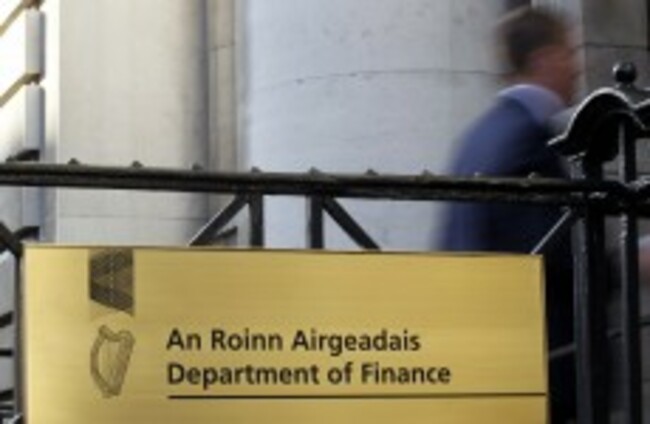
THE DEPARTMENT OF Finance has said there are no plans to release the letters that European Central Bank sent to former finance minister Brian Lenihan in the build-up to Ireland applying for a bailout in 2010.

It follows publication of a story in the Irish Times today in which political correspondent Stephen Collins indicates that the paper has seen the letters that were sent by the then president of the ECB, Jean-Claude Trichet, to the late Lenihan.

The letters have been the subject of much talk in the past week after the Finance Minister Michael Noonan told the Sunday Independent that a letter sent by Trichet in November 2010 should be released.

Noonan said last Sunday that the “very direct” letter left Lenihan with “little or no option” but to begin negotiations on a bailout in November 2010 but said that it was not within his authority to order their release.

He said that the matter was one for the Freedom of Information unit which has so far declined to release the letter to TheJournal.ie and numerous other media organisations.

Fianna Fáil, the party in government at the time of the bailout, has reiterated its call for details of correspondence between the Department of Finance and the ECB in the lead up to the bailout to be released to the public.

Letters

Today, the Irish Times says it has seen the letters but it has not published them nor has it directly quoted from them but it does paraphrase their content in detail.

The paper says that three letters from Trichet to Lenihan – sent in October and November of 2010 – outlined the ECB’s concerns about the state of the Irish banks and the strain that keeping them sufficiently capitalised was putting on the entire European banking system.

The story also makes reference to a telephone conversation between the two men on 12 November which it says was “decisive” at a point where the ECB was underwriting more than €150 billion of funding for the Irish banks.

The correspondence would eventually lead to Ireland applying for a bailout from the EU and IMF on 20 November 2010 with Lenihan later telling BBC Radio 4 that a letter from Trichet ‘bounced’ Ireland into its bailout.

A spokesman for the Department of Finance said today that the Department did not release the documents to the paper nor was he aware of any leak either from the Department or its Freedom of Information Unit.

The spokesperson said that the documents released to the Irish Times in response to an FOI request were the same that were released to other media organisations including TheJournal.ie.

Last weekend we published the documents that we received from the Department of Finance which included a responding letter to our request, a schedule of the documents that fell under the scope of the request and the reasons why almost all of the letters from the ECB would not be released.

‘Very disturbing’

The FOI unit outlined that the letters which would not be released contained ‘information communicated in confidence from, to or within an international organisation of states’  and if released ‘could have a serious adverse effect on the financial interests of the State, or on the ability of the Government to manage the national economy’.

Meanwhile, the Fianna Fáil finance spokesman Michael McGrath has called on the government to publish a full record of contact between the Department and the ECB in the lead up to the bailout being sought.

He described the details of today’s story in the Irish Times as “very disturbing” and said that the Irish people deserved to have access to the records.

McGrath said in a statement: “The information that has come into the public domain paints a picture of relentless pressure from the ECB on the Government to accede to its demand for Ireland to enter a formal programme in the false belief that it would prevent contagion throughout the rest of Europe.

“Subsequently the ECB insisted during the bailout negotiations, to the cost of ordinary Irish citizens, that no losses whatsoever could be imposed on senior bondholders in Irish banks.

“The Irish people deserve to have access to all records of the period leading up to and during the negotiations of our formal programme with the EU / ECB / IMF. It is not good enough for information as important as this to be drip fed into the public arena by way of selective leaks.

“I repeat my call on the Government today to release the records of all contact with the ECB before and during thebailout negotiations. It is my view that these records will allow a greater understanding of the circumstances of Ireland’s entry into a programme and the pernicious role of the ECB in insisting that Irish citizens bear the full cost of a banking bailout.”

Read more: We asked for copies of the ECB’s letters to Brian Lenihan. Here’s what happened

Read next:

Comments (30 Comments)

  • give a copy of the letters to some german politicians, shouldn’t take very long for them to leak it!!

    Reply
  • So the goverment can’t manage the economy if we all see some letters.
    Worst excuse ever!!
    Someone call wikileaks.

    Reply
  • So much for the openness and transparency promised by Fine Gael.

    Reply
    • ‎”It has been the one song of those who thirst after absolute power that the interest of the state requires that its affairs should be conducted in secret… But the more such arguments disguise themselves under the mask of public welfare, the more oppressive is the slavery to which they will lead… Better that right counsels be known to enemies than that the evil secrets of tyrants should be concealed from the citizens. They who can treat secretly the affairs of a nation have it absolutely under their authority; and as they plot against the enemy in time of war, so do they against the citizens in time of peace.” Baruch Spinoza,1676

      Reply
  • Cowboys Ted

    Reply
  • Ryan'O 01/09/12 #

    The Irish times should publish them and show the people what exactly the EU are up to! Fine Geal cannot hide behind this one….we are waiting for your excuses!

    Reply
  • Cowards to scared of what Europe would think.

    Reply
    • Ryan'O 01/09/12 #

      F Europe at this stage!! If we were bullied into taking a bailout when none was needed well then the ECB must answer as to why, I would consider that the EU are afraid to let the people know that their country was taken over by financial warfare

      Reply
    • There is no doubt the bailout was needed. The country at that stage was an economic corpse after a decade of theft, corruption and incompetence. The no’s are very clear on us needing that bailout at the time.

      Reply
  • You have to invite a vampire like the IMF into your house that’s how they work isn’t it .Break the country rescue the country and then bleed it dry and when there’s nothing left put us back on the life support and the vicious cycle starts all over again.

    Reply
  • It could be a blackmail letter & that’s why it’s too precious to be shown to the people of Ireland!

    Reply
  • someone who is keeping very quiet in all this yet had a big role to play in dealing with our banks is mr trichet! theres numerous videos of him forcing lenihan into a corner
    http://www.youtube.com/watch?v=WDN7NiEdNJ0 anyone remember that famous video ?

    Reply
    • I’m no fan of the ECB or the euro and at this stage the EU but the idea that Lenihan was an innocent in all of this. The financial markets at that stage had no faith in him or that Govt. viewing them as incompetents and liars. They might have had some respect here but internationally in finance and politics they were viewed with contempt. A contempt that was rarely hidden.

      Reply
    • Arjuna, what point are you making?

      Reply
    • rory what arjun is saying is that the markets had no confidence! in the goverment at that stage!
      the markets didnt believe what the goverment were saying and could see could through there lies!

      Reply
  • Course we won’t see the letters the Ecb have some notion in there heads if those letters get released to the public we won’t see the Ecb/eu/troika as our supposed saviours but really just a bullying foreign banker saving dictatorship…….bad news lads the majority of Irish people hate yer guts for the misery your cuts and lack of vision has caused us!

    Reply
  • As citizens of Ireland, we deserve to see those letters from the ECB, and it is our right to see them, so I think that they should be published for all to see. If anglo irish bank was let go under, we wouldn’t need a bailout , with problems with cuts everywhere for example in the health sector, sick patients going home for the weekend to save money in hospitals, and care being cut for the elderly, if we are trying to cut down on things, why don’t the TD’s buy their own Ipad tablets, and save the taxpayer of this country 200,000 euros. Anyway we should demand that these letters are published for all to see.

    Reply
  • Michael McGrath calling for letters to be released ? Sure wasn’t he Junior Minister in Finance at the time? Why didn’t he speak out at the time ? No matter how bad the day is, there’s always a laugh when Michael steps up to prate. Oh, the things he would do now. Except just go away.

    Reply
  • This is a bit overdone, we know the letters were threatening, that they said take the bailout now.

    We also know that the previous Govt., Cowen and Lenihan and co. ran the economy in to a brick wall and for the forst 2 years of the crisis they were incapable of acting but once it looked like Anglo was in serious trouble and Anglo looked at being would up, they had to act, they knew that if the deals in Anlgo between FF reps, their developer doner buddies and the bank became public knowledge that they would be destroyed and that many of them would go to jail.

    They then chose a path that involved destroying the economy, for a generation, rather than risk the true level of corruption in the party being exposed.

    These letters change nothing.

    Reply
  • The government of the day could have said no. Everyone knew at the time it was a lily livered cowards way out. If FF think that these letters would absolve them of responsibility for the shame of this nation they are mistaken and politically naive.

    Reply
  • so what??!!….publish the letters,,what will be the response?…nothing!!!!!, European nations revolt and we just sit and watch Vincent Browne…. Michael Mc Grath is playing politics and does’nt give two shites whether these letters are ever published in full, just like the other 166!!!

    Reply
  • As an Irish citizen i have a right to know why we were bounced into a bailout and what threats were made by a foreign minister,agency against the citizens of this state.The government are answerable to the citizens of this country and as such are duty bound to inform us as to what the grounds were for strangling the growth and services of this country for next 50 or so years…what is noonan kenny and the senior irish civil servants scared of. Possible other options that were available to us or just the decision by the german furher that her banks and investors get their investment back….

    Reply
  • Four legs good two legs bad!

    Slan EU
    Adios EU
    Ciao EU

    Hello feedom

    Reply
  • Why dont the print media just print the letters and show some balls…Then lets see what happens and the fall out would be….Maybe then we will start to get the answers that government,europe,the banking sector want to bury as deep as they can and keep us ignorant…

    Reply

Add New Comment