Sign in. It’s quick, free and it’s up to you.
An account is an optional way to support the work we do. Find out more.
Sign in. It’s quick, free and it’s up to you.
An account is an optional way to support the work we do. Find out more.

YOU MAY HAVE heard that there’s a vote happening in the US today.
Well actually there are loads happening, but one in particular that will have global ramifications for the next four years and beyond.
While we’ve been constantly told that this is the most divisive election race in history, it’s also true to say that interest is at an all-time high.
Just ask CNN who are expecting to make $100 million more this year than predicted thanks to the Donald Trump phenomenon.
Interest is also sky-high on this side of the Atlantic.
So if you’re one of the people planning an all-nighter tonight to watch the results roll in, we’ve put together a guide to help you stay awake and know what to look out for.

The first polls close at about 11pm Irish-time and between midnight and 1am voting stops in some of the tightest and most important states like Florida, Ohio and North Carolina.
Depending on how tight the races are in this states, many US networks will begin calling the results soon after polling closes. It means things will start to get really interesting after 1am when we can expect a flurry of activity as safe states are coloured blue or red.
At this point we’ll likely have a good idea about how accurate polling was compared to the actual votes and it may be possible to start predicting a winner. Unless of course the candidates are running really close.
In states that are tighter it could be hours before we get any declarations, so if you’re looking for a really clear idea of the result then you’ll probably have to stay up until 3am or after.
In the last two elections, defeated candidates Mitt Romney and John McCain delivered concession speeches at about 5am.
This crazy election though, when and if that happens?
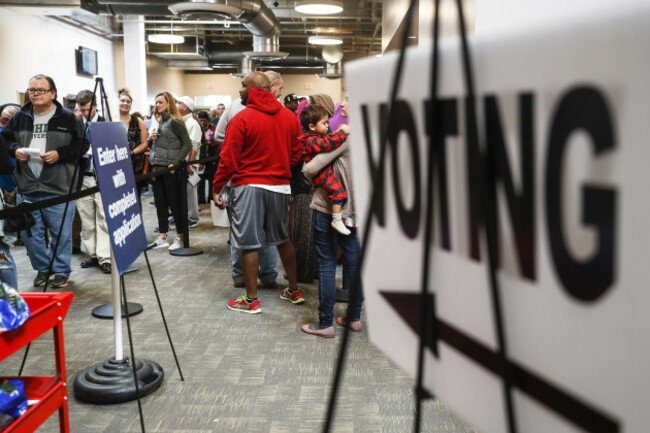
When it comes to following US elections, this isn’t the first rodeo for most people. But if you’re not familiar with it, the maths of the electoral college system is explained in detail in here.
As is increasingly the case in the polarised world of US politics, the winner of the presidency is the one who performs best in the so-called ‘swing states’. These are the states that aren’t firmly in the Clinton or Trump column but could go either way.
In short, the reason the odds of winning are firmly in Clinton’s favour is because she needs to win far fewer of these.
Aided by having some of the bigger states like California, New York and Illinois virtually locked up, Clinton has much less work to do than Trump.
Most predictions have Clinton with about 200 electoral college votes in the bag, 70 short of what’s needed to win the presidency. Trump is further behind with about 157.
Now, back to those swing states. Even assuming that these swing states can go either way, most of them are leaning towards Clinton.
If she wins them, or even most of them then it will be impossible for Trump to reach the White House.
This video shows just how right it has to go for Trump.
For Trump to win, he’ll have to take states like Florida, Ohio and Nevada where polling indicates it could go either way.
He’ll also need to win some states where Clinton appears be winning like Colorado and Virginia.
What it all adds up to is a very narrow route to victory for Trump where in effect everything must right for him on the night.
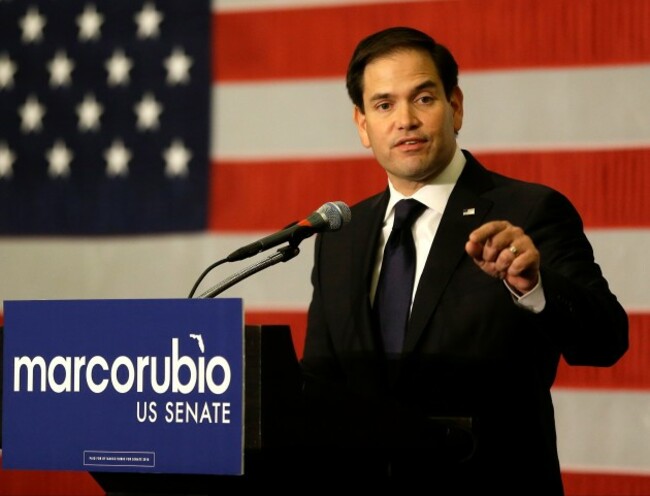
As mentioned above, the presidential race isn’t the only one happening today.
A battle for Congress is also coming down to the wire, with the fate of the Senate teetering on a knife-edge.
Who runs the two chambers is crucial, as bills can easily get stuck, particularly if the leadership does not belong to the same party as the president.
Both the Senate and the House of Representatives are currently under Republican control.
Republicans enjoy a strong 59-seat majority in the 435-member House of Representatives, and most analysts say it would take a so-called ‘wave election’ for Democrats to flip the 30 seats needed to retake control.
Attention falls therefore on the 100-member Senate, where Democrats would need to win a Clinton win and four seats off the Republicans for a majority (ties in the senate are broken by the vice president).

Their chances of getting these rated about 50/50. If they are to get these four turnovers, these are the states you should be looking out for.
Of the nine closest Senate races, only one, in Nevada, is held by a Democrat.
Illinois is likely to flip to the Democrats. Another vulnerable Republican is in New Hampshire. North Carolina and Pennsylvania could tip to Democratic blue, with tougher but still viable battles in Florida and Indiana. Even red-leaning Missouri could be a Democratic steal on a good night.
Loads to play for and keep you awake.
- With reporting by © – AFP 2016

To embed this post, copy the code below on your site














have your say