Sign in. It’s quick, free and it’s up to you.
An account is an optional way to support the work we do. Find out more.
Sign in. It’s quick, free and it’s up to you.
An account is an optional way to support the work we do. Find out more.

COVERING THE EUROVISION in Malmö back in 2024 was a bizarre experience.
That was the year Bambie Thug flew the flag for Ireland, managing to combine, as the week went on, show-stopping performances on stage with a series of increasingly outspoken gestures and comments to the media about the situation in Gaza.
Before the contest even started, protest campaigns had been mounted in multiple countries calling for singers to pull out.
Backstage tensions between the Israeli delegation and other countries were well-documented on social media, and even spilled out into the post-show press conferences.
Contest organisers the European Broadcasting Union (EBU) were accused of not doing enough to support their acts, as the music contest became a lightning rod for protest.
Adding to the sense of chaos, the Dutch singer was sent home after an incident backstage and several performers earned rebukes from the producers after displaying Palestinian symbols during the shows.
After sealing a top 10 finish and freed from any responsibilities to RTÉ at the end of the contest, Bambie Thug excoriated the organisers after the finale wrapped, saying the week had been “horrible” for most of the acts.
“The EBU is not what the Eurovision is,” the Macroom singer said. “Fuck the EBU. I don’t even care anymore. Fuck them.”
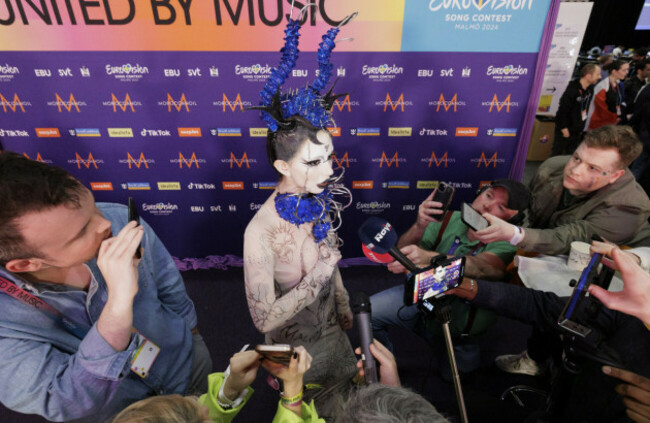
No doubt unnerved by the experience, the EBU brought in multiple measures to give contestants more space and privacy backstage.
The traditional multi-act press conferences that had been a feature of the weekday shows were quietly scrapped. New rules requiring singers to steer clear of hot-button issues altogether now also form part of the contest’s lengthy code of conduct.
So have all of those measures had an impact on the atmosphere here in Vienna?
Absolutely.
That sense of frenetic, anything-might-happen energy is gone. Instead of the artists, senior producers from the EBU and Austrian broadcaster ORF are fielding all the tricky questions at daily press conferences. The acts – even if asked about local protests – aren’t allowed to say anything beyond generalities.
The self-selecting nature of this year’s 35-strong roster is a factor too.
For the most part, the performers taking part in the Malmö contest would have kicked off that process before Israel’s invasion of Gaza in October 2023 and wouldn’t have had a notion of the pressure-cooker experience they’d inadvertently signed themselves up for.
Anyone seeking to represent their country either at Basel last year or in Vienna did so knowing what might lie ahead.
That applies to the fans too.
While there’s no fear of empty seats for the 10,000-capacity shows being held at the city’s Wiener Stadthalle, plenty of Eurovision fans who would have traditionally pencilled a trip to the contest into their calendar are simply staying away this year.
With five countries, including Ireland, boycotting this year’s Eurovision over Israel’s participation – what's the atmosphere like on the ground in Vienna?
— TheJournal.ie (@thejournal_ie) May 15, 2026
We spoke to Euro-Trip host Rob Lilley-Jones for his thoughts.https://t.co/UFgobzJ0JU pic.twitter.com/C9XFfOXUVI
Broadcasters from Ireland and four other countries are, of course, boycotting the contest, and we’re told only a few dozen Irish fans have decided to make the trip. Some Irish Eurovision superfans we checked in with said they’d simply stopped following the contest, for this year at least.
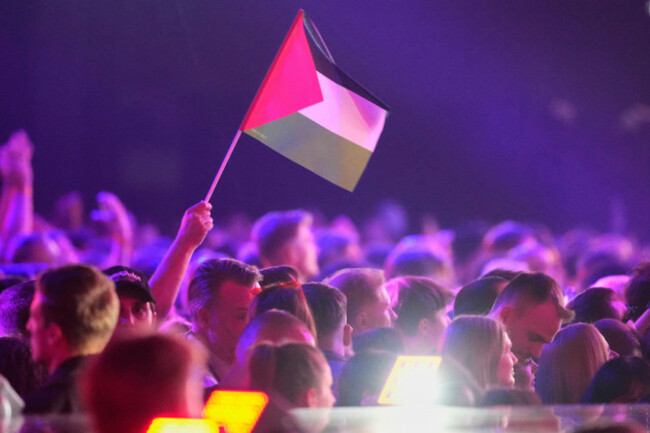
In his latest press conference Martin Green, the song contest director, referred to the boycotting broadcasters as “our five family members” and said he “couldn’t wait for them to come back”.
“But the ball’s in their court,” he added. “I’m sure those conversations will continue.”
Dressed up for a night of partying, excited fans from Liverpool, Melbourne and Malta stopped on their way into the arena ahead of the Thursday night semi-final show to talk of their hopes for their act and speculate on who might win come Saturday.
Most weren’t keen to talk about politics – save for one young Viennese man, David, who said he’d decided months ago he’d only buy a ticket for the Thursday night show as he could be guaranteed Israel wouldn’t be performing.
“I just don’t think that the decision should have been made freely to let Israel be part of the Eurovision this year,” he said.
“I came because it’s a once in a lifetime thing for me, but there’s… In German, we say a ‘bitterer nachgeschmack’ a kind of a bitter aftertaste in your mouth, you know.
“In Austria, especially, it’s a difficult topic, because there’s the responsibility of being an aggressor in the past against the Jewish people.
“I do understand that and that’s an important fact to consider. But there’s a line between, you know, respecting the past and excusing current events.”

To embed this post, copy the code below on your site







have your say