Welcome to our Public Beta Site - What does this mean?
Dublin: 18 °C Wednesday 23 May, 2012

Government proposes ‘far-reaching transformation’ of public sector pensions

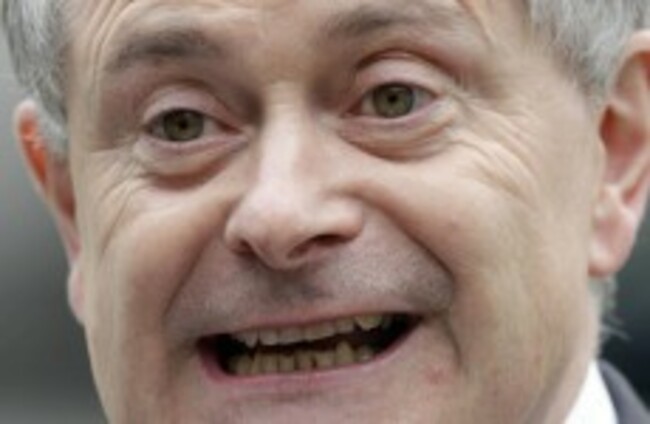
Brendan Howlin
Brendan Howlin
Image: PA Wire/Press Association Images

Updated 7.30pm

CHANGES TO PUBLIC service pensions in Ireland will cut €1.8 billion a year from the State pensions bill according to the government which unveiled plans for reform today.

The changes, announced today by the Minister for Public Expenditure and Reform Brendan Howlin, are to be applied to all new entrants into the public service, who will have their pension calculated on a career average basis rather than on the current final salary at the time of retirement.

The changes have already been criticised by one union.

Under the Public Service Pensions (Single Scheme) and Remuneration Bill 2011, public sector pensions will be linked to the consumer price index rather than the pay of the grade which the person retiring has just left.

A maximum retirement age of 70 is to be implemented.

While the age at which a person can receive a pension will initially be raised to 66 to bring it into line with the social welfare state pension age and it will then rise on a phased basis to 67 and then 68.

Howlin has described the changes as “a far-reaching transformation of the public service pension system,” adding:

This is a fairer approach to pensions; your pension reflects your career average earnings as opposed to your final salary.

The changes have been criticised by the Irish National Teachers’ Organisation (INTO) which said the Bill would force future teachers to pay more into their pensions than they will get out.

“This will mean in effect new teachers will fund the full cost of their pensions,” a statement said adding that the claim of savings of €1.8 billion were “highly speculative”.

The Fianna Fáil spokesperson for public expenditure and reform, Seán Fleming, said the changes had some pitfalls and noted it would be decades before a proper judgement could be made:

“The new single pension scheme for the public service is good in principal but it will be at least 40 years before we know if it is actually good in practice,” he said.

The changes apply across the public sector with new employees in the civil service, education sector, health sector, local authorities, Gardaí, Defence Forces, the regulatory sector and non-commercial semi state bodies all subject to the new rules.

As for the President, Oireachtas members, the Judiciary and the Attorney General and others who earn accelerated pension benefits, the new scheme will provide a doubled rate of accrual together with a doubled rate of contribution of 13 per cent for all new entrants.

Reducing the salary of the judiciary will be the subject of a referendum next month.

The President will continue to receive a pension on retirement from office while anyone who is or was an Oireachtas member prior to the enactment of the Bill retains those benefits and scheme membership if there is a break in their Oireachtas tenure.

The government added that the measure is part of proposals agreed under the EU/IMF bailout programme.

Read Next:

Comments (30 Comments)

  • Joyce Davenport 29/09/11 #
    Report this comment

    W

    Reply
  • Joyce Davenport 29/09/11 #
    Report this comment

    Will this change the age at which serving front line public servants can retire at? My understanding is that certain public sector workers are forced to retire at the age of sixty, resulting in the loss of valuable experience. Can they now continue to work to sixty six or seventy?

    Reply
  • Sean Smith 29/09/11 #
    Report this comment

    Is that really the best photo you could get?

    Reply
  • Ollie Pinion 29/09/11 #
    Report this comment

    WHAT! New teachers will have to fund their own pensions! That’s madness! … what next, people on the dole will have to be unemployed?

    Reply
    • Joyce Davenport 29/09/11 #
      Report this comment

      They have always contributed to their pensions. For some time now they have been contributing far more than most people with private pension schemes. In fact with all the cuts and levy’s imposed on them since the private sector, banks, developers etc. sent the economy down the toilet they have lost around half of their take home cash. Let’s not go there Ollie

    • Jim Brady 29/09/11 #
      Report this comment

      Joyce, public sector pensions are far more generous than private ones, try asking a fanatical advisor about setting up a defined benefit pension for yourself and see how far you get. The fact that teachers now have to pay a comparatively small levy doesn’t mean they’re getting a bad deal

  • Stither 29/09/11 #
    Report this comment

    I believe from reading on rte.ie following the six o clock news that it will be increased until 70 yoa

    Reply
  • Jo Murph 29/09/11 #
    Report this comment

    More lazy teacher bashing in that comment zzzzzzz.

    Reply
  • Conor Byrne 29/09/11 #
    Report this comment

    CAPTION THE PHOTO!

    ”Welcome to hell… where your soul is payable in monthly instalments or if you have no soul to give, we’ll hand you over to NAMA and they’ll help you out”

    Reply
  • Dom Morgan 29/09/11 #
    Report this comment

    Howlin at the moon. Only for new entrants – meaning we will benefit from this measure sometimes in 2050. Just what we need.

    Reply
    • Eoin Faz 30/09/11 #
      Report this comment

      Well spotted. This change will have zero impact on the budget during any of our working lives, country will still go bust :(

  • John Brady 29/09/11 #
    Report this comment

    Looks like they are just dipping the the toe in the water until the Joke Park agreement expires in 2014. Then he can follow through with these changes for all the existing public sector employees as well. The majority of private sector pensions are at the mercy of the markets with the risk of getting less back than you paid in a reality. About time the playing fields started to level out. Interesting to ponder if the public sector pension will be based on the average career earning will this encourage people to work harder and increase productivity? Small step forward today for the taxpayer. Hopefully more to come.

    Reply
    • Cormac Flanagan 29/09/11 #
      Report this comment

      And how would you like a fire fighter or paramedic to increase productivity. Should the firefighter start fires and then put them out or the paramedic mow down people before treating them. Not all public servants are the same.

    • Joyce Davenport 29/09/11 #
      Report this comment

      I thought public servants paid tax the same as the next guy?

    • Cormac Flanagan 29/09/11 #
      Report this comment

      Joyce you not hear. Public servant don’t pay any tax or levies, don’t contribute to our pension and we all sit around for a few hours during the day drinking coffee.

  • Damien Browne 29/09/11 #
    Report this comment

    “This will mean in effect new teachers will fund the full cost of their pensions,” this statement by the INTO is both hilarious and shocking as it displays their utter contempt, welcome to the real world!

    Reply
  • Adam Magari 29/09/11 #
    Report this comment

    I may have misheard earlier in the day, but the proposed legislation will contain another piece of enabling legislation allowing the relevant minister to adjust the pensions of existing public servants after February 2012 should circumstances arise.

    Reply
    • Neil 29/09/11 #
      Report this comment

      They always have the power to reduce existing pensions, by lowering the pay of the existing positions to which the pensions are linked.

  • John Brady 29/09/11 #
    Report this comment

    Cormac I do not refer to frontline services. It is well known that productivity is below par at various levels of the public sector. This is not an opinion of mine. Public sector unions acknowledged this when they signed up for the Croke Park agreement. You will recall the principal agreed aim of this agreement was to produce major productivity improvements in the Public Sector? In return the government agreed not to impose public sector layoffs or further public sector pay cuts despite continuous layoffs and pay cuts in the private sector. Nice deal if you can get it!

    Reply
  • Brian Walsh 29/09/11 #
    Report this comment

    People seem to forget there are two sides to the Croke Park deal, if we deliver, they’re supposed to deliver. Of course when the time comes they’ll argue that this wasn’t done and that wasn’t met, bottom line is they’ll do anything to get out of delivering on their side of the deal. The Public Service HAS seen numbers cut, HAS seen wages cut, all that’s been asked of it has been done.

    Reply
  • Barry Healy 29/09/11 #
    Report this comment

    i love the way everyone immediately jumps on the "how dare you cut front line workers pay&conditions" bandwagon everytime a change is considered! No one wants to see gardaí or nurses or firemen facing cuts but those people are in the minority of the public service. Everytime a debate gets going they’re pushed to the fore to hopefully insight some moral outrage! The government shud remove all the frobt liners from whatever grouping that has them lumped in with mandarins, quangos and assorted paper pushers and be dealt wirh seperately! Oh and by the way I know people a few years off retiring who have been paying into private pensions for years only for the value to disappear with all the market turmoil that has been going on effectively meaning they are gettin out less than went in! That is called the real world, god forbid that public and private employees shud both have to exist there!

    Reply
  • Pat Mullins 29/09/11 #
    Report this comment

    How can government save 1.8 billion euros on future public servants pensions when there is an embargo on recruitment? This is as useful as an underwater hair dryer. Government still ignoring elephant on the room.

    Reply
  • Frank2521 30/09/11 #
    Report this comment

    People should be paid for work not for time office the private sector. For a start get rid of sick days altogether and if people are sick claim from the sickness benefit like the rest of the private sector. No more sick days – it is sick and absurd.

    Reply
    • Cormac Flanagan 30/09/11 #
      Report this comment

      Ah after three days public sector workers do claim sick benefit. Saying that I must say it’s one thing I won’t try and defend is sick in the public sector. Ok if they have an actually illness bit there is a few that are just taking the piss.

  • David Higgins 30/09/11 #
    Report this comment

    Teachers paying for their pensions like the rest of us, bout frickin time!

    Reply
  • Frank2521 30/09/11 #
    Report this comment

    China have recently invested hugely in robotics. One company has 110,000 robots and employes 1.5 million in their group of companies.
    They recently started to replace the production line workers as the robots are so much more efficient and no sick days no pensions etc etc.
    When will the rest of the world wake up as employment’s a thing of the past for a lot more people. The company I am referring to is an IT company which produces for all the big US companies.
    The government are trying to incentivise these guys with grants for employment. Hello. Wakie Wakie.

    Reply
  • Barry Healy 30/09/11 #
    Report this comment

    robotic teachers? don’t think we’re quite there yet. also chinese companies treat their employees like robots anyway and doubt they’ve ever heard of pensions let alone sick leave!

    Reply
  • Kieran O Flynn 30/09/11 #
    Report this comment

    All this talk of public servant pensions being readjusted, but all there doing is attacking the small people in society again.. Notice how theres going to be no reform with politicians who can still claim 3 or 4 different pensions, fair enough claim a ministers pension, but not each level of pension you were entitled to before that.. how much is thus legacy system costing us??

    Reply

Add New Comment