Sign in. It’s quick, free and it’s up to you.
An account is an optional way to support the work we do. Find out more.
Sign in. It’s quick, free and it’s up to you.
An account is an optional way to support the work we do. Find out more.
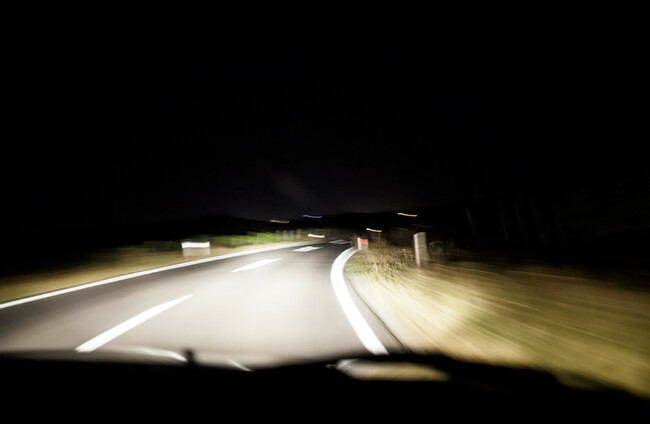
HIGH-BEAMS OR full headlights are the really bright lights at the front of a car that are turned on by pushing or pulling the indicator stalk away from or towards you until it clicks. (On some newer cars, they’re automatically operated.)
Whenever your full-beam headlights are turned on a blue warning light shows on the dashboard.
High beams are used to increase visibility when it is dark. With dipped headlights you should be able to see about 30 metres (about 7 car lengths) ahead of you, however, with your high beams on you should be able to see 100 metres (about 25 car lengths) on an unlit road.
The RSA advises that you should always use full headlights when driving at night.
However, you should NEVER use your full headlights in the following situations:
However, because high beams are so bright, you need to switch to your low beams within 150 metres of oncoming vehicles and within 60 metres of following a vehicle so you don’t blind the driver ahead of you.
It’s hard to guess such a precise distance, so use your common sense and basically switch off your car’s high beams as soon as you see the tail lights of a car in front of you or the headlights of a car approaching you.
If an oncoming vehicle has its high beams on and doesn’t turn them off, avoid being dazzled by the light by simply look toward the left at the edge of the road until they have passed and do not stare at their lights.
If the driver behind you does not dip their high beams while following you, flick the switch on your rear view mirror to night mode. If their lights are still too bright, turn the rearview mirror up toward the roof or pull over in a safe area and let them pass.

To embed this post, copy the code below on your site





have your say