Sign in. It’s quick, free and it’s up to you.
An account is an optional way to support the work we do. Find out more.
Sign in. It’s quick, free and it’s up to you.
An account is an optional way to support the work we do. Find out more.
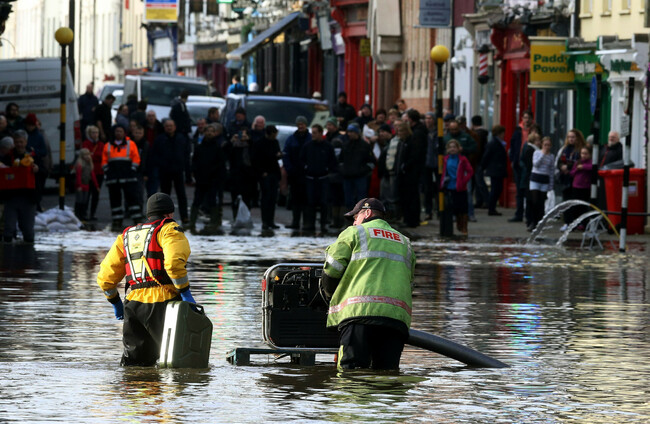
CITIES INCLUDING DUBLIN, Cork, Derry and Waterford will be much more severely affected by climate change than previously thought, according to a newly released study.
The study, by Newcastle University, analysed changes in flooding, droughts and heatwaves for 571 European cities using all climate models for the first time.
The researchers gathered results for three possible futures which they called the low, medium and high impact scenarios.
Flooding
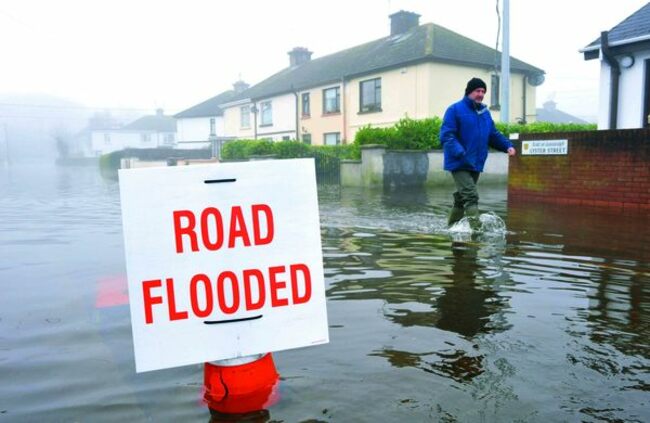
The study shows that even the most optimistic, low impact, scenario predicted that cities in northwestern Europe will see an increase in flooding from rivers, with Ireland and the UK worst affected.
Under the low impact scenario Derry will be one of the worst hit cities on the continent along with Chester, Carlisle, Aberdeen and Glasgow.
Derry is also predicted to be one of the worst affected under the high impact scenario along with Cork, Waterford, Wrexham, Carlisle and Glasgow.
The model predicts that Cork, Waterford and Derry could see more than 80% increases on peak river flows.
Even in the lowest case scenario, 85% of UK cities with a river are predicted to face increased river flooding.
Dublin also had the dubious honour of making it onto the list of capitals that are likely to experience the most extreme rise in flooding along with Helsinki, Riga, Vilnius and Zagreb.
The study, which was published in the academic journal Environmental Research Letters, also shows:
The study’s lead investigator, Professor Richard Dawson, says the implications in terms of how Europe adapts to climate change are far-reaching.
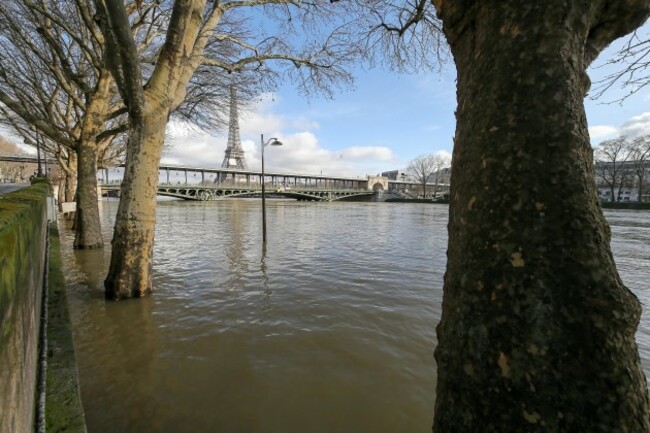
“The research highlights the urgent need to design and adapt our cities to cope with these future conditions,” he said.
“We are already seeing at first hand the implications of extreme weather events in our capital cities.
In Paris the Seine rose more than four metres above its normal water level. And as Cape Town prepares for its taps to run dry, this analysis highlights that such climate events are feasible in European cities too.
“Breaking point”
Cities in southern Europe will see the biggest increases in the number of heatwave days, while central European cities will have the greatest increase in temperature during heatwaves.
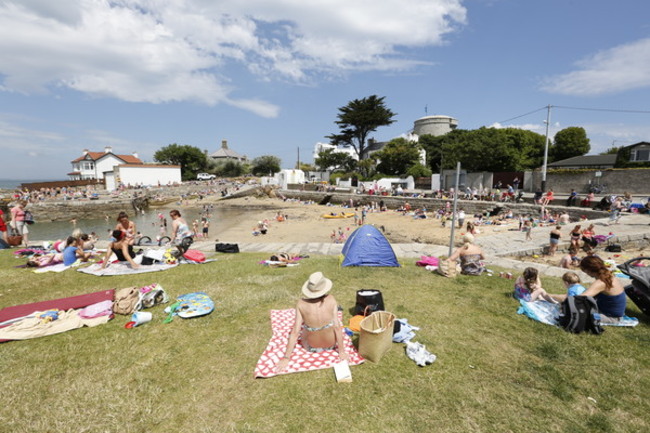
The increase could be up to 14°C according to the most drastic predictions.
During the period from 2051-2100 cities in the south of Spain and Portugal are expected to experience droughts more than twice as bad as during the fifty years from 1951-2000.
The high impact scenario predicts that southern European cities may experience droughts up to 14 times worse than today.
“Although southern European regions are adapted to cope with droughts, this level of change could be beyond breaking point,” Dr Selma Guerreiro, the study’s lead author, explained.
Furthermore, most cities have considerable changes in more than one hazard which highlights the substantial challenge cities face in managing climate risks.

To embed this post, copy the code below on your site














have your say