TheJournal.ie uses cookies. By continuing to browse this site you are agreeing to our use of cookies. Click here to find out more »
Dublin: 16 °C Tuesday 21 May, 2013

London coroner to publish findings of July 7 inquests

The findings of the inquests into the terrorist bombings on July 7, 2005 are due to be published this morning.

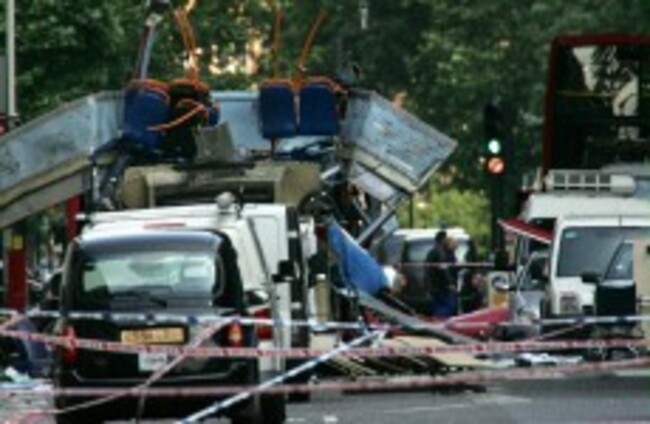
The wreckage of a double-decker bus with its top blown off and damaged cars scattered on the road at Tavistock Square in central London after the 7/7 bombings of 2005.
Image: SANG TAN/AP

A LONDON CORONER will this morning publish her findings into the deaths of 52 people who died in the July 7 terrorist bombings in 2005.

The publication of the reports come after five months of public hearings on the deaths, which occurred when Islamic extremist suicide bombers detonated their devices on three London Underground trains and a packed commuter bus.

Lady Justice Hallett is expected to record verdicts of unlawful killing in all 52 cases, Channel 4 News reports, while also making a ruling on whether separate inquests should also be held for the four bombers.

Hallett has also been urged to consider whether firefighters should have more discretion in deciding when they can proceed to an incident – in light of current protocols which meant firemen were forced to wait before they could approach the wrecked train carriages.

Current rules mean firefighters are required to stand back in case a disaster zone could be the site of a chemical or biological attack – but survivors making their way out of the train tunnels showed no signs of any such attacks.

The BBC adds that relatives of those killed have also asked for improved training for emergency workers, and have supplied a list of nine alleged failings by MI5 and police investigating the attacks.

Among the problems were a shortage of vital equipment – with radio equipment not working underground, for example – and the failure of the security services to share colour CCTV images of the bombers with their superiors before the attacks.

The outcome of the findings will therefore be of major interest to MI5, which may be told it could have taken steps to prevent the bombings. MI5 has previously defend its actions in the run-up to the bombings.

The blasts hit London only a day after it was announced as the host city of the 2012 Olympic Games.

Read next:

Add New Comment