Sign in. It’s quick, free and it’s up to you.
An account is an optional way to support the work we do. Find out more.
Sign in. It’s quick, free and it’s up to you.
An account is an optional way to support the work we do. Find out more.
LAST UPDATE | 30 Jun
THE GOVERNMENT HAS signed off on its one-off rural and Gaeltacht housing draft guidelines.
The new planning statement, which has been described as the “biggest overhaul of rural housing rules in two decades”, will make it easier for people to build one-off homes in their locality.
The government introduced the new document to provide more clarity and consistency on where and how, new housing in rural and Gaeltacht areas can be developed nationally.
Cabinet signed off on it today, meaning it can now move to environmental assessment under relevant EU Directives, prior to its approval by government.
The new rules will no longer allow local authorities to impose restrictions on ribbon and backland development or put caps on the number of homes that may be built on a farm.
Local authorities should not include “overly restrictive” rural housing rules in their development plans, according to the new plan, which sets out that each application for a house in rual Ireland should be considered on its own merits.
The policy also advises councils against setting prescriptive rules such as fixing the limits on how many houses can be built in an area.
Minimum road frontage requirements are to be scrapped, as are minimum site sizes for rural houses to be built.
The policy also says that local plans should not set fixed definitions of who counts as a “farmer” or what a “farm” is.
Rural homeowners will also be permitted to build a second one-off house on their land to facilitate downsizing under the new guidelines.
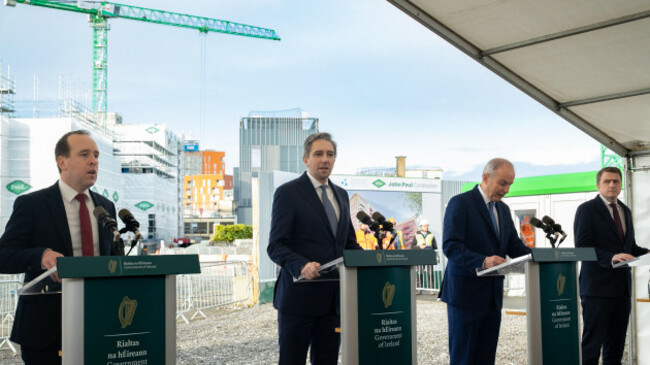
Housing minister James Browne said the new guidelines “strike the right balance between supporting rural communities, ensuring vibrant rural towns and villages and protecting the character and sustainability of our countryside.”
“We are removing arbitrary and prescriptive local rules and ensuring each application is assessed fairly on its merits,” Browne said.
“Crucially, this will end the current Eircode lottery where a house may be permitted in one part of the country while down the road in a neighbouring county, permission would be denied for the exact same development.”
Restrictions around building in rural Ireland have been the source of frustration over many years, according to Tánaiste Simon Harris.
The policy approach which was approved today will allow new rural housing for people who “genuinely need to live in rural areas, while also preventing the uncontrolled spread of housing from nearby towns and cities into the countryside”, it is understood.
Changes to the guidelines have been floated for well over five years now, but today a memo was brought to cabinet on the national planning statement draft which will replace the existing Sustainable Rural Housing Guidelines for Planning Authorities, 2005.
The new rules around building one-off homes in rural Ireland will be applied consistently across the country.
Browne has said the country-wide policy approach will override local policies that can often see a post-code lottery of sorts where different standards and rules are applied in different counties.
Speaking to reporters this morning, Browne said it’s been over two decades since the previous guidelines came in.
“They’ve taken on a life of their own in counties and local authorities across the country, to the point where even moving across the border from one local authority to another almost feels like you’re going to a different country,” said Browne.
He added that people in rural Ireland previously faced a “laborious and costly process” in “trying to figure out exactly what is needed to be available to live in their own local community”.
“It doesn’t matter whether you’re in Waterford or Donegal, the rules will be the same, and that is essential.”
He added that the new rules are “not a free for all, it is about bringing balance” and a “sensible approach”.
Browne also said there was “perhaps too much of a focus on rules and regulation” and that the changes will reduce costs.
Meanwhile, Browne said the government “is not looking at targets here” when asked how many homes the government expects the changes to deliver from these changes.
He added that “we are seeing a shift change in terms of housing delivery, but we need to accelerate it”.
“I’ve been trying to achieve that through simplification and standardisation to make things fair and clear, and that’s what the rural housing guidelines are all about.”
There has been lots of criticism about this policy shift from an environmental perspective, however the government argues the new planning rules will adhere to Ireland’s climate and environmental commitments.
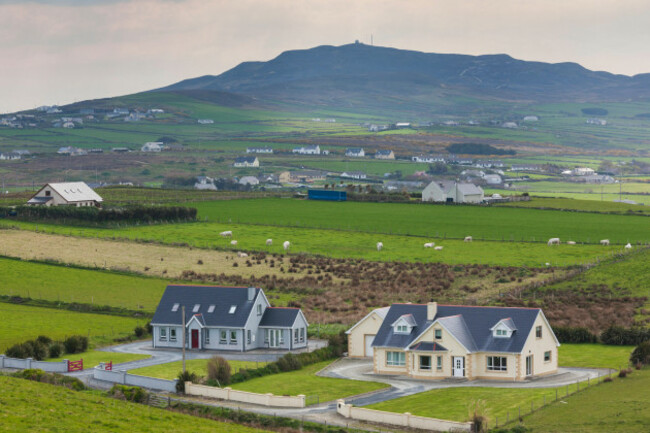
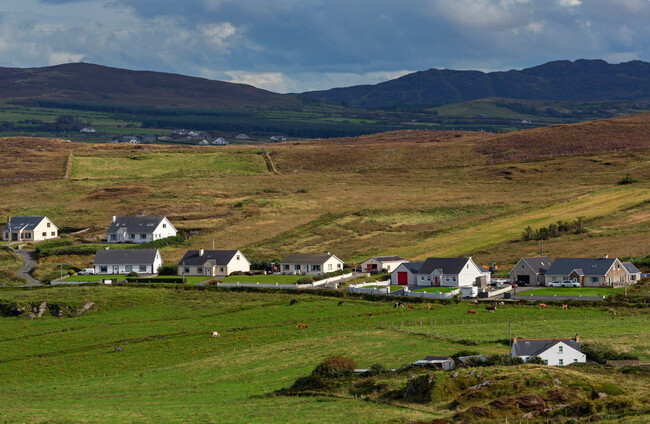
‘Rural areas’ in the draft planning statement will be defined as rural settlements with a population under 1,500 population at the last census with the definition also to include the description of “the wider rural countryside”.
The draft statement explains how someone can show they have a “local need” to build a house in certain rural areas.
A person looking to build a new single rural house must show a social need to live in the area, where a person can display they have strong local ties.
They must have lived in the rural area for a long time (up to 10 years, either all at once or over time). The site for the new house should also be in or near that area — generally up to 10km from where they currently live or originally come from.
A person can also display an economic need. This route applies to people whose main job depends on living in a rural area, and they need to live close to their workplace.
This includes jobs like farming, equine, forestry, working in essential services (like local schools), or people starting or running a rural business.
There is also some flexibility in how “local social need” rules can be applied within a permitted range in different rural areas, depending on how much pressure the area is under in terms of development.
A more relaxed social need criteria can also be applied in some rural areas, where a person must live within 10km of the site and must have lived in the area for at least 7 years.
In Gaeltacht areas, the person must live within 3km of the site and must have lived there for 10 years.
However, this can be relaxed to 5 years for people who speak Irish and can show a local need. It is understood this is to help protect and support the Irish language in these areas.
In most cases, the new house must be the person’s first home built in that rural area, except in a few limited situations.
Planning permission applicants in the Gaeltacht will be required to take an Irish language exam equivalent in standard to the Leaving Certificate oral exam, according to a government source.
It’s understood the government will provide guidance to county councils with Gaeltacht areas in their jurisdictions to set aside houses for Irish speakers in new housing developments.
Irish speakers moving from one Gaeltacht area to work in another Gaeltacht area will have an advantage when applying for planning permission in the new area under these policies.
Irish speakers in Gaeltacht areas have argued that they’ve been excluded from the housing market in their own areas for years because of inflationary pressure caused by the construction of holiday homes.
Those that are successful in getting planning permission will have conditions attached to ensure the house is going to be used as the permanent main home for at least 10 years. There will also be a stipulation that it cannot be used for short-term rentals during that time.
In addition, as mentioned, in some special cases, a person who may need to build a compact house beside or close to their existing home, will be permitted to do so.
This will generally be for those that wish to downsize to a smaller property on their land, with health issues cited as an exceptional reason why this will be allowed.
The new policy document also seeks to distinguish between high amenity and scenic areas.
In highly sensitive scenic and amenity value areas, particularly those places with national or international conservation protection, new houses will only be allowed in exceptional cases.
High-amenity areas that have coastlines, river valleys, and lakesides that are also scenic, but don’t have a conservation designation, can have new houses built on the land, but the government says it will be carefully managed.
Government sources say the draft policy approach aims to strike a balance between allowing development and preventing urban sprawl around cities and towns.
It says that where services and infrastructure already exist, building on land between existing houses and building behind existing houses, should be supported, as long as this does not block future planned growth, infrastructure or transport projects.
A number of bodies have questioned the loosening up of one-off housing rules, with the Climate Change Advisory Council and the Irish Planning Institute, arguing for tighter restrictions on one-off housing.
The Economic and Social Research Institute (ESRI) has also noted that Ireland’s emissions reductions are particularly difficult to meet “partially due to a large proportion of the population living in rural one-off housing”.
- With reporting from Concubhar Ó Liatháin

To embed this post, copy the code below on your site

















have your say