TheJournal.ie uses cookies. By continuing to browse this site you are agreeing to our use of cookies. Click here to find out more »
Dublin: 6 °C Thursday 23 May, 2013

Mind the gender gap: Ireland’s rating is on the rise

Ireland climbs two places on the Global Gender Gap Index.

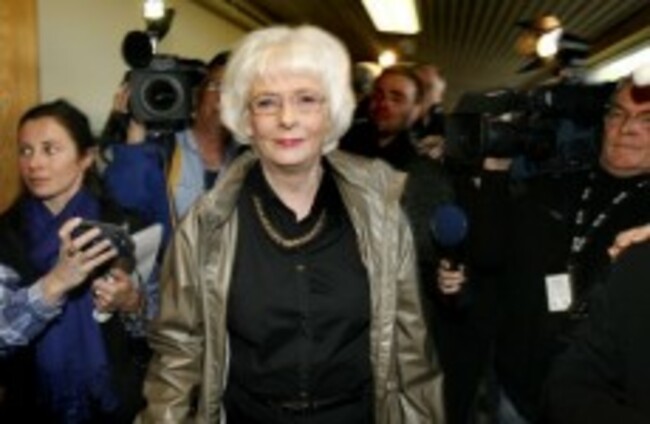
Icelandic Prime Minister Johanna Sigurdardottir

IRELAND HAS CLIMBED two places in the World Economic Forum’s gender equality league table to sixth place.
The Global Gender Gap Report measures equality in the areas of politics, education, employment and health.

Ireland still ranks behind Iceland, Norway, Finland, Sweden and New Zealand, but is now ahead of Denmark, Switzerland, Germany, Belgium, France and the UK.

Klaus Schwab, founder and executive chairman of the World Economic Forum told the BBC:

Low gender gaps are directly correlated with high economic competitiveness. Women and girls must be treated equally if a country is to grow and prosper.

When the score was broken down into detailed rankings, Ireland was awarded a perfect score for equality in education attainment.

The Republic did less well in the category of political empowerment, achieving a seven – and dropped down again in terms of economic participation and opportunity to 25.

The biggest drop was in terms of health and survival, for which Ireland scored an 89.

Meanwhile, the United States has reached the top twenty for the first time ever since the rankings began in 2006, due to a higher number of women in President Obama’s administration and a reduction in the country’s gender pay gap.

In contrast France fell dramatically from 18th place to 46th place in the space of just one year, which WEF blames on the decline of women holding ministerial positions within the French government.

Saadia Zahidi, WEF Director, says its is encouraging to see particular countries making progress; for example Saudi Arabia, which ranks very lowly on the index, is actually making some of the fastest progress relative to its previous performance, she said.

Overall, more progress is needed in terms of political participation, according to Zahidi:

93 per cent of the global gap on education has been closed. Over 96 per cent of the global gender gap on health has been closed. On the other end, however, only about 60 per cent of the economic participation gap has been closed, and only about 16 per cent of the gap on political empowerment.

So, if women are now starting to be as healthy and as educated as men, it makes sense to now be ensuring that they’re part of the economy and part of decision-making processes.

See Zahidi’s full interview on the report below.


Top 20

1. Iceland

2. Norway

3. Finland

4. Sweden

5. New Zealand

6. Ireland

7. Denmark

8. Lesotho

9. Philippines

10. Switzerland

11. Spain

12. South Africa

13. Germany

14. Belgium

15. United Kingdom

16. Sri Lanka

17. Netherlands

18. Latvia

19. United States

20. Canada

Read next:

Comments (4 Comments)

  • When I read this earlier, I assumed it was a product of the recession – as Ronan says, more women are leaving the home to work now, whether through necessity or choice. But it seems the study looks at a number of different factors that have an impact on women’s lives. I wonder if childcare provision, or the availability of healthcare were among them? If so, the Irish ranking is even more surprising.

    I wonder whether many Irish women would feel they have it better than their counterparts in Denmark, Germany, Switzrland and the UK?

    Reply
  • given that our political discourse is dominated by the bogey-men of Church/state and to some
    extent Broadcast meeja, I would say the figures look grand with the inevitable rant that NO
    the top-tables are still male-dominated. The Dáil is a mess imo- with perfectly qualified
    women relegated to lobbies and NGO’s whilst some badly managed young male
    politicos dominate media through spurious use of social-media and evident HUGE budgetary
    PR allowances.

    This survey is but a skeltal structure which ignores that Ireland is driven by a conservative
    group of males who put issues like blasphemy above the need for Child Protection Referenda,
    or ignore criminal justice issues such as rape to forward what appear to be idiotic and money
    -wasting vanity projects.

    lest I continue this rant any further, I’d just like to look at the portfolios that women cabinet
    members carry, and ask how long it is since women held Justice/policing/legal/local
    governmental portfolios ?

    Tokenism is rampant and has been for years. so we have women workers but not women
    who drive political and media discourse- with honourable exceptions. I am interested in
    who will be rolled out to address the news on the media- the minister for equality, who
    is numbered amongst those who reject gender-quotas ? or the Minister for Education
    who does not like adding her ideas to the political melt ??

    Reply
  • Keep a small notebook on you at all times, simply because you never know when an idea will pop into your head. An concept can come to you any time, such as when you’re on the train, walking via the park, or on an airplane, and you might not have anywhere to log the concept. I was once walking down the street, and saw this boy who looked so forlorn, and I took a notebook, and when I got onto the bus, I took out my notebook and began composing a back-story to the boy — why was he so upset? What happened to make him upset? From that, I got several ideas for different stories, 1 of which I’m done with, and 1 that might become a novella. If you have a notebook and pen or pencil on hand, you are always close to some thing where you can log everything that comes from your mind. Ideas can come at any time, so it’s good to be prepared for a flash of genius that will inevitably come.

    Reply
  • Is this a gender gap, or a women’s gap? Conceivable, gender gap could easily go into reverse, not as far-fetched as it sounds when one considers:
    (1) That among the 25-64 population, unemployment in the male cohort least affected by the recession (the eldest) is higher than among the most affected female cohort (the youngest)
    (2) Educational attainment is most certainly not “equal”, with girls performing significantly better than boys at secondary and increasingly tertiary education.
    I’m not for a minute arguing this is a woman’s world (to borrow from Mary Byrne!), but rather if this is a Gender Equality report, rather than just a Women’s Disadvantage Report, it will have to cut both ways. Ireland’s education score suggests that it is the latter, despite its name.

    Reply

Add New Comment