TheJournal.ie uses cookies. By continuing to browse this site you are agreeing to our use of cookies. Click here to find out more »
Dublin: 8 °C Thursday 23 May, 2013

National Breastfeeding Week: Irish breastfeeding rates below European neighbours’

The HSE says this year’s event will focus on the importance of breastfeeding for the health of children and mothers, and highlight how rates of breastfeeding in Ireland fall way below those of other European countries.

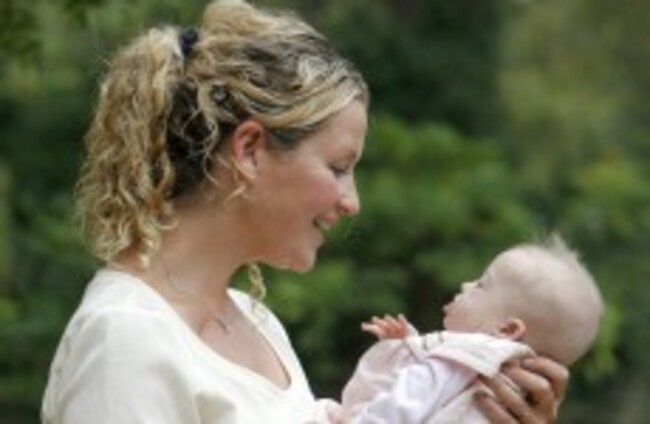
Five-month-old April Coveney and mother Therese are pictured as part of National Breastfeeding Week
Image: Mark Stedman/Photocall Ireland

NATIONAL BREASTFEEDING WEEK 2012 kicks off today, with the HSE has highlighting recent data from the ESRI which shows that breastfeeding rates in Ireland are well below those of the our European neighbours.

Five out of every 10 babies born in Ireland are breastfed, in comparison to eight out of every 10 in the UK.  Meanwhile, across Europe on average nine out of every 10 babies born are breastfed, with almost all babies born in Norway, Denmark and Sweden being breastfed.

Ireland also displays regional variations in breastfeeding rates:  six out of every 10 babies born in Dublin City and County, Cork, Galway, Meath, Waterford and Wicklow are breastfed – but fewer than four out of every 10 babies born in Limerick and Donegal are breastfed.

“Our current breastfeeding rates remain much lower than those in Britain or across Europe. However, more and more mothers in Ireland are choosing to breastfeed and our breastfeeding rates are gradually improving year on year,” commented Professor Michael Turner, Professor of Obstetrics & Gynaecology, at the start of National Breastfeeding Week. “We need to support more mothers to breastfeed and to breastfeed for longer, because breastmilk not only protects infants from childhood illnesses, it also contributes to long-term health”.

The theme of this year’s National Breastfeeding Week, which runs from Monday 1 October to Sunday 7 October, is ‘Good Health begins with Breastfeeding’, and will focus on the importance of breastfeeding for the health of children and mothers.

The HSE cites “extensive international research” which it says demonstrates that breastfeeding gives health protection to both the baby and mother. It says that children who are not breastfed:

  • Are more likely to develop ear, nose and throat infections
  • Are more likely to develop gastroenteritis, kidney and chest infections
  • Have a greater risk of obesity and of developing diabetes
  • Have an increased risk of sudden infant death syndrome (SIDS)

The HSE says breastfeeding also helps the women by helping to protect against ovarian and breast cancer, as well as helping new mothers to maintain a healthy post-pregnancy weight.

Siobhan Hourigan, National Breastfeeding Co-Ordinator with the HSE said:

Many mums tell us that when they were pregnant they thought about breastfeeding because of the health protection it would give their baby, but weren’t sure they could do it. We know that with the right support mothers can breastfeed successfully for as long as they want to. Those Mums now tell us that they continue breastfeeding because they want to maintain the health protection as well as enjoying other aspects like the convenience of breastfeeding and how it helps with soothing and comforting their baby.

The HSE says mothers who are exclusively breastfeeding – ie feeding their baby only breastmilk – upon leaving hospital tend to breastfeed for longer than those who use a combination of breastfeeding and other feeding.

Saying that the “most health protection for both baby and mother is gained from exclusive breastfeeding and from breastfeeding for a longer period of time”, the Department of Health and the HSE say they recommend exclusive breastfeeding for all infants for the first six months.

From six months, as other foods are introduced, breastfeeding can continue up to 2 years of age or older, says the HSE.

Many events will take place across the country to mark National Breastfeeding Week 2012:

  • Monday 1 October: ESRI in partnership with HSE will hold a half day conference ‘Breastfeeding in Ireland 2012: Consequences and Policy Responses’.
  • Tuesday 2 October: launch of the Mother-to-Mother 1,000 Days project by Concern, see www.concern.ie for more details.
  • Saturday 6 and 7 October: CUIDIÚ Parenting Conference takes place in Ballincolig, see www.cuidiu-ict.ie for more details.

Mother to mother support is a real feature of breastfeeding and parenting support in Ireland, and can be found at a local Public Health Nurse, La Leche League or CUIDIÚ breastfeeding and parenting support group meeting. Details of groups in each county are available on www.breastfeeding.ie or by calling 1850 24 1850.

Read next:

Comments (67 Comments)

  • I think the HSE can spout all the statistics in the world but the fact of the matter is that breastfeeding rates in Ireland are not going to increase unless mothers are given the support they need after the birth. Sure at ante-natal classes it’s all ‘breast is best’ and encouraging and brilliant and wonderful but many, many friends of mine have given birth and then been left to their own devices. No help. No support. Not even a glance from a midwife or lactation expert. One pal of mine was, in her words, ‘literally crying out for help’ to get her baby to latch and feed and was told by midwives that there was a meeting for breastfeeding mothers that she could attend that would help her. The meeting was in one week’s time. What was she supposed to do for that week? Listen to her child scream for food?

    Let’s get real here. Supports for breastfeeding mothers in Irish hospitals are woeful inadequate. There isn’t the staff, the time or the support. So the HSE and the Department of Health can pay lipservice to breastfeeding all it wants – unless these bodies are going to invest cold hard cash in improving staffing levels, in paying for lactation consultants to visit new mothers and in providing actual supports to mothers, then their words are meaningless.

    I’m not a mother myself, but I support 100 per cent breastfeeding mothers. And I agree wholeheartedly that they should be encouraged and supported to feed in public and feel comfortable doing so. It absolutely does normalise the practice which is brilliant. But unfortunately that won’t be enough if the supports and funding is not there in the first place.

    Reply
    • Just to clarify, I personally NEVER felt guilty for not breastfeeding…but you do hear that some women are made to feel guilty!

      Reply
    • well I had great advice and help in UH Galway while in, such lactation classes were twice a day as well as midwives who were doing rounds. suppose I’m thankful such resources were in place.

      I do know some of the women who were trying to breast feed didn’t not have their heart in it from the start and gave up very easily. each to their own though… I continued for 8 months… no bottles, no sterilising, hassle free, happy days!

      Reply
  • Education is hugely important, but I also think it almost needs to reach a critical mass.
    I surprised some of my peers by breastfeeding – they hadn’t considered it, and often hadn’t known someone else who had successfully done it. The more that people are (ahem) exposed to breastfeeding as normal practice, the more likely they are to consider it. At the end of the day, no matter what the doctor tells them, they will do what they see as normal. The more women who breastfeed, and do so in public places, the more normal it becomes and the more accessible it seems to people who are perhaps not educated fully in the benefits.

    Reply
    • I think you’re right with the whole “if it’s the norm” thing – I’d seen my mother breastfeeding my younger siblings so when I had my son it was just how I assumed I’d be feeding him, even when we had a few hiccups at the start. Also I fear a lot of education can either smack of paternalism (“now now little woman, here is how you must feed your child” ) and/or isn’t much use when not backed up with practical help.

      Reply
    • I found when i had my first and i said i was breast feeding, people were shocked. It was like it was a taboo, I was 19 and mom openly talked about us kids being breast fed so i thought nothing of it.

      But i still feel many view breastfeeding as taboo.

      Reply
  • I fed my 3 for different lengths of time the longest one being 10 months. I am not a breastfeeding pusher – if my friends have questions I am happy to help but if they choose bottle feeding I support them and again happily answer any questions. It is sad there is not a greater uptake in breastfeeding however I do not agree with mums esp 1st timers being bullied and made to feel less of a mum at a time when they are already extremely emotional and in alot of cases self doubting. I was lucky to have a very supportive PHN when I had my first child – not everyone is so lucky :)

    Reply
  • Well I had my baby in an Irish hospital and the breastfeeding support was woeful, it was actually the opposite of supportive, I am still not sure if what I experienced was actually abused.

    Reply
  • Breastfeeding my son was the best decision I ever made for him & me. I agree it is a personal choice and would never make any formula mum feel guilty as I formula fed my first born a decision which I regret now. I consciously made a decision early on in my first pregnancy not to breastfeed just because of the whole “taboo” associated with BF, nobody in my family nursed nor did any of my friends and to be honest I was one of those onlookers who thought it odd & weird, basically I didn’t have that natural “urge”. During my latter pregnancy however I had colleagues and friends all who started breastfeeding and being surrounded by the idea it did became somewhat the norm to me. I enrolled in breastfeeding support groups, attended classes in Holles St, bought books signed up to online BF forums basically I done everything I didn’t do on my first pregnancy. I went looking for as much help and information I could get my hands on. As I said my only regret was not having this urge and want in me in my first pregnancy but I suppose it was just how I felt at the time and both my children are fit and healthy now (while I admit my first had many stints of gastric throughout her first 2 years who knows if these could have been limited or prevented had I breastfed her) There will always be a debate on this topic and having experienced both sides of the coin I have to admit without a doubt BF is for me and I would always encourage it if the urge and want to do it is there. Good luck to any out there embarking on this journey albeit breast or formula.

    Reply
  • Breast feeding we all know is best
    But isn’t always successful for every woman so those who don’t / can’t breast feed shouldn’t be made feel bad
    Having said that it would be great if when women are feeding in public that men ( not all men but there are some) would learn to contain themselves instead going around with their eyes popping out of their heads

    Reply
    • I breastfed all three of mine and never once noticed men’s eyes popping out of they’re heads! As natural as breastfeeding is some women arent as comfortable ‘popping’ out a boob, if you don’t wanna cover up that’s great and if you do there are loads of handy covers to let you feed baby without feeling exposed.
      I think the only way to encourage first timers to breastfeed is to have more midwives dedicated to helping new mothers get started. Maybe 2 midwives on call to visit new mothers everyday, help with the latching on, reassure mothers that they are doing it right and offer support. By the end of my stay in the Rotunda I was the only one in a 4bed unit breastfeeding….two had given up after 24 hours- tiredness, hormones, uncertainty whether or not the baby was getting enough milk were all given as reasons. The nurses looking after us were rushed off their feet so to me a dedicated support system would be very useful.

      Reply
  • Some attitudes towards breastfeeding are terrible in Ireland- I have experienced it first hand! Not nice- very damaging indeed especially for a first time mum. Hooray for the support given it’s a postive plus.

    Reply
  • Surely it’s down to education of first time mothers at ante-natal classes and the support structures being available post birth?

    We attended Holles Street recently and had breasts shoved down our throat, so to speak. This was followed up with support in the community and recommendations on what cafes etc are ok with public feeding. Women need to feel that they can do this without being hassled, some people in the older generation seem to still have a problem with this even though there are obvious health benefits for the little person involved and they’re less likely to turn into sumo babies.

    Reply
    • Tell them to do it at home I don’t want to see there t….

      Reply
    • This is another advantage to having gay parents rather than straight. The breast feeding debate never arises.

      Reply
    • Ken have you considered seeing a chiropractor? If you have some sort of muscular issue that stops you from turing away then maybe you should get it seen to. It may be psychosomatic, see a shrink while you’re at it.

      Reply
    • Ken you were never breast fed I take it. Oh & by the way neither was I. My 4 children were breastfed & their mother was as discreet as could be when doing so. However the amount of neanderthals like yourself including family members making stupid comments was eye opening. The only thing we say about it now is our kids are the proof of the benefit & it was worth the hassle. If you want whats best for children then you too will put up with this.

      Reply
    • Breast is best. Obviously not all mothers are able and that’s just the way it is and it can’t be helped, but if you are able, the studies all show that breastfeeding is far better for babies, lowering the risk of obesity, boosting their immune systems and feeding their brains.

      Reply
    • Ken the troll was clearly not breastfed. What an appallingly uneducated and ignorant comment. Men go topless all the time and he is complaining about seeing a woman’s breast? Seriously??? She is feeding her baby you eeejit!

      Reply
    • I am neither uneducated or an eeejit. I just think there is a time and a place. If u have to go out and feed the baby then why not use a breast pump?

      Reply
    • You are clearly both. Do you know that your breasts hurt and leak when you hungry baby cries? Use a breast pump so as not to offend you?! What a joke. How would you like aching breast just so as not to offend neanderthals like you? I hope breastfeeding women everywhere whip out their boobs and offend you.

      Reply
    • ken

      it’s not that simple, I couldn’t my baby refused to take a fake nipple, she wanted the real deal.

      Reply
  • siobeli 01/10/12 #

    I find the maternity hosp I go to very informative, breast feeding class in ante class, plus they do breastfeeding classes for those pregnant or had baby very regularly with no need to make an appointment, there are numerous books, YouTube videos, new mum forums on the net, and support classes in the community. There are women who want to breastfeed and can’t due to a very difficult birth or other health issues
    The education is there if wanted!

    But it’s an attitude, a lot of woman don’t want to feel like ‘a cow being milked’ (this has been said a few times to me), or as one friend said to me recently she wouldn’t bother breastfeeding as she would want to be able to get back drinking ASAP after giving birth, or a few woman have said they didn’t want to breastfeed as they didn’t want droopy boobs!!!!

    Reply
  • Education is key, but it is incredibly hard to educate when sharing simple facts about breastfeeding is perceived as insulting people who formula feed.

    Reply
    • The whole question of education is a little condescending to mothers. What parent doesn’t know about the benefits of breastfeeding. My wife’s decided after both pregnancies that no, she wasn’t going to do it. The carry on in the hospital was very annoying. Constant questioning of her decision and telling her that she wasn’t doing our baby any favours.
      It was a bit much. I had to be convinced by my wife not to get involved because it was making my blood boil the guilt that they were making her feel.
      It’s a personal decision, if someone decides to breastfeed, great. If not, then great aswell.

      Reply
  • Would you not have added an image of a mother breastfeeding to accompany this article?

    Reply
    • OMG Laura where are you getting this information from…most of the things you list are related to lifestyle choices much LATER in life. Anyways I couldn’t care less what people think one way or the other, my two are intelligent, confident, not overweight well adjusted adults with no major health problems, one has bit of asthma (the only one breastfed). If you want to breastfeed great, if not great!!!! Chill!

      Reply
  • Breasts are often considered as a sexual object. That’s why showing a bit of your breast while breast feeding in public might be considered inappropriate. It’s a natural thing. This is how people have fed baby’s from the start

    Reply
  • In my experience, and that of my friends, the low rate is absolutely nothing to do with lack of knowledge about the benefits of breastfeeding (quite frankly I find this assumption insulting), but 100% to do with the complete and utter lack of support from the HSE. When my daughter was born earlier this year, the midwives’ only concern in the hospital was that she didn’t lose too much weight and that her jaundice cleared up. I breastfed her when she was just minutes old, but when she was 8 hours old and I was asleep, they took her and gave her formula without my consent, instead of waking me when they thought she needed food. They then told me that I needed to continue to supplement her with formula. Not once did they encourage breastfeeding instead, even though I really really wanted to continue. I ended up paying for a private session with a lactation consultant. In the end, breastfeeding didn’t work out for me, and I’m still gutted about it. Breastfeeding isn’t the most natural thing in the world, for the majority it’s bloody hard work and requires real support from people who can actually help, not just useless words. The HSE seriously needs to put in place a proper support system for mothers and not just go on about the poor rates of breastfeeding.

    Reply
  • Some women can’t physically breastfeed but it doesn’t explain the low rate of breastfeeding in Ireland. Most of those women must either give up after trying or choose not to try. I understand from my own experience that it’s difficult at first. Many Irish women have no relatives or friends to learn the skill from (as women would in cultures where breastfeeding is the norm) and rely on midwives for help. But that help needs to start before the poor mum’s exhausted in bed with a hungry newborn! You’re tired, emotional and easily disheartened if things aren’t going well. Midwives also ought to be more honest about how it can be a tough first week or two while you, your boobs and your bub get the hang of it. “It won’t hurt if you’re doing it right” is just not true in the beginning and leads new mums to thinking they can’t do it and giving up. As for pro-breastmilk campaigns making formula mums feel guilty… Well, I hate to add to the mummy-guilts (which plague us no matter what choices we make), but worrying about offending people who choose to ignore medical advice would be a poor reason for not pushing that advice.

    Reply
  • breast isnt best. its normal. human milk for human babies. babies who are breastfed reach their full potential nutrititionally, intellectually, and their immune system is fully supported. formula was originally available on prescription for babies who couldnt receive breastmilk for whatever reason. today it is seen as an acceptable sometimes even better alternative to breastmilk. far far from it. formula analyzed under a microscope is a dead substance, breastmilk is a living substance teeming with cells, it alters the whole time with the babies needs ie if the baby is fighting off an illness, or as the baby grows the milk changes its nutritional composition to support the growing baby. formula remains the same, all the time. cows milk altered with artificial vitamins and iron etc. advertising slogan, closer then ever to breastmilk, if i get on a ladder on my roof im “closer than ever” to the moon, but still millions of miles off! this is only the tip of the iceberg as regards the benefits of breast milk. people just dont know the facts. the breast crawl, virgin gut etc are also so important but few are aware of them. so many women say oh i couldbt breastfeed because of this that and the other. so often these reasons are easily remedied with a good lactation consultant and a little knowledge. how did the human race survive if so many women couldnt trust their own bodies to feed their babies. valuable knowledge passed from mother to daughter has died out. lack of support and knowledge is the reason our rates are so low.

    Reply
  • Abuse – sorry.

    Reply
  • It should be a personal choice and all these scaremonger stories about how ‘healthier’ breastfed babies are, just piles on the guilt with new mums, some people love it some don’t. I have no problem whatsoever with breastfeeding in public! I breastfed my first for few weeks and didn’t like it at all, didn’t do it at all with the second, first one was the one with all the chest problems with asthma. New mums have enough going on without being made to feel guilty if the don’t breastfeed.

    Reply
    • That is my point exactly. It is an extremely well researched fact that breastfed children have less chance of getting a huge range of illnesses. If that fact is stated is is labeled scaremongering.
      Everyone is entitled to make an informed choice. I’m fine with that. What I’m not fine with is taking that choice away from women because it’s seen as scaremongering.
      And in the end, guilt is not something you can push on another person. If you make a decision and own it, nobody in the world can MAKE you feel guilty.

      Reply
    • Guilt is only felt if the person experiencing it genuinely feel they made a mistake, if a decision is made with perfect clarity and there is no doubt then no guilt will be felt. If the statistics make people doubt and ultimately feel guilt, why do they feel the need to project it on successful breastfeeders who persevered when things did get tough.

      Reply
    • I agree Laura, it is a personal choice and I have no problems with women who opt not to breastfeed but the guilt you feel is your own, if you’re truly happy with your decision not to breastfeed then why would you feel guilty about it?

      Reply
    • I’m sorry but you are wrong to say that the guilt was our own. My wife was happy with her decision and I was happy to back her decision. We researched it beforehand but were unprepared for the onslaught of midwives etc telling her that she was making the wrong decision. This in my view was wrong.
      The narrative on this is a “if you don’t breastfeed then you either don’t know the facts or are intentionally disadvantaging your child”.

      Reply
    • Healthcare professionals are obliged to advocate best practice. If they did any less is would be a disservice to their clients.
      For instance, a person with asthma or any lung complaint will be told at every visit that they really should not be smoking. A person with drink related complaints will be told at every visit they should not be smoking.
      There is only ever a problem with this when it’s about infant feeding. Ive never once heard a smoker complain that the anti smoking ads are scaremongering and are only there to make them feel guilty.

      Reply
    • Apologies, I meant a person with a drink related complaint will be told to stop drinking.

      Reply
    • Sorry to pick holes, but are you comparing feeding a baby formula with is nutritious to smoking or drinking with is obviously detrimental to your health?
      Come on give me a break its a valid either/or choice which ever YOU as a mother decide to do.

      This is what I mean by guilt tripping parents.

      Reply
    • I was referring to healthcare providers’ obligation to dissuade clients from doing something which will have health implications.
      I have previously said that I have no problem with anyone making an informed choice. My problem is that this seems to be the only subject in which facts are labeled as insults. Without information, there is no informed choice. Every parent and child deserves the information for a truly informed choice and I’m sorry if people are offended by that but but the information needs to be given and reinforced.

      Reply
    • John F 01/10/12 #

      @Laura. What Health implications? Over Half the children in this country were not breastfed, are you saying as a result they all suffer poor health and are asthmatics/allergy sufferers? All of my sister’s children were formula fed – none of them suffered any childhood illness or have allergies. All of them we’re great sleepers as babies, very intelligent all went on to university, the benefits are negligible in my view. Let the mother decide what she feels works best for her!

      Reply
    • Yes, Damien. This is what they’re suggesting. I think this article is to be commended as it states, logically, the risks of formula feeding rather than the “benefits” of human milk. I’m sure it makes uncomfortable reading but I’ve heard it said, and I agree, that this factual approach is less guilt-inducing yet more effective than older campains that just used slogans like “breast is best.”

      Reply
    • @John. The health implications are too numerous to list here but 10 minutes of Internet research will give you some idea.
      It has been proven that, among other things, babies who are fed something other than breastmilk are at greater risk of SIDS, childhood Leukemia, other childhood cancers, diabetes, obesity, ear infection, throat infections, gastrointestinal problems, hospitalization due to diarrhoea, constipation, allergies, depression, and asthma.

      Reply
    • It’s no wonder women feel guilty for not breastfeeding. On one hand they are told they have a choice but if they choose not to breastfeed they are made to feel that they are damaging their babies. Some “choice”.
      To use analogies like asthma sufferers and smoking is just plain wrong.
      Having and rearing children is hard enough.

      Reply
    • John F 01/10/12 #

      @Laura. So with Donegal having one of the lowest rates of breastfed babies in the country they must have a higher child mortality rate than Camodia! Perhaps we should build the Children’s hospital there or Limerick?

      Reply
    • Again, I make absolutely no judgement on those who cannot or choose not to breastfeed. I never have, nor will I ever judge another parents choices as long as they are not purposely neglecting, abusing, or harming their children.
      But you have perfectly illustrated the point I was making in the first place. I listed proven facts and they were taken as insults.
      It is impossible to carry on a discussion when people react to what they imagine you’re thinking, and not on your actual words, so I will bow out at this stage.

      Reply
    • @Laura, Sorry but that’s just outrageous. “breast is best” is a walk in the park compared to “Breasfeed or your child has more of a chance of getting leukemia”.
      What utter nonsense.
      So now any poor parent whose unlucky enough to have a child with cancer now has the guilt of wondering was it because they didn’t breastfeed! The cause could be any no. of things. I’d love to see the statistical analysis. So lets just forget that there’s choice cos there isn’t.

      I can see how this is a less guilty approach alright.

      Reply
    • @John F health professionals are there to advise on best practice. Breastfeeding is proven through years of research to be the best for the baby. The midwives are responsible as professionals to pass this information on. Most people don’t like to hear it because they have researched it themselves, know that breastfeeding is preferable for a newborn but have chosen what is best for them overall. That is absolutely fine. It would be neglectful of midwife not to pass on the facts, also sometimes in chatting with mothers, fears may be expressed as to why they do not wish to breastfeed and sometimes these issues are resolved and the mother tries it out. Although personally I believe it is best for baby and mother, I also believe that what is best for momma is also best for baby. There is no point in having a tearful, overtired mother pouring all her energy into breastfeeding if she is not enjoying it and most importantly not enjoying her new baby.

      Reply
    • One would imagine the disadvantage of formula in comparison to breast would be the fact that one is a natural substance designed to be ingested by human young, and the other is a substitute filled with chemicals which are very similar to nutrients, but have been tweaked just enough for a company to secure patents on them.

      It’s not a huge difference chemically, but in terms of bioavailability the difference is immense. Synthetic vitamin isolates are not utilised in the same way by the body and do not have the same effect on blood serum levels as organic food form nutrients. They will provide *some* of what a baby needs, but not all.
      (Eg, DL-alpha tocopherol is synthetic vitamin E, it is only absorbed at 50% the rate of real vitamin E and actually interferes with absorption of dietary vitamin E, Ascorbic acid is only part of vitamin C, without the citrus bioflavinoids that ascorbic acid is nowhere near as useful to the body)

      This should however come with a caveat. A mothers breast milk is only as good as her diet. If the mother is low on certain nutrients then her breast milk will be too. Many women in the northern hemisphere are low on vitamin D3 and so in later months of the year new mothers are encouraged to give their babies vitamin D drops (really if mom is breastfeeding she should be taking the vitamin D!!). So breast is really at its absolute best when mother is properly nourished, with nutrients in their natural, food form (and good quality sunlight exposure). If mothers diet is appalling, then the formula could be argued to be better because at least there is a full compliment of nutrients no matter how poor their bioavailability may be.

      Reply
  • Audrey. The human race survived because people who could not breast feed used wet nurses. Your comment saying that children reach their full potential with breast milk is to me offensive. Its implying that formula fed babies must therefore not reach their full potential. How can this be measured exactly? It’s this kind of terminology that has so many mothers feeling guilty about not breast feeding. It’s not always as simple as choosing not to breast feed. Some are unable to breast feed no matter how much they wanted to. I do agree with you on the lack of support for mothers who want to nurse. A lactation consultant should be standard in every maternity hospital and should visit with any mother who express a desire to breast feed as soon as possible after birth.

    Reply
  • Sorry for double post!

    Reply
  • Breast feeding isnt all that its cracked up to be,

    I breast fed my first, she go chronic tooth decay at 2 (had 10 teeth removed at 3) and diabetes type 1 at age 7 she also had the asthmatic cough from age 1 to age 7. She got a chest infection with every tooth she cut, and was on antibiotics, the antibiotics caused her to ahve the runs and she got bad nappy rash.

    I bottle fed my next as he was 5 weeks premature and couldnt latch on, he is/was way healthier than my breast fed child. I bottle fed my 3rd too and i found it way better than breast feeding. He too is way healthier than the breast fed child. Both were/are rarely sick and both have good teeth the youngest even had his bottle till he was 4, he refused to give it up..

    I loved the bonding with breast feeding but that was the only plus side for me.

    Reply
    • Breastfeeding doesn’t prevent Diabetes Type 1 as it is an auto immune disorder so even if you had bottle fed the results would have been the same!

      Reply
    • It also doesn’t prevent : ear infections, chest infections, asthma, tummy bugs, runs, throat infections, diarrhoea, obesity, tooth decay, and so on.

      It’s not a magic cure.

      It’s overrated.

      Talking as a breast fed baby who has allergies, childhood tonsilectomy, stomach problems and so on and a mother of a breast fed child who also suffers from the above.

      I’m sure if my daughter had of been bottle fed she would still have all her illnesses, as would have I.

      Reply
    • oh and I breast fed her for 2.5 years.

      Reply
    • Karla, a lot of those things you describe in your first vs your other babies sounds like an early vitamin D deficiency, which wouldn’t be that uncommon, many people – especially those in the northern part of the world and those who use high SPF creams or avoid sunlight exposure are extremely low on this mislabelled nutrient. In fact, there have been cases of rickets reported in recent years.

      It’s called a vitamin, but it’s actually a hormone, made in the skin when UVB sunlight reacts with cholesterol. It regulates pretty much everything else and in addition to being needed for strong bones and teeth, is now known to be crucial for the immune system.

      If you were low on vitamin D yourself then you simply wouldn’t have had enough to pass on to your baby. We have been told that the RDA is all we need but the latest research shows that we need substantially more.
      This has all only come to light in recent years, possibly after you had your first. These days they encourage mothers to give their babies vitamin D drops in the winter months, but we get sod all sunlight as it is.. Perhaps they should be encouraging it year round.

      This could be why the others did better on formula. There would definitely have been vitamin D in it, in fact, as much as they aren’t the best forms to ingest – at least you are guaranteed that all the nutrients are there. I would be inclined to say that yes, breast is best – but if mom doesn’t have it to give or share – then it’s not going to be in the milk. Mothers need to be given better information on nutrition so that they can ensure their milk is the best they can give – for both the baby’s health and their own.

      Reply
    • The vitamin d story doesn’t ring true with us, oh and she has never had rickets.

      Its just the way she was, some kids are born are more susceptible to illnesses than others regardless of what mill they drink.

      a genetic predisposition.

      Reply
    • I really don’t think Shanti is saying that the only sign of vitamin D deficiency is rickets, but that better nutrition information should be available for infants and nursing mothers. Which seems fairly reasonable!

      Reply
  • So sad to see the HSE resorting to scare tactics to persuade women to Breastfeed. Some women have no choice and can’t do it for various reasons from tongue ties babies to the sheer agonising pain of it. Yes there are of course benefits and research but why should those who try and fail for reasons beyond their control feel like failures as mothers?

    Reply
  • Dani L 01/10/12 #

    i remember last year going to antenatal classes and the nurses drumming us on the importance of breastfeeding to the point of bullying. i couldn’t due an underlying health problem which some didn’t know about so i was made to feel guilty. also once i had my baby there was little support for me as a bottle feeding mother and first time mum may i add, than the breastfed mothers.

    Reply
  • you shouldn’t need help to breast feed its the most natural thing ever we survived hundreds of years without any help you have a question do some research online are we gone that stupid we can’t feed our young without help and were suppose to be advancing as a race backwards i say

    Reply
    • That’s not very fair, or accurate. Breast feeding isn’t like say a period .. it doesn’t just happen on some subconscious trigger of your body. First time trying to BF women DO need support and advice and guidance. I completely agree its absolutely a natural thing to do and baby’s instinct is to latch on asap, but that doesn’t mean they automatically get a latch that is comfortable or efficient, and first timers need to have support to know when its better to take the baby off and try again, or the tricks to coax them into getting a suitable latch first time. And over the last 100s of years midwifery was entirely led by older experienced women and not medical as it is today – so all the help support and advice actually WAS there in its best form.

      I BFed my first two, fingers crossed in a matter of days I’ll be doing the same with my pending arrival, and from my own experience at that of all my friends who chose to BF, we all found it took time patience and support the first time.

      Reply
    • You’d think, wouldn’t you?

      I did all the research and believed the same as you until I had my daughter. It turned out that she hadn’t read the same books as me. Breastfeeding is a skill, and some (if not most) women do need help. Especially with small or early babies.

      Reply
    • Maria 01/10/12 #

      Caroline – that’s simply untrue and makes me so mad. It’s a fact that some women just can’t breast feed. There are loads of reasons. I really wanted to breast feed and was so prepared for it. As it happened, I was told by a lactation nurse that it would be impossible due to flat nipples. That was three days after having my baby and we were both frustrated and desperate at that stage. As I was so committed to it, I expressed every 3 hours even at night as well as feeding baby. I gave up after a month due to exhaustion. My situation was a case of can’t, not won’t.

      Reply
    • Did you ever breast feed?

      Reply

Add New Comment