TheJournal.ie uses cookies. By continuing to browse this site you are agreeing to our use of cookies. Click here to find out more »
Dublin: 17 °C Tuesday 21 May, 2013

Column: Make no mistake – it is time to make beef-eating taboo

Being a regular steak consumer should be considered more environmentally egregious than being an SUV driver, writes Frank Armstrong.

Frank Armstrong

CATTLE HAVE LONG occupied an important position in our agriculture, especially west of the Shannon.

Previously kept for milk or occasionally drained of blood – just as the Masai Mara do in Kenya – in Gaelic Ireland, they were not raised for meat until the seventeenth century. It is possible a taboo was emerging around beef consumption on account of the importance of dairy with which there was a sacral relationship.

Just as Japanese venerated deities connected to rice, Slavs rye, Mayans corn, and Christians wheat, the Gaelic Irish saw supernatural forces at work in dairy. Deriving beef from this quasi-maternal animal may have been considered immoral as was the case in India, Japan and some Germanic tribes. AT Lucas asserts: “There are no beef-eating heroes in Irish mythology”. Fattening cattle for meat was a wasteful use of resources especially in the absence of refrigeration for a large carcass, and winter fodder.

This changed after renewed English colonisation in the seventeenth century after which Ireland became a source of beef for the Empire; the introduction of barrelling allowed it to be preserved and Ireland became the leading exporter in Europe. It was in this time too that much of our remaining native hardwood forests were felled to make way for intensive agriculture, leading one poet to mourn: Cad a dhéanfaimid feasta gan adhmad? Ta deireadh na gcoillte ar lar? – “Now what will we do for timber, with the last of the woods cut down?”.

The Great Famine removed the last vestiges of subsistence farming. From the late nineteenth century farmers on increasingly larger holdings became producers for the international market, and so it has continued.

In post-colonial Ireland 90 per cent of our agricultural land is devoted to pasture. We have the lowest coverage of forestry of any EU, a mere 10 per cent of our total area, and much of it is coniferous which inhibits biodiversity. The island of Ireland is a mass production site for livestock with dangerous environmental consequences.

The New Caviar

A 2006 UN report Livestock’s Long Shadow outlined its startling contribution to climate change; rearing cattle produces more greenhouse gases than driving cars. Being a regular steak consumer should be considered more environmentally egregious than being an SUV-driver.

The Green Revolution which began after World War II has allowed the consumption of meat to reach unsustainable levels. It doubled crop yields around the world but depends on finite fossil fuels: herbicides and pesticides are by-products of oil; synthetic fertiliSer is produced by burning natural gas; the harvesting, planting and drying of grain all demand significant energy inputs. Much of what is cultivated is not consumed directly: 80 per cent of US grain is fed to animals. Since the 1960s average per capita meat consumption in many countries, including Ireland, has doubled.

The energy conversion of beef offers a pitiful return of 1g for every 40g of grain. With a rising population and peak oil on the horizon a calamitous future may await, especially as Third World diets converge with those in the First. Vaclav Smil estimates that if the world’s growing population decide to eat the same amount of meat that the world’s affluent now consume, we would need 67 per cent more land than the earth actually contains. Thankfully, at least the Indians regard the cow as sacred.

In his book Just Food, agricultural historian James E. McWilliams reaches a stark conclusion:

Every environmental problem related to contemporary agriculture that I’ve investigated ends up having its deepest roots in meat production … Monocropping, excessive applications of nitrogen fertilizer, addiction to insecticides, rainforest depletion, land degradation, topsoil runoff, declining water supplies, even global warming – all these problems would be considerably less severe if global consumers treated meat like they treat caviar, that is, something to be eaten rarely, if ever.

Howard F. Lyman goes so far as to say: ‘To be an environmentalist who happens to eat meat is like being a philanthropist who doesn’t happen to give to charity”.

Green Delusions

It is incorrectly assumed that Irish beef is a pure product of terroir. In reality, grain, most of it imported and one million tonnes of it genetically modified, forms, on average, 40 per cent of their diet. Synthetic fertiliser promotes the grass they graze, and pollutes our water. But apart from external inputs, grass-fed cattle actually produce four times more methane through enteric fermentation than their feedlot cousins.

Teagasc, the Irish Agriculture and Food Development Authority admit:

Ireland is unique among the EU countries for the proportion of its greenhouse gas (GHG) emissions which originate from agriculture, representing 29.1 per cent of national and 4 per cent of the non-Emissions Traded Sector (non-ETS) emissions.

This is compared to an EU average of 9 per cent. Among developed economies only that other island of livestock, New Zealand, has a higher proportion of emissions associated with agriculture.

Teagasc’s submission to the derailed Climate Change Bill disclaims any responsibility for Irish agriculture:

The impact of rising food demand means, other things being equal, that a reduction in food production in Ireland to meet national GHG reduction targets would result in increased food production elsewhere. This can result in a net increase in global GHG emissions, if the countries expanding food production were unable to produce food with an emissions intensity that is as low as in Ireland.

But this argument ignores that the production of Irish beef is heavily subsidised. McDonalds purchases Irish beef because it is cheaper than the alternatives, not because it is has a better environmental record or is higher quality. Undoubtedly, an artificially low price increases demand for hamburgers. Moreover, Irish beef is aggressively marketed at home and abroad. The Minister for Agriculture Simon Coveney is presently attempting to bypass the EU and sell it directly on the Chinese market. With each new trade deal his popularity rises and he is seen by many as a future leader of Fine Gael.

The EU could curb demand for beef by increasing tariffs to take account of its contribution to global warming. In certain scenarios embargos could be applied. Third World production can be curbed by reducing demand in the First. Europe can be a beacon of responsibility.

Teagasc also ignore how if we move away from livestock production we could plant more forests thereby offsetting our emissions and satisfying long-term energy requirements with carbon neutral fuel; we would also promote biodiversity and make the country more attractive to tourists; forest-gardening and permaculture offer a sustainable source of food.

Furthermore, it seems likely that consumers, in the developed world at least, will alter their consumption patterns in years to come to take greater account of beef’s environmental impact and health consequences. Our agriculture model may become obsolete just as British coal mines did.

Alternatives

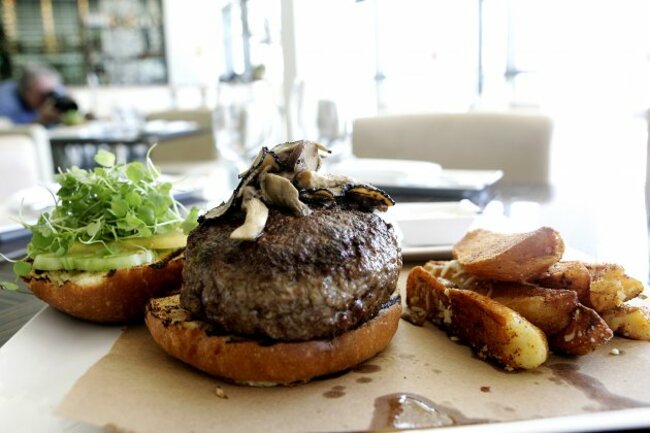
$100 BURGER

(AP Photo/J. Pat Carter)

The option of increasing our dairy sector at the expense of beef production offers little encouragement, as the same environmental hazards apply, albeit the energy return is greater on milk than beef. In bygone times when dairy formed an important component in the Irish diet the population was below one million and most consumption was on a subsistence level; low level production preserved many of our woodlands.

We can certainly maintain that sector but instead of moving towards mass production we should focus on quality, nutritious produce: artisan cheeses and non-homogenised even raw milk should be promoted instead of being stymied by over-regulation. These will have more value added and can create greater employment than the powdered milk produced by multinationals that our government flogs to the Chinese. Cattle should be integrated into agriculture allowing their manure to be used as fertilizer in mixed farms, rather than generating further methane as it decays in feedlots.

Diversifying production would certainly benefit our tourist sector: a recent poll found that only 4 per cent of visitors come to Ireland for its food. A post-colonial agriculture generates little variety for domestic consumption.

Arguably at a time of economic hardship we should not reform a profitable sector. But it is important to analyse its wider costs. The government’s promotion of domestic beef consumption is potentially injurious to the health of the population, thereby increasing medical costs and reducing productivity. The author of a recent study of the Harvard School of Public Health involving 100,000 men and women concluded that ‘regular consumption of red meat, especially processed meat, contributes substantially to premature death’.

Human health will not suffer if we abandon meat consumption altogether. On the contrary, the China Study (2005), a comprehensive epidemiological survey conducted over twenty years, revealed that a plant-only, wholefood diet minimises or reverses the development of chronic diseases. Contrary to the nutritional myths that abound, plants provide ample protein sources.

Ireland’s future

In Ireland we should grow crops for human consumption. Although we have a cool summer season our mild winters and regular rainfall compensate. The Netherlands has a huge horticulture sector with a temperate climate similar to our own. There, vast greenhouses compensate for their northern latitude; they also deploy cutting-edge aquaponics which allow freshwater fish and vegetables to be farmed symbiotically. This might have particular appeal on the Western seaboard where soil quality is low.

The challenge is to re-think the whole model of food production in Ireland. The UN have declared 2013 the ‘International Year of Quinoa’; known as Mayan gold, it contains all our essential amino acids and grows well in temperate conditions just like the potato, another Andean crop.

A further benefit of horticulture is that it is labour-intensive. With unemployment close to 15 per cent and rural areas full of vacant housing higher employment in agriculture would be a boon.

By altering our consumption patterns and placing greater emphasis on plant-based nutrition there will certainly be cultural loss, just as the smoking ban brought difficulties to pubs. But the consequences of continuing to raise livestock in vast herds could be devastating. Increasing rainfall which seems to be a consequence of climate change in Ireland may ruin our grasslands in any case. We can do our bit to halt this trend.

Even if we are unwilling to reform our practices, inevitably peak oil will drive the price of beef beyond the budgets of most households. It would be better to adapt early, and begin to tackle global warming.

Without an awareness of enteric fermentation or health studies our ancestors seem to have developed a taboo around beef consumption. It is about time we do too.

Frank Armstrong is a food writer and lecturer at University College Dublin’s Adult Education Centre. This article appears in the latest edition of Village magazine.

Read more pieces by Frank Armstrong >

Read next:

Comments (180 Comments)

  • I have two steaks in the fridge for dinner tonight.

    Reply
  • Have 6 cattle ready for the mart tomorrow. Would love to cover my land in trees but cant afford to wait 25 years for them to mature.

    Reply
  • “You don’t make friends with salad”.

    Reply
  • Thank God for speed scrolling…

    Reply
  • Mmmmmm steak.

    Reply
  • I need a steak after reading all that ‘tripe’

    Reply
  • ” Cattle should be integrated into agriculture allowing their manure to be used as fertilizer” It already is as I can testify to a couple of times a year when neighboring farmers spread slurry on the land. This happens all over Ireland so if the author doesn’t know that what else is he misinformed on? Artisan cheese, how many people can afford that on a regular basis. “Column: It’s time to take the turkey off the Christmas table”, now I can’t have my Christmas turkey! In the same column he advocates a meat free Christmas dinner.

    Whenever vegetarians berate me for being a meat eater I take great solace in the fact that my food tends to shit on their food!

    Reply
  • Oh god, id love a steak now!

    Reply
  • “apparently my crazy friend hasn’t heard of the food chain”

    Reply
  • Just had a juicy striploin thanks ma!

    Reply
  • It’s high-time pontificating about other people’s choice to eat red meat was made taboo

    Reply
  • If they could just find an effective way 2 trap n harness al these methane gases that livestock produce wed b sorted n could eat our steaks with a clear conscience, ha

    Reply
  • if you wait long enough just about anything is touted as bad for this bad for that and going to kill us all yada yada. This tripe is more about feeding journalists than anything

    Reply
  • The China study has been disproven as a proverbial load of tripe on several occasions, using it to back up the article does the author’s arguments no favours. Crops may be more environmentally friendly (although this is questionable given the herbicides and pesticides used, and also the fact that soy cultivation alone is also responsible for a large portion of rainforest felling), but there is growing evidence for the fact that wheat, eaten in its modern, mutated (and untested for human safety, I might add) form is responsible for many of the modern ills and ailments which assail us. I’ll stick with my steak & veg, thanks.

    Reply
  • I have an idea. To help our budget deficit, there should be a tax on killjoys. The revenue should amend tax returns to include categories like ‘pontificating vegetarian’ and each checked box should impose an extra 5% on the income tax. In case the killjoy has no taxable income, then reduce the welfare accordingly.

    Reply
  • Damn … I can’t smoke anywhere any more; me booze is so stupidly expensive I can only afford one binge session a week … and NOW they want me to stop eating a lovely red raw juicy steak?

    What next … a total ban on sex and drugs and rock and roll? Ah no, wait, some of those are already illegal …

    Reply
  • Gene 29/07/12 #

    2 questions. Did the author actually get paid for writing this rubbish (if so where can I sign up) and secondly has he ever actually seen a farm or been outside his lecture room.
    Now back to my T Bones.

    Reply
    • John Mac 31/07/12 #

      I’m embarressed Gene if you consider yourself Irish.

      I’m a beef farmer as were both grandparents, and i have utmost respect for Frank’s highly conscious article. I don’t have answer to our corporate domination, ignorance towards our roots as respectful earthlings (under brehon laws that protected our forests until england’s civilization trampled our indigeneity) and explosion in human numbers to the tune of media crap (controlled by a small number of corporations). There’s a serious lack of questioning in our society. Brave article given the mass unconsciousness in this country and the world at large.

      Reply
  • There is NO way, no way in the world, that a time will come when people don’t want to eat beef. It’s just way too delicious. If it gets more expensive and harder to obtain, then we are perfectly positioned to take advantage of that and produce more of it.

    Have steaks marinating as I write, ready for a delicious dinner. I hope, and believe, that I’ll be eating steak for as long as I can swallow independently! Oh, and to add insult to injury, I brought it home in an SUV (which we require, for work purposes). I am so evil.

    Reply
  • The point of a cow’s existence is to end up as a nice t-bone, red in the middle, 75% pink and just browned on the outside with some baby potatoes, roast veggies and pepper sauce. And a glass of Bordeaux. At the same time the author of the tirade above should be given a boiled turnip.

    Reply
  • “But the consequences of continuing to raise livestock in vast herds could be devastating”

    Does the author not know that the adverace herd size for suckler farms in Ireland is 12 cows. Yes 12! Hardly the vast herds he would have you beleive. Th author obviously hasnt ventured beyond the pale too often.
    the majority of the land in thios country isnt suitable for tillage and pasture is the only viable alternative.

    he also quotes the figure of 80% of US grain goes to feed animals. Firstly the majority of this goes to feed non-ruminants (pigs and chickens) who can be fed on 100% cereal diets. Secondly its an irrelivant fact when talking about Irish beef since meal (cereal) feeding only make up a very small percentage of an
    Irish bullocks diet since we can grow abundunt grass and dont rely on feedlot systems like the US

    Reply
  • The evidence presented here supports a reduction in the growing of GRAIN whether for animals or people. It has presented no evidence for the removal of livestock from a proper holistic renewable grazing relationship with the land.

    Grain growing is what destroys soil, releases sequestrated carbon, requires further carbon inputs for fertilising its dead substrate, and for processing. Grain growing accounts for almost all of the carbon footprint falsely ascribed to pastured ruminant livestock.

    Well grazed pasture is a carbon sink. Livestock on pasture regenerates soil, renews the land, is compatible with biodiversity and is an excellent agricultural strategy for lands too marginal for horticulture or permaculture, the only other long- term sustainable food production systems we have.

    Reply
  • Oh well, if Simon Coveney is marketing Irish Beef to the Chinese it won’t be long till the Irish themselves can’t afford to eat it anyway, listened to a bbc radio four documentary which made this point recently.

    Reply
  • Human dentition dictates that we are omnivores and meat is part of our healthy diet. If we shun meat I guarantee the human race will vanish.

    Reply
    • My understanding of this topic is that while we are omnivorous, we are edging more towards herbivorous then carnivorous- reasons for same include relatively small canines n large intestine with small stomach. It’s funny how the same facts be skewed to meet different arguments…. Always end up wondering grounds for perceived truths !!!

      Reply
  • Unbelievable comments. Might it not be better to put the defensiveness to one side – instead of thinking of it like somebody taking away something from you, try to view it as a reminder that Titanic is sinking fast and you are squabbling with the people who are trying to tell you to get in the lifeboat because you are having such fun at the bar! Nobody’s gonna tell ME what to do!!! Just because our media in this country does not report enough on this crisis, that is no excuse not to get yourselves educated – go to reputable sources and find out for yourselves that we are literally on course to end much of the life on this planet, and that IRREVERSIBLE tipping points are frighteningly near, then consider whether you still want to cling onto your current lifestyle, thus threatening by your own actions your own future and for sure that of your children, grandchildren, nieces and nephews – how smart is that? Sorry but it’s a bit hard to stomach jokes about something so horrible serious, especially as we are hurtling towards the point of no return, beyond which there will likely be little we can do. If you fight all the changes we need to make, then you may count yourself utterly culpable when it comes to the point when nobody can deny what we have done – and it will be in your lifetime.

    Reply
    • I’m sorry Michelle but it will not be within our lifetime, the destruction of a dominant species has happened multiple times over the life of the earth, who are we to assume it will not happen to us, tipping points my ass it’s all natural cycles, a volcano can pump out more co2 in an hour than we can produce in a year so please do not be fooled by what your fed through the media, global warming =cycle, mini ice age = cycle they will happen, the sun is in its lowest period of activity since the last mini ice age (mons something they called it), nature will correct itself and we’ll be the victim

      Reply
    • Sorry sis but the hype is gone. The temperature flatlined and GDP went into red territory. No more money to spend on such luxuries as the Kyoto penalties. The Greens got a boot footprint on their backside. Nobody cares any more about polar bears, we care more about the December budget and whether it will be delivered in Euro or punt. The roof has fallen on our heads so what other reaction do you expect when killjoys want to take away a very few pleasures one has in life these days. Stop fear-mongering and enjoy life. And don’t touch our f****** steaks.

      Reply
  • Whoops. Big typo in previous comment. It’s cheaper to get a cup of coffee than to get a cup of petrol. I think we should eat less red meat though. Many of the greatest thinkers/scientists/inventors/mathematicians etc were all herbivores.

    Reply
  • An animal rights argument in the guise of global warming

    Reply
    • I want to go veggy and I could give a fck about animal welfare once their above the basic “”Don’t torture the lads” rule of farming. The energy thing makes far more clear sense than the animal welfare argument. Of course I’m not a veggy but Im trying to at least cut down on my intake.

      But ya. This article sounds like it was screamed by a hippy who doesn’t like science (see comments about GM crops meant to scare monger.) Always annoys me that when basic science and logic supports far reaching enviromental ideas its always the irrationals and hip-tastic romantics that are making the arguments for the ideas.

      Reply
    • John Mac 01/08/12 #

      GM is a nasty science. It’s not just genetic engineering. You’re making an organism compatible with some of the most toxic chemicals to life. Roundup wipes out the DNA of any cell whether it be the bit you inhale when spraying it in your garden. Ever see the red faces on people who spray without masks the following day?

      If you do a simple google, the negative propaganda will heavily outweigh the positive corporate stuff. Of course it sounds great in theory but it caused devastation, like any environmental mess, economically and socially in India with farmer suicides due to them having to buy the patented seeds and all the chemicals, yet the BT cotton crops still collapsed. http://www.hindustantimes.com/News-Feed/Business/Ministry-blames-Bt-cotton-for-farmer-suicides/Article1-830798.aspx

      You can only tweek nature so much. Not to mention rapid global bee collapse has been traced to the pesticides used. You might hear less about that now since Monsanto (the corporate GM giant) just bought up the leading bee research institute http://naturalsociety.com/monsanto-bee-collapse-buys-bee-research-firm/

      Reply
  • Completely OTT article:
    The argument here that Irish beef is ecologically unsound, imo, hinges on the statistic that 40% of what Irish cattle eat is imported grain (whether it’s GMO or not is a total canard): We don’t have a feedlot system like on the continent or in the US as our cattle are mostly outside getting wet, so that sounds ridiculously high to me. Where does that figure come from?
    Anyway, a lot of Irish land is fairly crap and unsuitable for tillage farming- but our shitty weather means it’s probably the best country in the world for grazing and cows eat what is basically a free food for most of the year. Using that land to produce animal protein is actually more efficient than trying to create grain-based carbs or vegetable proteins. I suppose you could plant it with trees but don’t invite me round to your house for a willow and sycamore salad. Many vegetable fats (oils) have a worse ecological footprint than animal fat.

    I suggest reading “Meat: a benign extravagance” by Simon Fairlie who puts many of the myths (on both sides of the argument) to a rigorous analysis. We probably eat a bit too much meat in the developed world, but if farmed responsibly (and Irish beef generally is) you shouldn’t feel guilty about it.

    Everything in moderation folks, including self-righteous half-informed ranting.

    Reply
    • John Mac 01/08/12 #

      That GM figure is realistic. Dairy cows, calves and finishing cattle are given vast amounts of grains, which nowadays, unless the farmer goes out of his way to get GM-free feed, include genetically modified ingredients. Not to mention hens, chickens, turkeys, pigs. A lot of european consumers are turned off by GM but don’t realise that it’s in all their dairy, poultry and meat products via the back door unless they buy organic (or we create a certificate for GM-free produce).

      Reply
  • I agree. We as a company want to purchase plant based crops from Irish farmers, we import hulled hempseed from Germany and the UK which can be grown without pesticides here. We also import small red kidney beans which are being grown in the UK (which we could also grow here under the same climatic conditions) and other crops such as cob-nuts etc. Currently Irish farmers are not growing any real plant protein crops besides peas for Bachelors,. It has nothing to do with being vegan or vegetarian. We all need Protein, be it from animals or plants. Protein is made of amino acids. The time will come due to resource and water shortages where we will have to decide whether we want to feed grain/legumes to animals or eat it ourselves. At that point it becomes a no-brainer. There is a huge opportunity to grow industrial hemp in this country, it is a native plant like flax. All parts of the plant are used. Hempseed is technically a nut as it has a hard outer kernel. If you remove this outer layer you get a product called hulled hempseeds which are a perfect food. Currently a tonne of hulled hempseed can fetch €20,000. How can anyone tell me this is not profitable. It has nothing to do with supermarkets and the price of a potato. America currently imports all its hemp products as hemp growing is banned in the US due to a negiligible amount of thc remaining on the outer kernel after processing. This government needs to wake up and take its head our of the beef and dairy sector and get serious about growing plant proteins for the future food security of this nation. Why can’t the potato farmers that are suffering start planting industrial hemp? Instead of bemoaning the fact most people prefer to eat rice or pasta for dinner. Look at what is really happening with plant protein crops today. Lots more people supplement their diets with high protein products like whey protein, soy protein, hemp protein. We need to explore this opportunity seriously.

    Reply
  • denism 29/07/12 #

    I need a steak after reading all that ‘tripe’

    Reply
  • @SaintRuth, yes! Some vegans are non -judgmental! Only a few though lol! I’m not an angry vegan!! No way! My girlfriend eats meat and I love her to bites

    Lol I’m mean bits :-)

    Reply
  • Hard facts…

    The Irish sea is devoid of white fish, we’re ‘growing’ Talapia in pools of their own filth and fed on pig excrement…
    Quinoa has been driven out of the price range of the natives that eat it, your nutritious protein filled snack is basically starving those who farmed it for millennia

    Man up, eat a steak and stop trying to make factual arguments with nostalgia, nonsense and poetry

    Reply
  • If all the vegetarians out there love animals so much why are they eating Their food? Anything in moderation I say. It’s easy to argue for 1 side or the other but the fact is that it is expensive to eat clean in this country.people with the worst diets tend to be less wealthy and consume lots of processed foods

    Reply
  • I’m gonna keep eating beef until every one of those Chik-fil-a cows is dead!

    Reply
  • How do you know when someones a vegan? They will tell you!

    Reply
  • Interesting article and he makes some good points.

    Reply
  • @Peter, there are plenty of vegan athletes out there, vegan boxers, bodybuilders. I’m a vegan and I can bench 280 lbs, what can you bench? Dont be silly with your generalisations and assumptions. Google vegan athletes.

    Reply
    • I WAS being silly … because the whole thing IS subjective and it’s noteworthy that the Vegans/Vegetarians are being SO defensive??

      Oh … and I’m 5’4″ and 54 and could prench bess an ANT!! Guess you vegetable diet DOES give you a PopEye complex then?

      Reply
    • Can I ask a question Luke – genuinely? Do you take supplements – vitamins, mineral etc and/or protein products – and if so how essential to your diet do you consider them to be?

      Reply
    • No one who goes to a gym let alone someone who allegedly benches 200+ pounds EVER talks about gym weights in pounds.

      If you were actually telling the truth you’d know gyms deal in kilos

      But do carry on

      Reply
    • Are you serious? If you think that the weight that you can bench press is an indication of how healthy you are, you must have ingested some dodgy vegetables. It is possible to eat meat responsibly. What a long-winded and biased report. Zzzzzzz. Now for a steak…

      Reply
    • @Katie,

      I’m vegan, I don’t take supplements outside of vitamin C if/when its flu season or I’m run down from work or college. . Much the same as I did when I still ate meat years ago. I don’t take any regular supplements and I get more than enough protein from beans,pulses, soy products etc I give blood with no problems and would consider myself very healthy. I am 5’3 but I stopped growing when I was still a meat eater and my mother is shorter than me ;-). Though I could definitely use some more exercise I am the slimest and healtiest in my immediate family who are all omnivores. Like any diet you should ensure you get enough of anything. There are probably dozens of people who comment on the journal who eat meat and are deficient is many key vitamins. Bad diets exist irrespective of whether you eat meat or not.

      Since going vegan I do have more energy though and I haven’t had a single chect infection since I gave up dairy when I had been plauged by them several times a year for 20+ years before that. Though that suggests something to do with dairy intolerance or something.

      Reply
  • What a load of rubbish. It’s just evolution.

    Reply
  • More crap. I will eat what I like and if anyone doesn’t like it the can go shite.

    Reply
  • It makes a lot of good points. Unless you’re doing heavy physical labour, there’s no real need to eat large amounts of meat. Fruit, veg, bread and dairy should be the main part of anyone’s diet. In terms of meat, chickens are much better food converters.

    And the amount of methane gas released by cattle is enormous. For anyone who dismisses this, Google is right there ready to prove you wrong. Seriously, the ignorance of some of the comments at top of this page is mind-boggling.

    Reply
  • Very good article!

    Reply
  • I’ve found, actually, that people who don’t eat vegetables but eat lots of meat tend to look pale and unhealthy.

    Reply
  • Actually I am not a hippy and I see well managed nuclear power as part of the solution towards reducing climate emissions. You are the one who sounds fanatical, the first person to swear on here.

    Reply
    • actually i blocked out the swear myself saffron and how do i sound fanatical i’m not forcing my opinion on people i just laid out some facts which franks article did not. for a lecturer he seems to lack scientific backing the same way that video you posted is scare mongering and not does not have any real factual basis. the fact that this is a one sided argument is ridiculous where is the balance.

      Reply
  • If I look outside, at the Irish country side, i see that most cattle are outside in the fields and in winter are fed mostly silage and hay from these fields. Unlike our eu counterparts and other major countries,

    The Dutch greenhouses are a major pollutant and I really don’t understand why this author uses them as example. Each greenhouse uses huge amount of (mostly fissile) fuel to keep warm in winter. Next to pesticides, artificial foods, lighting systems and other equipment.

    I agree people should eat less meat, as it’s nor required on a daily basis, but by no means is abstinence the answer.
    It simply doesn’t work that way. People are omnivore and that’s it.
    If other want to do otherwise than that’s their business and I have personally no issue with that, as long as I’m allowed to have my steak every so often…

    Reply
  • People don’t care now because it is out of sight african children that are starving while we pour tonnes of grains down the throats of pigs and cattle, but if their own children begin to starve because of mass crop and agricultural failure caused by climate change they will sit up and take notice too late.

    Reply
    • Saffron, African children are not starving because we feed grain etc to animals, they are starving due to war among themselves and their trible leaders or governments, famine due to a lack of water and poor agricultural practices ( i.e. planting crops in the wrong areas, not rotating crops) lack of financial investment (mainly by their own governments who think weapons are more important than their people)poor education , poor health facilities again due to lack of proper investment, and illness such as aids.( mainly due to unprotected sex thanks to the wisdom of the church). Africa has had billions of pounds/dollers/ euro, given to it over the last 50 years and more, most of which never reaches its intended target due to being siphoned off by so called charities as ‘expenses’, ludicrous interest rates on loans from the likes of the i.m.f. and world banks, and it’s own political system of warlords and leaders.
      if all the money that has been donated by people actually went to where it was intended and was used for the purpose that it was donated for Africa would be able to cope a lot better than it presently does.

      Reply
    • I agree. We should all starve in support of Africa.

      Reply
  • don’t vegetarians release more methane gas than meat eaters? kicking the can down the road really!

    Reply
  • No Peter I’m just saying that people dont have to kill and rape this planet’s resources to live. People wound rather die than change their habits.

    There is no need to eat meat. Like it or not.

    Reply
    • Absolutely … No “need” for a lot of things in this world. But when/if the rape and pillage of this planet’s resources is a REAL issue … then you’ll be getting a lot more “Thumbs Up”. This non-subject raises the usual CONTENTIONS that a few die-hards decide to “blood-suck” (not pardoning the pun).

      I’m sure you’re genuine … BUT I don’t honestly think you’re going to change the mindset of a load of meat eating Irish people tonight.

      Ahhh! Damn, me hot plate is burning away and red hot … got to go to wound a dead bit of animal a bit further …

      Reply
  • The author made the mistake of trying to appeal to peoples reason, humanity and intelligence, unfortunately there are still a lot of Cletus Spucklers in Ireland –
    http://en.wikipedia.org/wiki/Cletus_Spuckler

    Reply
    • Think you’ve hit the nail on the head. People seem to have taken a v strong reaction to this article. While I don’t necessarily agree with all points made (eg peak oil is still heavily debated), a lot of points are v valid, particularly the essential argument- current consumption of beef across the world has had quite serious negative environmental impacts (eg mass deforestation, which in turn leads to water levels rising; levels of methane gas; over-growing grains etc). Would be really useful if people could put their immediate emotional reactions aside n look at the debate logically- might result in solutions that were best for everyone … Heavens forbid

      Reply
  • Katie it’s about both but my health comes first, Im a selfish human being :-)

    Reply
  • Yes Toby eat what you like, you have every right to do that, it’s your life.

    To everyone here that’s opposed to Veganism: why not give it a try? Just for a month? Go vegan for a month and if it’s not for you then so be it. Don’t knock it til ya try it!!

    This is a positive message, and it’s non-judgemental message. Go vegan and reap the rewards! Much love :-) p

    Reply
    • Non-judgemental message?

      Tell that to Saffron Willetts above.

      Reply
    • bob 29/07/12 #

      I gave up meat,alcohol, sugar and salt,soft drinks,tea,coffee for nearly 2 months some years back.first wk was hell,sweats and fever.best thing I every did! I now enjoy them all but on my way.so not knocking points before but the focussed veg heads just do their own thing pls! try getting more allotment s in ur area,sell the veg and big it up! instead of nagging!

      Reply
  • Red meat is a killer (especially for the animals).
    I gave up on beef many years ago when it was ‘seasoned’ with angel dust and when the cows went mad from eating their own flesh! Talk about jumping over the moon; the poor aninals could not even stand upright! Wonderful animal husbandry, eh?
    I do not trust beef producers. I do not treust advertisers-for-money.
    I do not eat beef.
    I do not listen to hype intended to line the pockets of big business.
    I am not a vegetarian. I’m too old to be a hippy. I am not an orgasmically organic.
    I will eat what I decide and not what someone on the make, or with an agenda or a mission tells me to eat.
    Having said that, those who preach at us to eat beef, or anything else in the interest of lining their own pockets, can go an have a jump over the same moon as the mad cows, (singing ‘ring-a-ring-a rosy,’ ) jumped- before they all fell down, legless.

    As for the economy – wtat economy?

    So there.

    Reply
  • Thats the second time in two days I’ve come across a burger with mushrooms on it. What are people playing at?

    Reply
  • bob 29/07/12 #

    what annoys me are the people that order well done,or over done steak.or as is known in the trade,cremated! it takes longer for your body to break down and flavour and goodness is burnt out! but here’s the kicker,these steaks take a lot longer to cook,and a waste of energy a lot of energy! have a burger instead and save the good meat for those that know it!

    Reply
  • I love eating me steak dinners. mmm

    Reply
  • I’m destroying the environment one delicious bite at a time!

    Reply
  • Nicolle what supplements am I taking?!! Name one? Is it protein? I eat tofu, chickpeas, lentils, beans. Is it vb12? I eat lots of leafy greens and have had my vb12 tested, it’s fine. Now how are you doing? Are you healthy? Full of energy? I am :-)

    Reply
    • Luke it’s rather silly to insinuate that those who eat a diet different from yours are less healthy or have less energy than you, when you know little their diet and nothing of their health. Plenty of people who eat an omnivorous diet are very healthy and fit and have excellent energy levels. I’d say there is a fair few steak eaters residing in the Olympic village just now.

      And is it about health for you anyway, or animal welfare as your first post would suggest?

      Reply
    • Luke do you realise that cultivation of vegetable crops, like soybeans, corn and wheat, kills animals too? Granted they are smaller ones, but harvesting these plants kills moles, mice, rabbits, not to mention countless insects. In fact it’s entirely possible that my high meat diet kills fewer animals than your vegetarian one. Unless you have some sort of scale, where larger animals are more important?

      Reply
  • With regards to statement in the article concerning peal oil being on the horizon. Peak oil is not on the horizon and the very idea that it is looming on the horizon is nuts. The average global recovery rate of oil today is 35%. So that’s 65% still in the ground. Now increase the recovery rate by 1% and we have two more years of global oil consumption. We will not see the end of oil or your children. It’s simply the end of really cheap oil. It’s more expensive to get a cup of coffee than a cup of coffee. Don’t believe me? Well go check it out for yourself:
    http://www.youtube.com/watch?v=6v3weyXVWE.
    http://m.guardian.co.uk/commentisfree/2012/jul/02/peak-oil-we-we-wrong?cat=commentisfree&type=article

    Reply
  • You can say this and that about a plant based diet, try it first. Go Vegan, don’t restrict your calorie intake and watch what happens.

    Peace out people :-)

    Reply
  • I dare any meat eater here to watch this
    http://earthlings.com/

    Going by the small minded and ignorant comments here our planet and civilization is doomed anyway. Wonder how smart these people will be when runaway climate change is upon us.

    Reply
    • And while your reply is may be intended for the ignorant it comes across more that you intend to insult anyone who eats meat. Why is it you think then that those who enjoy meat find it so easy to refer to vegetarians & vegans as “hippies” and “tree huggers”.

      This article makes some significant points, though it would definitely benefit from depending on some more respected research and being a LOT more concise.

      Reply
  • Don’t worry Luke, I take thumbs down as a compliment when they are from people who are too stupid to realize they are in an oven and its getting hotter, they could act to turn the heat down but they are too short sighted. And all these self absorbed women eating atkins type diets to stay thin aren’t helping either. What good will being thin be when the planet is burning, and no I am not being dramatic go read the climate change science.

    Reply
  • I don’t care about being PC on this issue when it concerns the futures of the children who will have to live with the consequences of our actions. They are facing the prospect of starvation, conflict, extreme weather, and becoming climate refugees. People are already dying from this right now and being flodded out of their homes. When my child is old enough to realise that I was there at a time when my actions could make a difference I am not going to say I didn’t change because I felt it was my right to carry on as I always have, whether eating meat, flying or whaterver and I didn’t speak up either for fear of hurting peoples feelings. Don’t think politicians have our back on this, they can’t see past the next election and think they will be insulated on an island somewhere with their hoard, nobody but you is going to make a difference here.

    The titanic sinking is a good analogy, short film here that spells out the seriousness of the situation our planet and our children are facing.
    http://wakeupfreakout.org/film/tipping.html

    Reply
  • Ok I’ll close off by saying this: F**k the animals and f**k the planet, do it for yourself, be selfish. Reap the benefits!! I am not a protestor, not at all, don’t assume! Look into it! Check out Bill Clinton’s transformation and he still eats fish now and again, check out Mike Tyson, look at how it benefited him.

    Look into it, educate yourself.

    Reply
  • Go vegan for a month, see how easy it is and how it will benefit you :D

    Reply
  • That’s it! Make fun of the slaughter of millions of animals to keep our bellies full!!! Well done!! Look at the comments: ‘ mmm steak’ and so on.

    Why not educate yourselves? Read ‘The China Study’ or watch it on YouTube. See how easy it is to live on a plant based diet, there is no advantage in eating animals. The science is in.

    Watch cows with their young, watch how much they love them, how much they want to protect them.

    Go vegan, it’s not difficult and the benefits are amazing, no more obesity, no more tiredness! Veganism Is growing as a lifestyle! Check out ‘Durianrider’, make the choice, lose weight and send your energy levels through the roof <3

    Reply
  • That’s a load of bull….

    Reply
  • I am astounded that such a poor article could provoke such a volume of response.

    Having googled the author I read another poorly written piece (a review for a restuarant in London) in which he discusses his trips to South America and his love for red meat. In one meal he tells us, with no apparent regard for the environmental impact of its production, he enjoyed beef steak, pork and lamb.

    Given this information I find his preaching arguments hard to swallow.

    Reply
  • Although there are some very worthwhile points in this article it’s all about us (humans), isn’t it? But we are not the only beings who matter. It would be refreshing if a journalist mentioned the ethics of our food production and how what we put in our mouths hurts equally sentient and important others, human and non-human.

    Reply
    • Does anybody know if we actually do feed our cattle with 40% grain, mostly imported? Or is that as nonsensical as the rest of the article.

      As for the methane emissions there are solutions for that. There is a pill which stops cows from farting This form of greenism – which will devastate one of Ireland’s long term viable industries – is never going to be implemented. We should look instead for technical solutions.

      I notice the author invokes peak oil. And GM foods. In fact peak oil is always years away, as prices increase in oil more research abs exploration opens new fuel – GM actually reduces the need for pesticides. It’s use in this article is Luddite bogey man.

      Reply
  • Katie I eat plenty of protein and get a lot of vitamins from fresh fruit. Is there vitamins in dead flesh? Vb12 is the talking point but there are plenty of meat eaters that are Vb12 deficient

    Reply
    • You didn’t answer my question though, do you take supplements?

      Reply
    • And yes, there are vitamins in dead flesh.

      Meat is a very good source of B vitamins and Niacin. Red meat also has worthwhile levels of vitamins A, D, E, and K. It also has a good mineral content, providing Iron, Calcium, Potassium and Zinc among others.

      Reply
    • Meat is so much more nutritious than you clearly understand, Luke. I have no doubt as a vegan you are taking supplements, purely because it’s particularly advised by most medical practitioners. And yes, the China study has been debunked. I’m sure you can google that. It speaks volumes that you shout about science speaking but conveniently disregard the science that follows which disproves the “scientific findings” on which your argument hinges. And yes I’ve actually met more than a few overweight vegans who are by now so insulin resistant and borderline metabolic resistant from a diet which is usually by necessity high in grain and- wheat.

      http://www.medicaldaily.com/news/20101119/3971/3-benefits-of-eating-meat.htm

      Reply
  • No Katie I don’t

    Reply
  • Katie, do you? Have you taken them in the last few months? Vit c? Or whatever? What supplements would I need to take?

    Reply
  • There are many facts that have been skewed and more that have been omitted from your article. To give some balance I wish to address the main ones.
    1. Your point: ‘Synthetic fertiliser promotes the grass they graze, and pollutes our water. But apart from external inputs, grass-fed cattle actually produce four times more methane through enteric fermentation than their feedlot cousins.’

    My response : Your argument that grass based production pollutes our water and produces four times more methane is misleading. In an EPA report on water quality in Ireland it states that ‘In comparison with other EU member States, Ireland has better than average water quality. There is evidence of an overall improvement in water quality in Ireland.’ http://www.epa.ie/downloads/pubs/water/waterqua/WaterQuality0709.pdf
    While it is true that enteric methane production is higher in grass fed animals compared to grain fed animals. This is, however, misleading as the emissions from the individual animal is just a small piece of the jigsaw, failing to take into account the greenhouse gas emitted from growing, harvesting and transporting the feed to these grain fed ‘feedlot cousins’. The only true comparison of greenhouse gas emissions between different production systems is using a cradle-to-gate life cycle analysis. This system accounts not only animal production but also emissions from the feed the animal eats, mineral fertilisers, pesticides, energy and the land for the production of feed. A study conducted by the EU commission on the contribution of the Livestock sector on EU greenhouse gas emissions using cradle-to-gate life cycle analysis placed Irish dairy farming as the lowest carbon footprint country and Irish beef farming as the fifth lowest in the EU, and in comparison with beef from brazil, Irish beef has 75% lower emissions. http://ec.europa.eu/agriculture/analysis/external/livestock-gas/index_en.htm
    So if you are going to consume any agricultural products I would recommend products from Ireland due to the above environmental benefits but also due to our pasture based systems provided a natural living environment for our animals operating to highest animal welfare standards.

    2. Your Point ‘Teagasc, the Irish Agriculture and Food Development Authority admit: Ireland is unique among the EU countries for the proportion of its greenhouse gas (GHG) emissions which originate from agriculture, representing 29.1 per cent of national and 4 per cent of the non-Emissions Traded Sector (non-ETS) emissions. This is compared to an EU average of 9 per cent. Among developed economies only that other island of livestock, New Zealand, has a higher proportion of emissions associated with agriculture.’

    My response : Your point that, agriculture contributes 29.1% of national emissions compared to the EU average of 9% , is true, but could be interpreted negatively and I feel obliged to clarify. One might assume from looking at these figures that it would be better to reduce agricultural emission’s closer to the EU average, as is being implied in the article? This however is not true. To shed some light on the reason for Irish agriculture (which is one of the most environmental sustainable in the world) having such an impact on our national emissions, is quite simple. The Irish economy is more reliant on Agriculture than most other EU nations, as we do not have heavy industries such as in Germany or Great Britain (in fact agriculture’s contribution to the GDP is more than twice that of the EU average). And so it should be, Ireland has the natural resources (Climate, Land, Skilled farmers) to produce food, so we should work to our strengths and feed more people (currently it is estimated that we can feed 36 million people). So in the same way as it can be miss leading to compare agricultures’ contribution to national emissions it would be unfair to make a comparison between the car manufacturing industries of different European countries. This would show Ireland’s car manufacturing industry’s contribution to be the best in Europe, with zero emissions as we make no cars. The German, French and Italian car manufacturing industries are all contributing handsomely to their national emissions. Does this mean that the Germans should stop making Audis to reduce the car manufacturing industries contribution to national emissions? Of course not, if there is a demand for Audis then let the country with the resources and skills to do so in the most environmentally sustainable way. The same holds true for agriculture.

    3. Your point regarding the direction of the Irish Dairy Industry: ‘We can certainly maintain that sector but instead of moving towards mass production we should focus on quality, nutritious produce: artisan cheeses and non-homogenised even raw milk should be promoted instead of being stymied by over-regulation. These will have more value added and can create greater employment than the powdered milk produced by multinationals that our government flogs to the Chinese.’

    My response : Your opening line implies that mass production reduces quality or nutritious content of Irish dairy produce and somehow cheese produced from the same milk processed on a smaller scale (artisan) is more nutritious? This is without fact. The efficiencies and quality controls that can be achieved on a large scale are impossible to replicate on an artisan basis. A simple example, would you trust the lives of your family in a car that your local mechanic built or is driving around in a Toyota that is mass produced a safer bet? I can however, understand the romanticised views of the local cheese makers plying their trade which I think should be encouraged and let flourish and there is a market for that kind of niche product. I however cannot see how there is a market in the world where we could supply 160,000 tonnes of it (that’s how much cheese we produced last year)? Like the Toyota model, the Irish dairy sector is strongly focused on quality and nutritious produce on a large scale. The development of value added products is very important for our industry to grow and create employment but in the same way that Toyota has a range of cars we must also have a range of products. As an industry if we focused solely on niche markets we would collapse in the same way that Toyota would if they focused solely on its fancy sports cars. Now everyone loves the fancy cars (and artisan cheese) but it is the standard reliable family cars that pay the bills for Toyota and in the same way it is the standard dairy commodities that make the Irish dairy industry flourish. One of these products (which was so finely put) that we ‘flog’ to China is milk powder which is used as infant formula that brought nearly €128m into the Irish economy last year. The quality of the Irish product is reiterated in the fact that we are the single largest supplier of infant formula on the world market. That many mothers can’t be wrong!

    4. Your point regarding the direction of food production in Ireland: ‘Ireland’s future In Ireland we should grow crops for human consumption. Although we have a cool summer season our mild winters and regular rainfall compensate. The Netherlands has a huge horticulture sector with a temperate climate similar to our own. There, vast greenhouses compensate for their northern latitude; they also deploy cutting-edge aquaponics which allow freshwater fish and vegetables to be farmed symbiotically. This might have particular appeal on the Western seaboard where soil quality is low.’
    My Response: I ask the question, why in Ireland is there not wide spread production of crops for human consumption? There are no barriers stopping anyone setting up a horticultural business and producing crops for human consumption, yet between 2004 and 2008 there was a 36% reduction in vegetable growers down to 473 (in total). The reason for this exodus from the industry is profit or lack thereof. So even if I could convince a bank to loan me the money to invest in a ‘vast greenhouse’ and ‘aquaponics’, I wouldn’t be able to make a profit to make any repayments or employ anyone. Therefor not only should beef farmers not get involved in low profit horticulture but horticultural farmers should change over to more profitable forms of farming!
    For Irish agriculture to take this direction would mean a lot of money wasted and a far longer dole queue. The issue to be resolved is how can we make the production of crops for human consumption profitable? Because if it is profitable people will do it, simple. The answer however, is also simple. We can’t make it profitable! I could start blaming the large retailers for their dominance in the market but if the truth be told is it is not entirely their doing. The reason we can’t make large scale horticulture profitable in Ireland is because Ireland feeds 36 million people and as a result we have to export food across the globe. The problem with horticulture is that you are producing short shelf life perishable goods. Therefor market proximity is key, which is fine for the Dutch who have a large urban population on their door step but a turnip farmer in Kerry that wants to make a shipment to China this is quite a problem. It is for this reason that the horticultural industry in Ireland is located close to our major cities. There is a major weakness in producing a good that is perishable, you have to sell it when the time comes and the retailers can dictate the price because you have no other option. So to tackle both of these problems (transport and retailer power) Ireland needs to produce goods that are non-perishable, if this can be done with crops for human consumption and it is profitable then great another product we can produce but until this crop is unearthed we need to stick to producing the worlds finest meats, cereals, dried dairy products.

    Reply
  • Urgh….chunks of meat….vom. That’s like biting into your own leg! Lol.

    Reply
  • There is virtually no difference between the amount of biodiversity in coniferous forests and hardwood forests. Why are people still spreading around long disproven lies?

    Reply
    • Why do Fianna Fáil still exist?

      Reply
    • John Mac 31/07/12 #

      There is no difference between one MONOCULTURE and another. Have you been in a native ash plantation? It’s sick, and has little or no difference in biodiversity compared with a typical american sitka spruce plantation that are now in majority on our ‘irish’ soils. If you compare either with a native indigenous plantation of course then you will see an exponential difference in wildlife.

      Reply
  • Nicolle if the China study is pure crap and vegans are fat!! Lol

    Reply
    • Vegans look sallow and malnourished! Nothing a good steak wouldn’t improve?

      Reply
    • Nobody gets fat from a steak. People get fat on sugar and vegetable oil both coming from plants not cattle.

      Reply
    • I eat lots of meat and veg, not so much in the way of grain products. You could say a diet high in animal protein and relatively low in carbohydrate. I eat it not cos it is/was a fad, but because it was the food I was brought up on and I like it.

      I know that no individual experience has scientific relevance, but I am five foot six inches tall and weigh just over 9 and half stone. Much the same I did when I was in my 20s but that’s 30 years ago. My parents who raised me on this diet, and are enthusiastic meat eaters, are slim, still active in their mid 80s and in rude good health.

      You just cannot generalise. It’s quite possible to eat a crap vegatarian diet and really a vegan diet cannot work without supplementation. It’s more about getting an overall good diet than it is about meat eating or not.

      Reply
  • Stopped reading at “sacral relationship”.
    If you want to make a point, don’t use words you can’t type.

    Reply
  • sunshine 31/07/12 #

    Never heard such sh1t in my life.

    Reply
  • Imagines cows with hoses up anus and balloons inflating with methane natural gas, we need somebody to invent a way to harness the cows arse shit falls, gas rises, new source of ozone destroying energy? Now I’d love cheeseburger with onions n bacon.

    Reply
    • Sorry sis but the hype is gone. The temperature flatlined and GDP went into red territory. No more money to spend on such luxuries as the Kyoto penalties. The Greens got a boot footprint on their backside. Nobody cares any more about polar bears, we care more about the December budget and whether it will be delivered in Euro or punt. The roof has fallen on our heads so what other reaction do you expect when killjoys want to take away a very few pleasures one has in life these days. Stop fear-mongering and enjoy life. And don’t touch our f****** steaks.

      Reply
    • Obviously the above post wasn’t meant in response to Niall.

      Reply
    • There’s an idea for the Dáil – hot gases, farts and all.

      Reply
  • Sorry bout the ‘if’ there lol

    Reply
  • How can you claim cows emit carbon also… They don’t, they are carbon sinks, they hold the carbon they injest from grass keeping it out of the atmosphere… The only carbon they ‘emit’ is transporting and processing and grains and vegetables have to be shipped and baked too

    Reply

Add New Comment