Welcome to our Public Beta Site - What does this mean?
Dublin: 12 °C Thursday 24 May, 2012

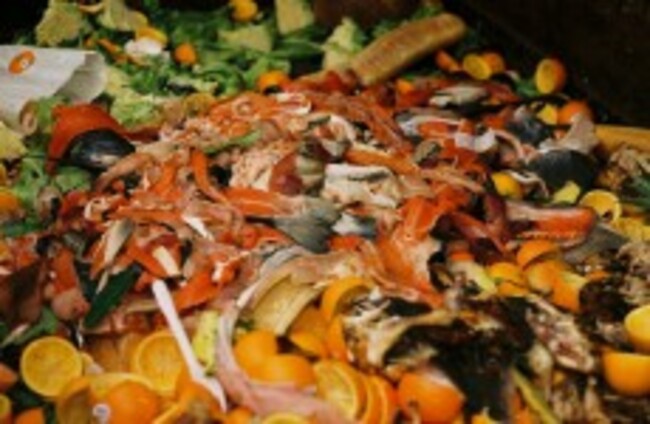
Column: We throw a third of our food away – and it’s polluting our country

Image: sporkist via Flickr

The UN has warned today that famine is spreading further in Somalia and 3.7 million people are now in crisis. Meanwhile in Ireland, a huge proportion of the food we buy goes straight into the bin – and from there, to poisonous landfills. But there is a better way, as environmental campaigner Tara Connolly argues here.

IMAGINE THE SCENE: you come home from your weekly food shop at the supermarket. You unpack the food you have just bought and put it on a table. You divide the food into three piles and throw one pile into the bin. It sounds like an act of madness but this is, effectively, what the average Irish household does every week.

According to the EPA, a third of all food bought by households ends up as food waste. But the scale of the problem is much larger with food waste created along the food supply chain and in commercial enterprises, such as canteens and restaurants.

At a time when most households are facing financial difficulties, it is difficult to understand the widespread squandering of such a basic resource. The Irish League of Credit Unions recently reported that almost a quarter of Irish people have less than €20 left over per week after paying essential bills. And poorer households tend to spend a higher percentage of their income on food, which increases the importance of minimising food waste within the home.

But as with all kinds of waste, the economic costs of food waste extend beyond inefficient use of the resource itself: we also have to look at the cost of disposal. This is a cost that is borne not only by households and businesses, but also the state. Ireland still sends most of its waste to landfill and food waste presents significant challenges for local authorities.

When food decomposes in a landfill it produces methane, a significant greenhouse gas that is 21 times stronger than carbon dioxide. When not properly treated methane can build up, creating a serious fire hazard as demonstrated by the landfill fire at the Kerdiffstown landfill in County Kildare earlier this year. Nearby communities suffered weeks of toxic fumes and noxious odours with the HSE advising residents to stay indoors to avoid the smoke plume.

Landfilled food waste contributes to more polluted leachate levels (the polluted liquid that collects in landfills). Leachate is normally caused by rain percolating through landfills that becomes contaminated through contact with waste sources, although the embodied water in food waste can add to overall leachate levels. Leachate often consists of seriously polluting elements like heavy metals but food waste increases the biochemical oxygen demand (BOD) of leachate. This means that if the landfill leachate reaches a river, it reduces the amount of oxygen available for other aquatic life forms such as fish. Every landfill should have a proper leachate collection and treatment system in place to ensure the leachate does not pollute local water bodies, including underground aquifers. The proper management of all these issues costs a lot of money on top of what are already very costly waste facilities.

Fortunately, and frustratingly, food waste is relatively easy to dispose of correctly. Compared to other types of waste such as electronic waste, composite items like shoes and hazardous waste, food waste does not generally require advanced technology to be properly recycled or disposed of.

The cost of inaction

You can do it quite easily at home by setting up a home composting system. This could be as simple as buying a subsidised compost bin from your local authority or building your own compost bin. You will have the added benefit of producing your own compost that you can use in your garden. Or you could avail of a food waste collection service, normally called a ‘Brown Bin’ from your local authority where available. Unfortunately a Brown Bin service is only available to a quarter of Irish households. Making this service more frequent and widely available to homes and commercial premises would help divert household food waste away from landfills.

On farms, anaerobic digestion (AD) plants successfully convert food and other types of organic waste into biogas that can be used onsite to generate heat and electricity in what is effectively a form of renewable energy. The leftover residue can be used on the land as a fertiliser, thus closing the nutrient cycle and reducing our dependency on imported fertilisers.

The recycling of food waste is a classic example of “cradle-to-cradle” thinking, which replaces wasteful linear systems with cyclical designs that aim to close material loops, turning waste into a resource. Recycling food waste creates a set of products that can be sold onto consumers, for example in the form of compost.

Improving our national infrastructure to ensure better separation and treatment of food waste will require investment but it is clear that the costs of inaction are much greater. Local authorities can do better by offering the brown bin service to more households and educating residents on how to compost at home.

But we, as individuals, are the key to reducing the high levels of household food waste that are created today. Simple steps like sitting down to make a proper food shopping list, knowing a few good recipes for leftovers and understanding how best to store food could make a big difference to your shopping bill as well as the amount of food that ends up in a landfill.

Just as Irish households cannot afford to through away good food, Ireland cannot afford to keep filling landfills with food waste. The cost of running Ireland’s landfills is rising as is the price of imported fertilisers and energy that properly treated food waste can help offset. Not only that, the EPA has warned that we will run out of landfill space in 8 years if no new landfills are opened. When it comes to food waste prevention is better, and cheaper, than the cure.

Tara Connolly is a campaigner/co-ordinator at Voice of Irish Concern for the Environment (VOICE). For more information, see voiceireland.org.

Read Next:

Comments (20 Comments)

  • Stephen Johnston 04/08/11 #
    Report this comment

    A good article about the retail-engineered consequences of consumer waste, but why involve Somalia in the introduction when it only serves to confuse the issue? Famines aren’t caused by a shortage of food, or by other countries wasting theirs, as we of all nations should know. The Somalian tragedy is the product of politics and economics, with the drought (as with our own potato blight) only a final straw.

    Reply
  • Pavel Shipilov 04/08/11 #
    Report this comment

    So true.

    Reply
  • Irishowned 04/08/11 #
    Report this comment

    Great article. It’s also given me an idea for a birthday present for a friend, compost bin.

    Reply
  • Dave O'Shea 04/08/11 #
    Report this comment

    Ironic really that we throw a third of our food away…. Imagine how fat the kids would be if we didn’t.

    Reply
  • Aoife O'Connor 04/08/11 #
    Report this comment

    My problem with the brown bin is that we don’t throw out enough food and organics for it to fill quickly, which means it ends up sitting in the garden stinking.

    Reply
    • Alan Doyle 04/08/11 #
      Report this comment

      We had a similar problem in winter, to the point where we stopped using it for a while, but cutting the grass tends to fill it at the moment. There should be a shared brown bin system or something for houses or apartments with low use.

    • Report this comment

      If you use the green bin liners for the small bins they actually last a few weeks before they break down. They keep your wheelie bin from smelling. I use both the Wheelie bin liner and the small bags for the kitchen caddy and I don’t have any smells or flies this year. Also, it keeps the wheelie bin clean!

    • Itchy Brain 06/08/11 #
      Report this comment

      Real solution is try get a compost bin if it’s practical, either way I use the green bin liners and it’s fine.

      Only put it out once a month as well!

  • Jane Bresnan 04/08/11 #
    Report this comment

    I’m all for low waste, very aware of anything i have to pay for! We make soups and stocks with bones, freezing any leftovers into single portions, but there is still waste. There is no more use for bones and trimmings once you have made stock, cooked leftovers have to go somewhere, and cannot be composted. We compost the raw stuff like veg peelings, garden waste… But in a small family with a small garden the volume is never ever there to get composting going properly. Tried for nearly ten years now, and we are on the verge of ditching the compost bin and taking that space back for another square metre of garden!

    We just cannot get to the critical mass. I dont think individual composting is feasible at all. It is a nice idea, but in practice is pure eco-nonsense. Community ones would be more effective, but would need someone employed there to manage it.

    Reply
    • Alan Aston 04/08/11 #
      Report this comment

      Jane, small quantities can equally be composted, I have been using a tumble composter for fourteen years and I have NEVER emptied it, as with yourself we are a small family and our green waste is quite low but the composter works fine! Have you tried introducing lots of worms to your composter?

    • Itchy Brain 06/08/11 #
      Report this comment

      Obviously for a business you would need something more industrial. The main focus is to get this done in all houses

      I know someone that runs a small restaurant and has 4 pigs at home. He gathers food scraps and feeds them vegetables only as well as there other food!

      There’s many solutions that can be taken advantage of and I think this is brilliant.

  • Gaping Headwound 04/08/11 #
    Report this comment

    At the risk of detracting from the article, which I don’t want to do, there is something worth pointing out here…

    The 1/3 food waste figure is an average (per capita). While the article mentions how that figure is a greater percentage of income for low income households, it neglects to draw any factual demographic comparison of food waste to household income. What it *should* say is how significant that cost *would* be if low income households produced the same average food waste as other demographics. Instead, what it *does* say comes across as a cheap ruse to play on the reader’s emotions!

    Additionally, wouldn’t an analysis of food-waste-by-household-income be (1) a more serious endeavour, (2) produce more informative results and (3) better serve possible strategies to remedy the problem? Oh, and separate studies for food and catering industries? Wouldn’t the extra work involved be worth it?

    Just sayin’…

    Reply
  • Niamh Francis 04/08/11 #
    Report this comment

    Why don’t people just cook food that won’t have leftovers, or just eat the damn leftovers later? That said, there are foods that are very healthy to eat but have unpleasant-tasting parts that get left behind, like fish/meat bones, fat and sinewy bits of meat, orange/grapefruit peel, apple cores… It would be nice if the article told us what kinds of food our households are throwing out because I’m all for using leftovers, as stock or breadcrumbs or whatever, but there are some food scraps that just don’t go down well and if you live in the city there’s not much use for compost bins!

    Reply
    • Itchy Brain 05/08/11 #
      Report this comment

      That’s why in city’s they should have brown bins! Every house that does not compost should have one and people need to be educated on this topic!

  • Martin Gallagher 04/08/11 #
    Report this comment

    It just shows what’s up with the western world in particular ,a glut of food of oil and other commodities while the other half go hungry.What recession i ask my self when i see such blatant waste,shame.

    Reply
  • Jo Murphy 04/08/11 #
    Report this comment

    Why can’t we at least have brown bin collections, like in Galway? You can put Moltex nappies in them as well.

    Reply
  • Report this comment

    This is not an advert – I am a customer.
    We also have ‘brown-bins’ in Clare. Clean Ireland Recycling offers this service for ‘free’. All the ‘Goodies’ taken away are treated to break them down, reproducing the treated material as a saleable comodity. (I think as composting material-but not certain). This is a fantastic fortnightly service, along with the usual recycling & rubbish removal. While the whole point is enviromental it usually boils down to basic economics, thus it is here as the weight of our fortnightly food waist would otherwise be costing us a lot to have removed as ‘rubbish’.
    Every one’s a winner!
    Re. backyard composting – This not viable, (for several reasons, including smells & flies) in a lot of smaller back-to-back gardens, even if the barrel/container is closed.

    Reply
  • willy pearse 05/08/11 #
    Report this comment

    Food waste is banned on farms under the swill act. The article should be amended accordingly.

    Reply

Add New Comment