Sign in. It’s quick, free and it’s up to you.
An account is an optional way to support the work we do. Find out more.
Sign in. It’s quick, free and it’s up to you.
An account is an optional way to support the work we do. Find out more.
EVERY WEEKEND, OUR political team casts an eye over the events inside and outside Leinster House that have people talking.
This week was dominated by the start of Ireland’s presidency of the European Union, a surprise(-ish) visit from Zelenskyy, and a clatter of bills being rushed through the Dáil before the summer recess.
So, here are our political winners and losers from the week that was:
1. Micheál Martin
The EU Presidency. This is Micheál Martin’s World Cup.
Ireland will be hosting the presidency for the next six months, and to mark the occasion, there were a number of high-profile events this week.
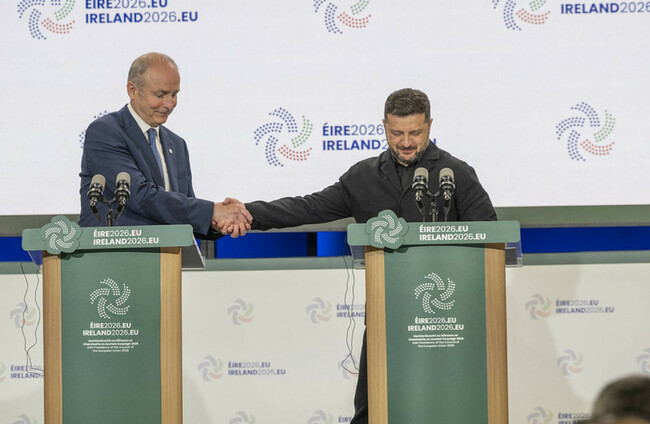
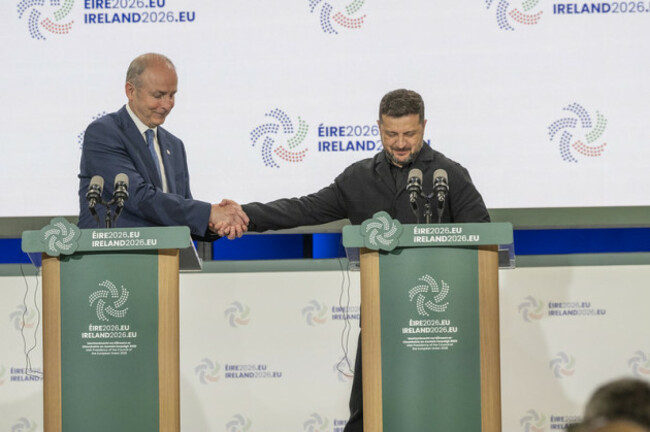
It kicked off with proceedings in Dublin Castle. There were lots of speeches, music and dance and even a surprise(-ish) guest of honour, Ukrainian President Volodymyr Zelenskyy.
The Journal had got wind the week before that plans were underway for his visit, but due to security concerns, it was only officially confirmed on Tuesday, the day before his arrival.
The opening ceremony went off well, but there was one hiccup for the Taoiseach when Zelenskyy gave a dig about the Aughinish Alumina plant in Limerick. An investigation is underway to determine if any of the material it produces is ending up in Russia. Zelenskyy said he doesn’t want the investigation to drag on, Martin promised it will be ready shortly.
It was the one stain of the day for the Taoiseach. Events moved on to Cork on Thursday and Friday, with European Commission President Ursual von der Leyen flying in from Armenia for plenary event.
Martin was grinning throughout the two days, happy no doubt that all the European head honchos, Brussels and Dublin media had descended on his home of Cork when the sun was shining.
Again, no major diplomatic faux pas. He’ll be happy enough it went off without a hitch.
2. Alison Comyn

The Fianna Fáil senator, who is chair of the Irish Women’s Parliamentary Caucus, is a winner for us this week for speaking out about threats of violence against women in politics.
On Thursday, Comyn launched a report by Women For Election, which showed a pattern of online, sexual and physical threats of violence against women TDs and senators.
An online survey by Women for Election found that 96% of women in Irish politics have been in receipt of threats of violence, with many of them altering how they use social media as a result.
Comyn said these sorts of threats don’t just impact the individual women in receipt of them, they also have a corrosive effect on our democracy at large.
“When women are silenced, discouraged and driven out of public life, our political institutions become less representative, less inclusive, and ultimately less effective,” she said.
Hear, hear.
1. Helen McEntee
While much of the presidency events went off well enough, there was an awkward moment during Wednesday’s Dublin Castle press conference with Zelenskyy and Taoiseach Micheál Martin when the former was asked why his country turned down an offer of armoured combat vehicles from Ireland.
They were too “old”, was the reply given by Zelenskyy.
“We are thankful, by the way, for everything. We never say no during the war,” he added.
Except to, well, this.
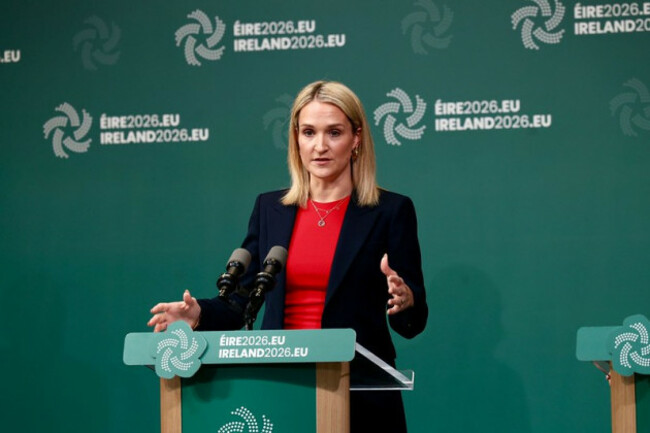
During an interview with Newstalk earlier in the day, Minister for Foreign Affairs and Defence Helen McEntee denied that the rejection was humiliating for Ireland.
“I think this has been blown out of proportion,” she said, putting it down to the additional training that would be needed to use the vehicles.
This didn’t quite chime with the reasoning given by Zelenskyy, who said it would be too costly to get the 27 vehicles up to a usable condition, and that they would rather spend that money on drones and missiles.
Worth noting as well that back in February, in response to a parliamentary question, McEntee said that the vehicles were “approaching end of life” and no decision had yet been made on how they would be “disposed”.
One man’s trash is another man’s treasure, I suppose?
Not a great look.
2. Jim O’Callaghan
Another week, and the fight with solicitors is still rumbling on.
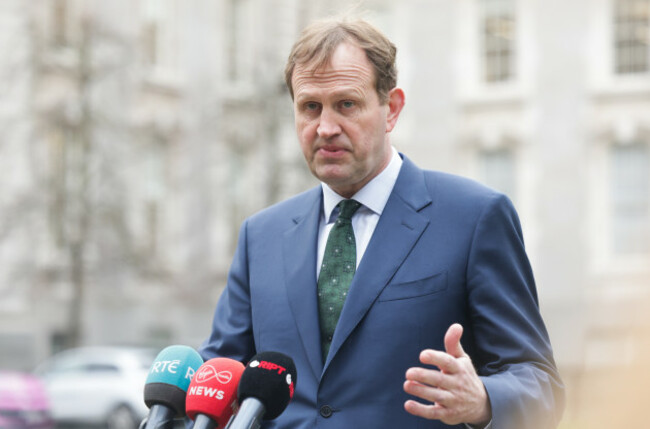
The justice minister has faced another week of heated criticism over his decision to introduce a single flat fee model for criminal legal aid work.
On Thursday, around 60 solicitors walked out of Dublin District Court in protest over the changes, with thousands of criminal cases adjourned in recent weeks due to the continuing withdrawal of services by legal aid solicitors.
President of the Law Society Rosemarie Loftus said this week that solicitors across the country were now resigning from the criminal legal aid scheme as a result of the overhaul. O’Callaghan hit out at the criticism he was facing this week, saying it was unfair to call him Trumpian.
He even had the Taoiseach coming to his defence, saying that fee has been increased, and he doesn’t understand why the lawyers are continuing with their action.
Despite O’Callaghan backtracking somewhat and upping the flat fee from €455 to €520, the dispute looks no closer to reaching a resolution. With the courts set to be off for much of the summer, he might be trying to ride this one out, but if it goes on much longer, he’ll probably have some explaining to do.
3. Darragh O’Brien
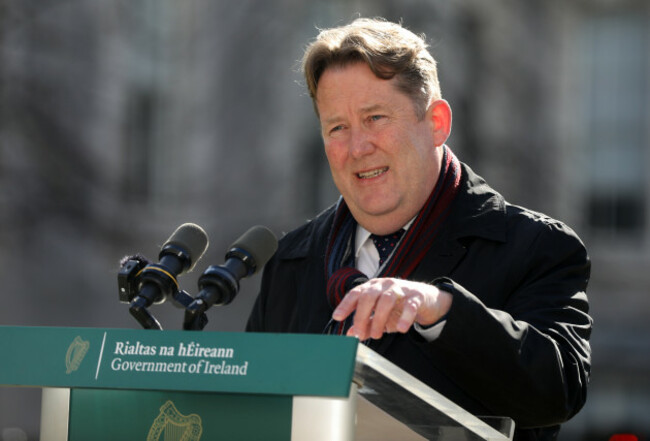
It was a busy week for the Climate and Energy Minister, with two of his bills passed by the Dáil ahead of the summer recess in two weeks’ time.
Both the Dublin Airport Passenger Cap Bill and a law to build a gas storage facility in Co Clare were approved by the Dáil on Tuesday evening after truncated debate, much to the anger of the opposition.
The minister’s decision to guillotine both bills, meaning each had only two hours of debate on proposed amendments, was highly criticised by climate spokespeople from opposition parties.
Labour TD Ciaran Ahern accused the government of “rushing through” the two bills and told The Journal that they are “two of the most destructive bills possible from a climate perspective”.
“They’re systematically dismantling all the guardrails that the previous government had put around our climate obligations in this country. Both of these bills disapply section 15 of the Climate Act, which is the only bit of that act with teeth, which actually requires public bodies to essentially comply with our climate obligations.” he said.
Given the long-term impact both of these bills will have on Ireland’s ability to reach our climate targets, it’s hard not to be critical of O’Brien choosing to use the guillotine and limiting scrutiny of them.
Tell us in the comments who your winners and losers are this week.
To embed this post, copy the code below on your site









have your say