We need your help now

Support from readers like you keeps The Journal open.

You are visiting us because we have something you value. Independent, unbiased news that tells the truth. Advertising revenue goes some way to support our mission, but this year it has not been enough.

If you've seen value in our reporting, please contribute what you can, so we can continue to produce accurate and meaningful journalism. For everyone who needs it.

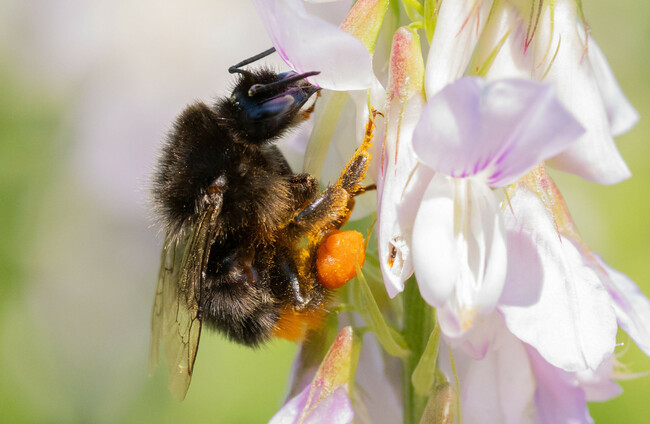
A red-tailed bumblebee, 1 of 21 bumblebee species in Ireland. Alamy Stock Photo

Opinion Forget 'save the honeybees', there are so many other bees in dire need of help

Brian Murray says it’s wild, solitary and dozens of other species of bees who are in trouble as biodiversity drops, and our energy should not be going to honeybees.

LAST UPDATE | 6 Aug

FU*K HONEYBEES! YES, I said it.

And while that statement may come as a shock to you, especially coming from someone like me, I believe I am reflecting the thinking of most people interested in genuinely saving the wild bees on this planet at this time. Of course, I wish the humble honeybee no harm, but if we’re focusing on them alone, it’s no wonder we’re in trouble. 

Firstly, let’s look at the types of bees that exist. Honeybees are just one type of bee who make honey. There are many, many more species of bee species though, including bumblebees, solitary bees, leafcutter bees, mining bees and another group called sweat bees.

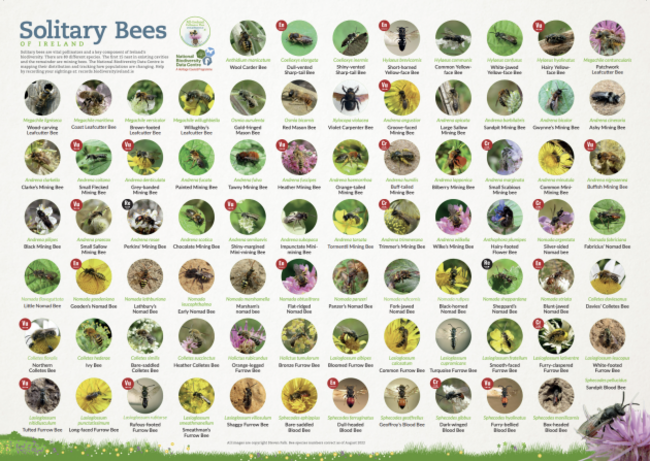
If you look up the great All-Ireland Pollinator Plan, you’ll find great information on the 100 bee species in Ireland and lots of detail on where they are doing well, and not so well. Yes, there is the honeybee, but we also have 21 species of bumblebee and 78 species of solitary bee.

Screenshot 2025-08-05 at 15.19.23 The Solitary Bees of Ireland. All Ireland Pollinator Plan All Ireland Pollinator Plan

I bet most people haven’t realised that we have so many bees here in Ireland. And yes, it’s confusing, but my aim here is to educate you and help you understand that honeybees are not the bees you need to worry about, and I apologise that I had to be crude to get your attention.

The rise and fall of colony collapse disorder

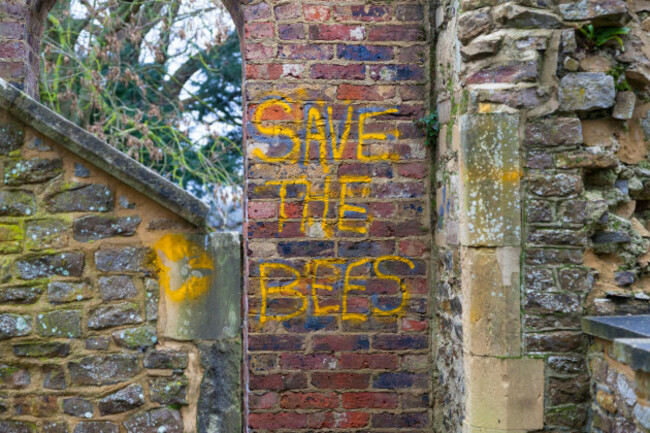
The phrase “Save the Bees” originated in the early 2000s and gained popularity fast. At the time, there were rising incidences of honeybee Colony Collapse Disorder (CCD) in North America.

Cases of CCD had also been recorded, first in Europe and then in Africa and Asia. These days, however, CCD is rarely reported, and the loss of colonies tends to be more a symptom of poor husbandry, inadequate foraging, other diseases, or climate variability.

save-the-bees-graffiti-and-emblem-scrawled-on-an-old-brick-wall-uk Alamy Stock Photo Alamy Stock Photo

And while the United States has reported record losses of commercial honeybee colonies over the past winter, there are apparently still more honeybee colonies than ever before.

The real crisis — wild bee decline

Separately from the above, scientists have been recording the decline of wild bees (non-honeybees) for decades. A recent study found that approximately 25% fewer bee species have been recorded between 2006 and 2015 than before 1990, suggesting a decline in populations and potential extinctions.

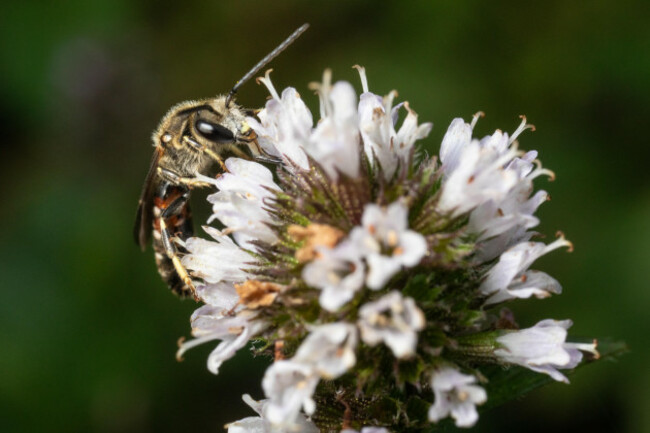
male-common-furrow-bee-kent-uk A Common Furrow Bee, one of the many Solitary Bees found in Ireland. Alamy Stock Photo Alamy Stock Photo

But, because the honeybee is essentially agricultural livestock, the focus remains on it simply because honeybees serve humans in two very distinct and easily observable ways:

They produce honey for our consumption.

They play a significant role in crop pollination in many countries around the world, not least the United States of America, where more than 2.5 million honeybee hives are used to pollinate Almond trees in California alone.

Both of these have quantifiable monetary values attached and therefore sit at the forefront of political decision-making.

A misleading rallying cry

And so, for the longest time, “Save the Bees” has been inextricably linked to honeybees, the one species of bee that does NOT need to be saved. Just googling “save the bees” returns some of the most uninformed trash an entomologically-slanted mind could ever perceive.

While there are over 20 thousand species of bees recorded in the world, only approximately 40 of those produce honey. For those currently trying to work that out, that is 0.2% of bee species.

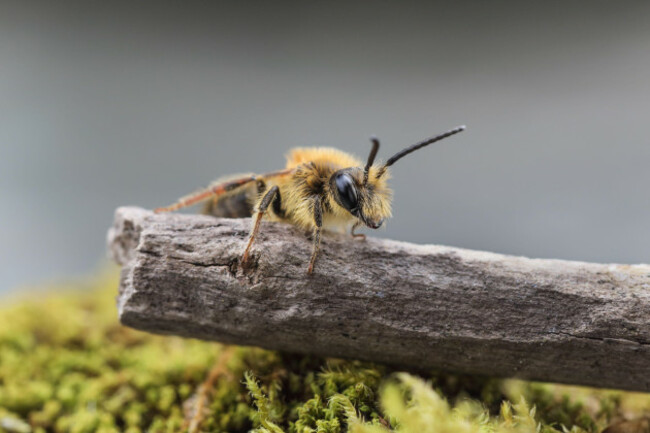
male-tawny-mining-bee-andrena-fulva-in-a-garden-habitat-teesdale-county-durham-england-uk Tawny Mining Bee, one of the Alamy Stock Photo Alamy Stock Photo

A good portion of the other 99.8% are ACTUALLY in decline and need our attention and help. Unfortunately, greenwashing by agricultural, beekeeping and other organisations, as well as chronically sloppy journalism, has made the honeybee a poster child for bee decline, and in doing so has done untold damage to the 99.8% left.

Let me be very clear about this. You are NOT protecting the environment by keeping honeybees. The reality is quite different. In fact, scientists now believe that high honeybee hive concentrations may have a detrimental effect on wild and native bee populations.

The opening line in a previously referenced article is rife with irony:

“As the world’s native bee populations are declining, crop production requiring pollinators increasingly relies on commercial pollination services.”

Let’s break that down. Humans, in this case farmers, take over massive swaths of land for agricultural purposes, effectively extirpating wild bees (causing local extinction) that would naturally perform pollination services for free.

They then pay for the pollination services of commercial beekeepers, who transport thousands of honeybee hives in truck beds to areas where the locally extinct populations of wild bees would have provided their services if they had been accounted for in the first place. The existence of these honeybees in such large numbers then has the potential to further adversely affect the wild bee populations in these areas.

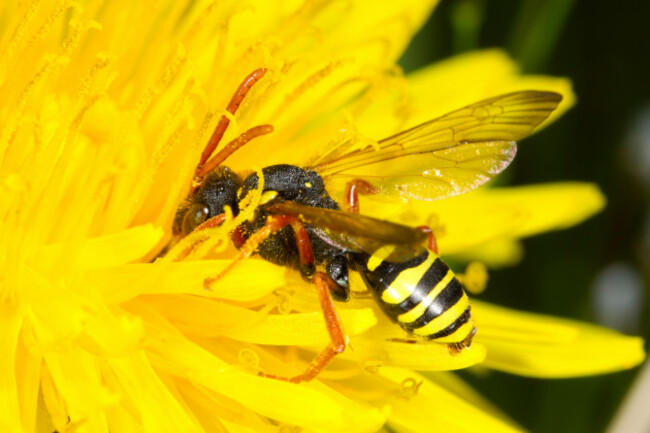
goodens-nomad-bee-nomada-goodeniana-adult-female-feeding-in-a-dandelion-flower-powys-wales-april Gooden’s Nomad Bee, one of the Solitary Bees found in Ireland. Alamy Stock Photo Alamy Stock Photo

So, in case you weren’t following. Free pollinators were exterminated, and to replace them, humans invented pollination as a paid service, which has further adverse effects on the remaining wild bees. That’s not innovation. That is ecological debt, pure and simple.

What can I do to save the ‘correct’ bees?

To begin with, stop equating honeybees with all bees, and share this message with everyone you can. Now that you know the truth, demand responsible journalism and call out lazy publication of the wrong messages when you see it. Never allow them to use images of honeybees in articles about wild bees; it sends the wrong message. Educate yourself, and then educate others.

Be part of the solution by incorporating wildflower areas into your garden. Demand unmown native wildflower areas in your local parks. Preserve hedgerows, dead wood, and bare soil areas to provide safe nesting sites for solitary bees and bumblebees.

Don’t hobby-keep honeybees in a misguided effort to save bees. It is tantamount to being horrified at the effect that bird flu is having on our native Gannet populations and deciding to keep chickens as a solution.

Ultimately, for beekeepers, it is crucial to recognise that hive density is a significant concern. This is a problem everywhere, but particularly when too many hives are located near conservation areas that already support at-risk bee populations. Honeybees can travel up to 10 kilometres for food resources. Bumblebees can travel up to three kilometres.

Solitary bees, however, will only travel up to 500m and are most vulnerable to ecosystem change and habitat destruction, whether that be land clearing for agricultural use or the introduction of livestock bees into their environment.

In a brief conclusion, and with respect to all those who buzz in the sky… please save the bees.

The correct bees.

Not just honeybees.

Brian Murray is the founder of microWild, a biodiversity project based in Blessington, Wicklow. Focusing on invertebrates, microWild provides areas for them to feed, breed, and shelter, including a native wildflower meadow, purpose-built microhabitats, and a pond. Brian shares images of these often-unseen invertebrates on social media and also delivers educational opportunities through workshops, courses, and walks on the microWild site. More at BlueSky and Instagram.

Readers like you are keeping these stories free for everyone...
A mix of advertising and supporting contributions helps keep paywalls away from valuable information like this article. Over 5,000 readers like you have already stepped up and support us with a monthly payment or a once-off donation.

View 12 comments
Close
12 Comments
This is YOUR comments community. Stay civil, stay constructive, stay on topic. Please familiarise yourself with our comments policy here before taking part.
Leave a Comment
    Submit a report
    Please help us understand how this comment violates our community guidelines.
    Thank you for the feedback
    Your feedback has been sent to our team for review.

    Leave a commentcancel

     
    JournalTv
    News in 60 seconds