We need your help now

Support from readers like you keeps The Journal open.

You are visiting us because we have something you value. Independent, unbiased news that tells the truth. Advertising revenue goes some way to support our mission, but this year it has not been enough.

If you've seen value in our reporting, please contribute what you can, so we can continue to produce accurate and meaningful journalism. For everyone who needs it.

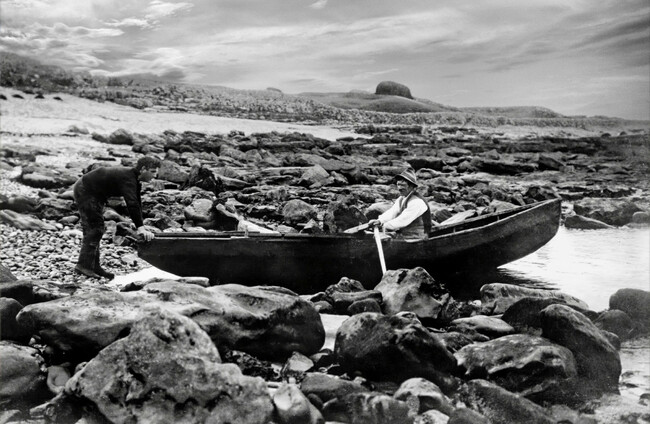
Islanders launching a traditional currach from the Aran Islands off the County Galway coast, Ireland in 1922. Photograph by Ellen O'Connor (1874-1943) via Alamy

Opinion Ireland’s islands have a unique and captivating history — we should cherish them

Artist Pamela de Brí looks at the history and changing shape of life on Ireland’s many islands.

IRELAND’S OFFSHORE ISLANDS have a unique and captivating history which goes back to the earliest evidence of life in the country. Their survival is increasingly threatened by a lack of support and services, migration to the mainland and abroad, and the greater intensity of weather events due to climate change.

Islanders are admirable, not only because of their resilience but also because of their strong sense of community, which has developed from the reality of being sadly neglected by successive governments.

The earliest inhabitants of Ireland probably lived on the shores and adjoining islands, as the mainland was covered in forests and swamps. A variety of people seek refuge on isolated islands to find “a retreat from the clamour and din of modern civilisation, where their spirits can expand… The early Celtic church realised the soul value of these lonely places… the remains of their early settlements can be seen” there.

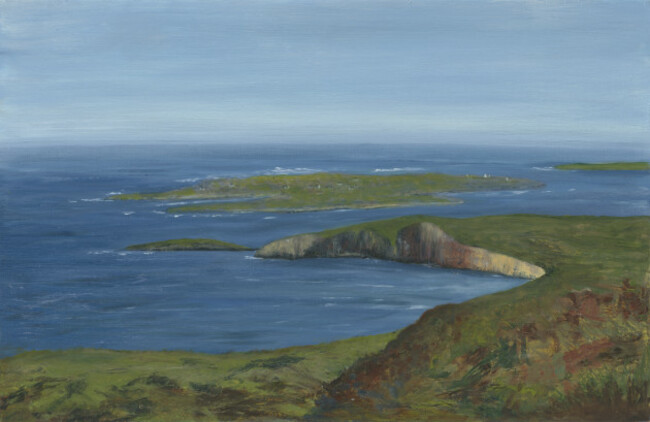
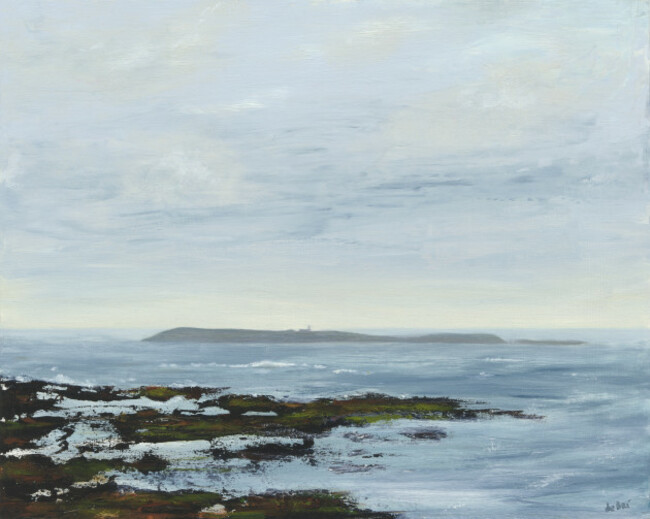
Galway_Tairbeart_Turbot_390x600mm 2 Galway Tairbeart - Turbot Island painting by Pamela de Brí. Tony G Murray; Murray Imaging Studios Tony G Murray; Murray Imaging Studios

Island life means different things to islanders and those viewing them from the comfort of the mainland. The dwindling population and the ultimate abandonment of many of the islands over generations is a reminder of the harsh reality of life on an island which was often cut off from the mainland, for weeks at a time. On the other hand, islands are a paradise for archaeologists, historians, geologists, tourists and those pursuing a Utopian ideal of escape from oppressive urbanisation. 

Ireland’s islands

Ireland is fringed by offshore islands, the vast majority of which are on the west and south coasts. The number of islands varies depending on what size bit of land constitutes an island rather than a rock, but about “300 pieces of land off the coast are of a size and scale as to be accepted as islands (The Coastal Atlas of Ireland).” Fewer than 10 percent of these are still inhabited. Irish was spoken on most of them, and it still is on some.

“Islands have played a significant role in Ireland’s history and culture” (The Coastal Atlas of Ireland), from prehistoric settlements (Dún Aonghusa, Árainn) to medieval monastic communities (Sceilg Mhichíl), to their use as strategic locations for protection of the country (Bere and Spike islands) or, as in Clare Island, a stronghold for Granuaile in her effort to control the seas in the west.

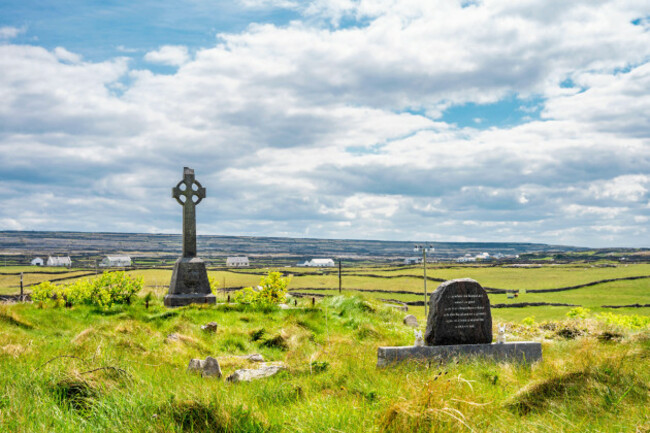
graveyard-with-celtic-cross-in-inis-mor-or-inishmore-the-largest-of-the-aran-islands-in-galway-bay-off-the-west-coast-of-ireland Graveyard with celtic cross in Inis Mór, or Inishmore, the largest of the Aran Islands in Galway Bay, off the west coast of Ireland. Alamy Stock Photo Alamy Stock Photo

Paradoxically, islands were more likely to thrive under British rather than Free State rule. In 1922 the new state didn’t care or see the value of these little individual worlds, the philosophy seemed to be to encourage the inhabitants to move off the islands. In 1953, the last of the Blasket islanders in Kerry relocated to the mainland. The final trauma of a boy who died because the doctor couldn’t travel due to bad weather, along with an aging and diminishing population, led to the decision by de Valera to order the island’s evacuation.

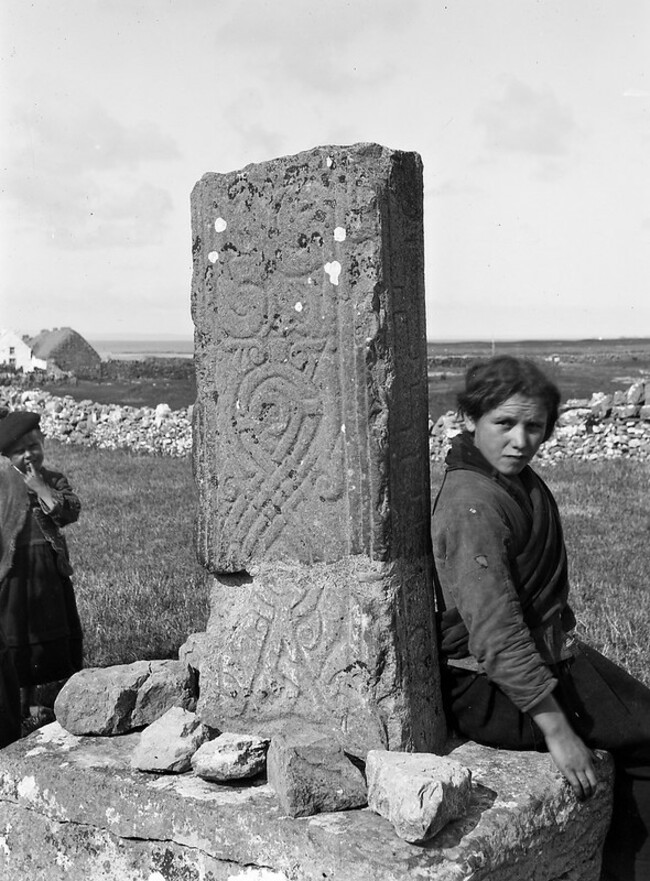
50572248431_ec3795e9ca_c Locals in the Aran Islands in 1860. Photographers: Dillon Family Contributors: Luke Gerald Dillon, Augusta Caroline Dillon Collection: Clonbrock Photographic Collection Date: Circa 1860-19301914 National Library of Ireland National Library of Ireland

Fork, spade and nets were the tools of island life in the past. It wasn’t easy, the land mostly was not good. In the Aran Islands, the soil was “made” over the rock using sand, seaweed and dung. Fishing, sealing, hunting seabirds and their eggs and gathering seaweed supplemented income from farming.

Nowadays, more and more islanders are involved in tourism and, with some government support, can make a decent living on the island. But tourism can both sustain and destroy islands. Farming has often virtually stopped; everything is imported while fields lie not only fallow but neglected.

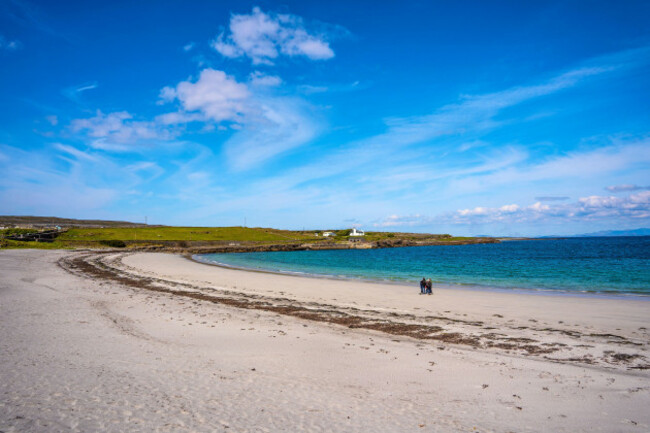
kilmurvey-beach-in-inis-mor-or-inishmore-the-largest-of-the-aran-islands-in-galway-bay-off-the-west-coast-of-irelandSource: Alamy Stock Photo

The effect of the fall-off in farming on the landscape and biosphere is unpredictable without research. Under-grazing leads to invasion by bracken or rushes and loss of pasturage, natural biodiversity, and loss of symbiosis between people, stock, wildlife and land. There’s also cultural loss; language, communities and society, as people aim to make a comfortable life before tourism declines. 

Resilience of islanders

Island stories are frequently sad, inevitably including drownings and shipwrecks, but other stories illustrate their individuality, resilience and character. Historian Diarmaid Ferriter writes about how in the 1870s, four men rowed eight miles from Inishmurray for a priest; one of them pleaded that his father was dying. The priest made it to the island, but because it was a stormy night, keeping the police at bay on the mainland, ‘the natives were busily engaged making poitín’.

At dawn, the crew were ‘too drunk to journey’. The priest replaced the crew with women, who ‘could handle the oars as well as the men’. The women were terrified of the storm and wanted to return to the island. The priest had a gun with him and told them: ‘The first woman who leaves her place, I’ll shoot her dead.’

Donegal_Reachlainn_Uí_Bhirn_Rathlin O'Birne_400x500mm 2 Donegal, Reachlainn Ui Bhirn by Pamela de Brí. Tony G Murray Tony G Murray

Then there is the woman on Cruach na Caoile, (Galway) who went into labour. The husband went by boat to get a midwife. When lying in front of the fire, a big dark man-monster came into the house and told her to get up. She refused, then the cock crowed, and the man left saying “if it wasn’t for that male thing outside your life would have been short”. The woman gave birth to a baby boy in the morning.

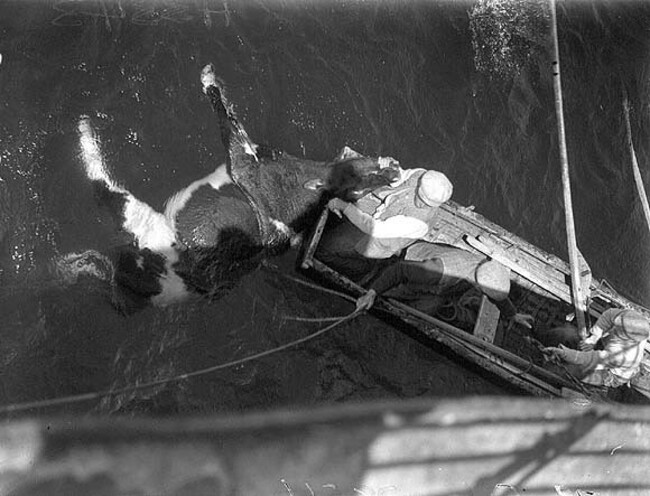
6276031368_8b41dc22a6_z Inisheer islanders bringing a bullock out to the Dublin built steamer, the Dún Aengus, on 31 May 1939 for transport to Galway. This is how livestock had to be transported from the island between 1921 and 1958 until a pier was built on Inisheer (Inis Oírr) in 1997. National Library of Ireland National Library of Ireland

A traditional way of marking a sea border between Mayo and Galway was to throw a sack of oats into the sea and see where it would land. The islands that lay to the north of the oats as they floated out would be in Mayo, and those to the south would belong to Galway. In the case of Crump, the sack of oats floated to the south of the island before heading out to sea.

Recently, there is evidence of changing attitudes towards some of the permanently inhabited islands. In 2023, the Department of Rural Development published “Our Living Islands”, a 10-year national policy for offshore islands. “The aim of this policy is to ensure that sustainable, vibrant communities can continue to live — and thrive — on the offshore islands”.

A positive and hopeful initiative.

Pamela de Brí is a Kildare-based artist whose work documents and reflects social and demographic changes in rural Ireland. Having researched and painted nearly 60 offshore islands, a selection of which will be exhibited in Kilcock Art Gallery (26 April – 7 June 2025), Pamela has collected their stories, which will be published in a book, along with images of the paintings in Autumn 2025.

Readers like you are keeping these stories free for everyone...
A mix of advertising and supporting contributions helps keep paywalls away from valuable information like this article. Over 5,000 readers like you have already stepped up and support us with a monthly payment or a once-off donation.

Close
7 Comments
This is YOUR comments community. Stay civil, stay constructive, stay on topic. Please familiarise yourself with our comments policy here before taking part.
Leave a Comment
    Submit a report
    Please help us understand how this comment violates our community guidelines.
    Thank you for the feedback
    Your feedback has been sent to our team for review.

    Leave a commentcancel

     
    JournalTv
    News in 60 seconds