We need your help now

Support from readers like you keeps The Journal open.

You are visiting us because we have something you value. Independent, unbiased news that tells the truth. Advertising revenue goes some way to support our mission, but this year it has not been enough.

If you've seen value in our reporting, please contribute what you can, so we can continue to produce accurate and meaningful journalism. For everyone who needs it.

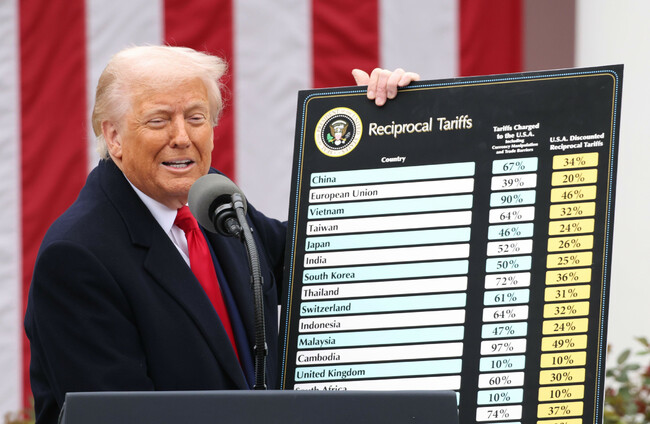
The consensus amongst legal and constitutional experts is that by any objective standard, Trump’s tariffs are unconstitutional and unlawful. Alamy Stock Photo

Marion McKeone All the experts say Trump's tariffs are unlawful. Will the Supreme Court agree?

The US correspondent says a ruling that the tariffs are illegal could see billions being refunded and deal a body blow to Trump’s handling of the economy.

IT’S NOT THE first time in US President Donald Trump’s second term that the Supreme Court has been asked to decide whether Congressional power can be ceded to the current occupant of the White House.

Trump’s demand for a fast-tracked ruling on the legality of his arbitrary and chaotic tariffs represents the biggest test so far of his economic agenda – and the court’s willingness to uphold the checks and balances system on behalf of a Congress that is unwilling to do so itself.

If the Supreme Court upholds the appeal court’s finding that most of Trump’s tariffs are unlawful, it will deal a triple whammy to his stewardship of the economy. Importers who have paid tens of billions of dollars in duties will be entitled to seek refunds. US Treasury Secretary Scott Bessent will have to find another way to plug the $4 trillion cost of Trump’s massive tax cuts. And the economic cudgel Trump used to clobber trading partners into submission will be confiscated, whittling away his leverage and his strongman swagger.

Trump lawyers filed a petition with the Supreme Court on Wednesday night ahead of oral arguments in November and a ruling that is expected by the end of the year. What it lacked in legal heft, it compensated for with hyperbole. Solicitor General John Sauer’s claim that tariffs pulled America “back from the precipice of disaster” sounded somewhat histrionic, given that Trump inherited an economy that grew by 2.8% in 2024 while experiencing its lowest unemployment in sixty years and keeping inflation below 2.5%.

If there is a cogent legal argument for retaining the tariffs, it was nowhere to be found in the 35-page appeal. Meanwhile, Trump and his surrogates engage in increasingly frantic legal lobbying as they dominate cable news and online media, warning of the catastrophic consequences of upholding the Federal Circuit ruling. Secretary of State Marco Rubio claimed the Supreme Court would “create a foreign policy disaster scenario” if it refused to allow Trump to gouge allies like Brazil and reward adversaries like Russia.

The potential complications from the tariff mess are boundless and the cost is potentially stratospheric. Luckily for Trump, he has not, as he falsely claimed on Tuesday, accrued $17 trillion in tariffs since his lottery wheel performance in the Rose Garden on 2 April. Sober estimates indicate that the Treasury has amassed up to $100 billion and counting over the past several months.

The consensus amongst legal and constitutional experts is that by any objective standard, Trump’s tariffs are unconstitutional and unlawful. That the Federal Circuit appeals court and the International Trade Court were correct in their findings.

If the Supreme Court upholds the lower courts’ rulings, then every importer of goods who paid tariffs will be potentially entitled to a refund. Even if the Supreme Court limits the application of its ruling to the importers who sued Trump, the prospect of recovering tens of billions of dollars in unlawful payments will unleash a cascade of copycat lawsuits.

Tariff refund rights

But small or medium businesses that have been partially or fully eating the tariffs costs so far may lack the legal muscle and deep pockets needed to take on the Treasury department.

This has prompted some financial services firms to explore a novel but potentially lucrative line of business, where they would buy the tariff refund rights of importers at a steep discount, in much the same way debt collection agencies buy delinquent credit card debts from Visa or MasterCard.

Cantor Fitzgerald, the Wall Street financial brokerage firm that was headed by Howard Lutnick before he became Trump’s Commerce Secretary, received communication from two Democratic senators saying they intended to investigate repots Cantor had “offered companies the opportunity to trade their legal claim to a future tariff refund in exchange for 20 to 30 per cent of the duties the company paid”.

It’s understood that Cantor Fitzgerald had internal discussions about ‘facilitating trades for hedge funds’ for several weeks after the Court of International Trade’s ruling on 28 May, but that no further action has been taken and no tariff refund transactions have been executed by the Wall Street firm to date.

Following his Senate confirmation last February, Lutnick anointed his 27-year-old son Brandon as Chairman and CEO, while his 28-year old son Kyle, who failed to astonish the music world in his previous career as a rapper, became Cantor Fitzgerald’s executive vice chairman.

If the company does pursue tarif refund transactions, it would mean that while Lutnick Sr has been one of the fiercest champions of the higher the better Trump tariffs, his sons would be betting against them to enrich themselves and their clients.

Cantor alerted the antennae of Elizabeth Warren, the most fiscally literate member of the Senate. On 11 August, Warren and fellow Democrat, Senator Ron Wyden promptly wrote to Lutnick’s sons, announcing their intention to investigate the reports that Cantor had offered companies the chance to trade their legal claim to a future tariff refund in exchange for a percentage of duties paid.

What are Trump’s options?

The hum about tariff refund business in the financial services suggests that Wall Street thinks Trump’s tariff train is about to be derailed.

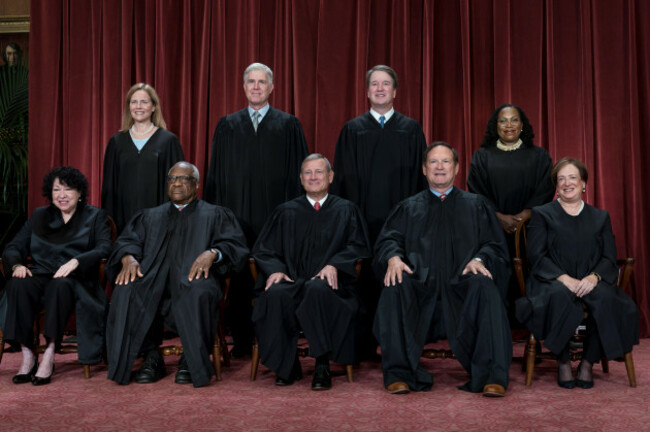
file-members-of-the-supreme-court-sit-for-a-group-portrait-in-washington-oct-7-2022-bottom-row-from-left-justice-sonia-sotomayor-justice-clarence-thomas-chief-justice-john-roberts-justice-s Will the Supreme Court justices allow the tariffs to stand? Alamy Stock Photo Alamy Stock Photo

If the Supreme Court rules against him, he’s not without options; the 1974 Act is a better legal fit for what he’s trying to accomplish and would allow him to impose 15% tariffs for up to 150 days, a period that could be extended by Congress. But it sets out conditions and imposes limitations that would chafe against the US President’s impulsive, headline-grabbing instincts.

Meanwhile, the bond market has been forced to reckon with the potential impact on America’s already untenable fiscal situation. Treasury yields jumped on Tuesday when the Court of Appeal ruling was handed down. Bond traders have been factoring in income generated from Trump’s tariffs to shore up America’s public finances. US national debt currently exceeds $37.3 trillion, according to US Treasury data. The Congressional Budget Office (CBO) estimates it will reach $150 trillion within the next thirty years.

Before the Federal Circuit appeals ruling, the CBO predicted that the tariffs would add $4 trillion to the Treasury coffers over the next decade, which it said could be used to pay down government debt and offset the estimated $4.1 trillion in revenues lost over the same period as a result of Trump’s new tax cuts.

There is no good outcome for the US or the global economy. But the least bad option would be for the Supreme Court to uphold the Federal Circuit’s ruling, which would at least restore a semblance of legal certainty by requiring the US president to abide by Constitutional, federal and international trade laws. Otherwise, agreements between the US and its trading partners assume the weight of suggestions rather than legally binding contracts.

For Ireland, some certainty would be welcome. Last month, Trump warned of 250% tariffs on pharmaceutical exports – which account for €44 billion of Ireland’s €72.6 billion in exports to the US in 2024. While the Trump tariff turmoil has caused some US corporations to stall further investment, analysts and economists are sceptical that it will prompt any of the big pharma or big tech corporations to shutter their overseas operations and relocate to the US. Instead, they’ve made some token concessions to Trump, stressing their commitment to long term investment in the US or announcing plans to build manufacturing plants in red states.

Unchecked and unbalanced

Nobel Prize winning economist Paul Krugman is no fan of Trump’s economic policies, but he doubts tariffs will have any significant impact on how multinationals operate in the long or short-term. He claims both Trump’s tariff cheerleaders and Democratic doomsayers are exaggerating their respective arguments. The main problem with the tariffs, he says, is that they’re unlawful.

Professor Ilya Somin, a constitutional law expert at the libertarian Cato Institute agrees, describing the tariffs as “a blatantly illegal usurpation of legislative power”. Somin has more in common with the libertarian wing of the MAGA movement than he does with left-leaning economists like Krugman, yet he was the first lawyer to sue Trump on behalf of five American import businesses.

The tariffs debacle is a symptom of a bigger problem: the erosion of the checks and balances system that has protected American democracy laid the foundations for its economic prosperity. The Supreme Court may yet conjure up some legal fiction that would allow the tariffs to stand.

Its conservative supermajority has bent itself into a legal pretzel in its attempts to indulge Trump’s authoritarian impulses – or at least where they dovetail with its conservative Christian ideology.

But its acquiescence has taken a heavy toll on its reputation; a Gallup poll conducted last month revealed that America’s highest court, which once enjoyed the highest approval rating of any US institution, remains mired at a 40% approval rating, its lowest on record.

The Republican majority’s abdication to a would-be authoritarian may be craven and despicable, but it’s temporary. Elections come and go. Control of Congress switches back and forth and even the most flaccid Democratic majority would push back against such blatant presidential encroachment on legislative turf.

For a Supreme Court to rubberstamp the abdication of power by the current Congress would permanently undermine the separation of powers that are the cornerstone of America’s already battered democracy.

Marion McKeone is an award-winning journalist, writer and documentary maker.

Readers like you are keeping these stories free for everyone...
A mix of advertising and supporting contributions helps keep paywalls away from valuable information like this article. Over 5,000 readers like you have already stepped up and support us with a monthly payment or a once-off donation.

Close
15 Comments
This is YOUR comments community. Stay civil, stay constructive, stay on topic. Please familiarise yourself with our comments policy here before taking part.
Leave a Comment
    Submit a report
    Please help us understand how this comment violates our community guidelines.
    Thank you for the feedback
    Your feedback has been sent to our team for review.

    Leave a commentcancel

     
    JournalTv
    News in 60 seconds