We need your help now

Support from readers like you keeps The Journal open.

You are visiting us because we have something you value. Independent, unbiased news that tells the truth. Advertising revenue goes some way to support our mission, but this year it has not been enough.

If you've seen value in our reporting, please contribute what you can, so we can continue to produce accurate and meaningful journalism. For everyone who needs it.


Sitdown Sunday: 'This generation was bred for addiction': The toxic mix of technology and gambling

Settle down in a comfy chair with some of the week’s best longreads.

IT’S A DAY of rest, and you may be in the mood for a quiet corner and a comfy chair.

We’ve hand-picked some of the week’s best reads for you to savour.

1. Unsafe bet

closeupoftwomenwatchingfootballmatchontv Shutterstock Shutterstock

Problem gambling has often been referred to as a so-called “hidden addiction”. Now, with a phone in everyone’s pocket, it’s become more secretive and more problematic- particularly when it comes to young men and sports-betting.  

(Rolling Stone, approx 27 mins reading time)

I put the obvious question to clinician after clinician: Why are young people, males in particular, so susceptible to sports-bet apps? Bechtold, the founder and director of the Better Institute in Pittsburgh, began with the mile-high view. “This generation was basically bred for addiction, [having been] raised on cellphones inches from their faces.” The feeds on those devices “disrupted their neural wiring,” leaving them anxious, impulsive, and susceptible to “stims that are quick and constant onscreen.” Their online childhoods also robbed them of life skills best learned by leaving the house. Fiscal savvy gained by working part-time jobs. Risk awareness from running the streets, and an acquired sense of consequences from actions. “When these kids go bust, time after time it’s the parents who bail them out,” says Bechtold. “Every family I deal with, I say, ‘Quit giving the kid money!’ And Mom says, ‘Oh, I’m not ready to do that yet.’” 

2. A brother’s conviction

Scott Johnson died after falling from a cliff in Australia in 1988. His death was ruled as suicide, but his brother was convinced that he had been the victim of a hate crime. Eren Orbey investigates whether his quest for justice resulted in a wrongful conviction.

(The New Yorker, approx 46 mins reading time)

One morning in 2005, Steve was sorting through mail in his kitchen when he found a manila envelope from Noone. It contained a pair of news clippings from the Sydney Morning Herald concerning three men who’d died or disappeared in the nineteen-eighties along the cliffs of Bondi Beach, a popular tourist site less than an hour from North Head. One article explained that the Bondi headland was a well-known cruising spot, or “beat,” where gangs of teen-agers were known to attack and rob gay men. The cases of the three victims had originally been left unresolved or chalked up to “misadventure.” Now, however, after a new investigation, a coroner had concluded that at least two of the men had likely been thrown to their death from the cliffs. As Steve read and reread the pages, he felt a long-sought sense of certainty: “It’s safe to say that I instantly thought, This is what happened to my brother.”

3. Daniel Day-Lewis

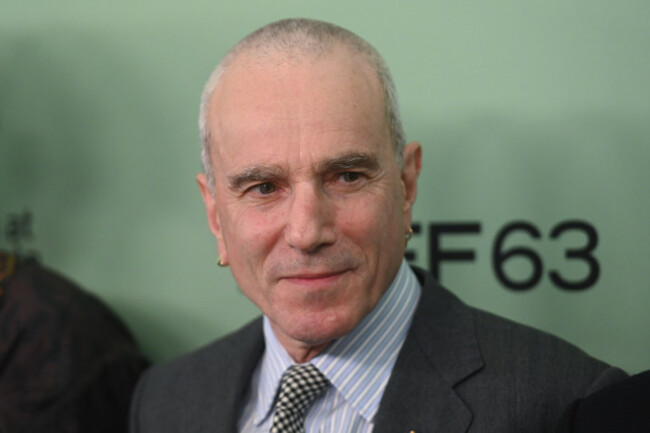
photo-by-ndzstar-maxipx-2025-92925-daniel-day-lewis-at-the-world-premiere-of-anemone-on-september-29-2025-at-the-63rd-new-york-film-festival-in-new-york-city Daniel Day-Lewis at the world premiere of Anemone on 29 September. Alamy Stock Photo Alamy Stock Photo

The Oscar-winning actor has come out of retirement to star in Anemone, a new film directed by his son. 

(The New York Times, approx 15 mins reading time)

Day-Lewis began writing the film with Ronan several years ago, when he was still in the thick of retirement. “Knowing that it was quite possible I wouldn’t find my way back to working as an actor, I had kind of an anticipatory sadness that I wouldn’t then work with Ronan when he made films, so I suggested that we just try and cook something up for its own sake,” he said. As the project grew bigger and he signed on to star, Day-Lewis had to face his own feelings about becoming a public figure again: Even at the height of his fame, he largely eschewed press, and our conversation was the first solo print interview he has given in nearly a decade. Still, despite his initial reticence, I found Day-Lewis to be thoughtful and surprisingly forthcoming about the central conflict that has defined his career.

4. Young Republicans

Thousands of messages exchanged over seven months in a group chat of Young Republicans in New York, Kansas, Arizona and Vermont were leaked. What they said when they thought no one else was looking has led to bipartisan condemnation in the US. 

(Politico, approx 17 mins reading time)

Jipson reviewed multiple excerpts of the Young Republicans’ chat provided by POLITICO. One was a late July message where Mosiman, the chair of the Arizona Young Republicans, mused about how the group could win support for their preferred candidate by linking an opponent to white supremacist groups. But Mosiman then realized the plan could backfire — Kansas’ Young Republicans could end up becoming attracted to that opponent.  “Can we get them to start releasing Nazi edits with her… Like pro Nazi and faciam [sic] propaganda,” he asked the group. “Omg I love this plan,” Rachel Hope, the Arizona Young Republicans events chair, responded. “The only problem is we will lose the Kansas delegation,” Mosiman said. Hope and the two Kansas Young Republicans in the chat reacted with a laughing face to the message. Hope did not respond to requests for comment. Mosiman declined to comment. Jipson said the Young Republicans’ conversations reminded him of online discussions between members of neo-Nazi and white supremacist groups. “You say it once or twice, it’s a joke, but you say it 251 times, it’s no longer a joke,” Jipson said. “The more we repeat certain ideas, the more real they become to us.”

5. Virginia Giuffre

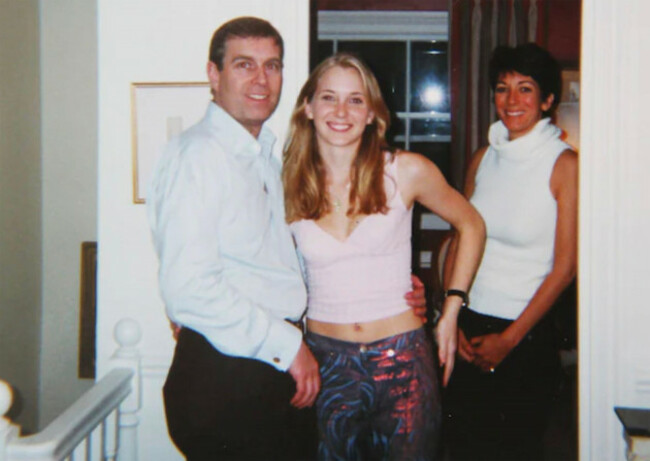
prince-andrew-with-virginia-giuffre-centre-and-ghislaine-maxwell-photo-us-dept-of-justice Prince Andrew with Virginia Giuffre and Ghislaine Maxwell. Alamy Stock Photo Alamy Stock Photo

The woman who alleged that she was trafficked by Jeffrey Epstein died in April. In this extract from her posthumous memoir, she writes about being recruited by a predator at Mar-a-Lago aged 16 and alleged encounters with Britain’s Prince Andrew.

(The Guardian, approx 19 mins reading time)

When Prince Andrew arrived at the house that evening, Maxwell was more coquettish than usual. “Guess Jenna’s age,” she urged the prince, after she introduced me. The Duke of York, who was then 41, guessed correctly: 17. “My daughters are just a little younger than you,” he told me, explaining his accuracy. As usual, Maxwell was quick with a joke: “I guess we will have to trade her in soon. In contrast to his appearance today – stout, white-haired and jowly – Prince Andrew then was still relatively fit, with short-cropped brown hair and youthful eyes. He’d long been known as the playboy of the royal family. When I noticed that Epstein called the prince “Andy”, I began to call him that, too. As we chatted in Maxwell’s entryway, I suddenly thought of something: my mom would never forgive me if I met someone as famous as Prince Andrew and didn’t pose for a picture. I ran to get a Kodak FunSaver from my room, then returned and handed it to Epstein. I remember the prince putting his arm around my waist as Maxwell grinned beside me. Epstein snapped the photo.

6. Fear and laughter in Saudi Arabia

Helen Lewis went to the Riyadh Comedy Festival to watch comedians like Jimmy Carr and Kevin Hart perform in a country known for public executions and severe human rights abuses. 

(The Atlantic, approx 21 mins reading time)

What could stand-up comedy look like in a theocracy? Would enough crude jokes about incest, pedophilia, and anal sex really usher in Western liberal democracy to Saudi Arabia? Ahead of the Riyadh event, I had already enjoyed weeks of watching comedians scramble to explain why they had agreed to perform for a brutal authoritarian regime. The podcaster Tim Dillon said on his show that he’d accepted $375,000 to “look the other way,” and, in any case, “there are so many beautiful things that have happened as a result of forced labor.” (He flashed up a picture of the pyramids, which are located in a completely different Arab country, to underline the point.) Saudi Arabia—showing an unexpected grasp of comic timing—promptly canned him from the festival. Dillon said that his manager had told him, “They heard what you said about them having slaves. They didn’t like that.”

…AND A CLASSIC FROM THE ARCHIVES…

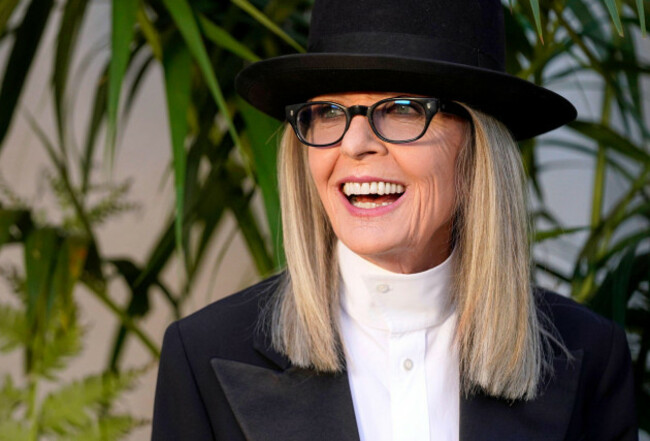
file-diane-keaton-appears-at-the-ralph-lauren-spring-2023-fashion-experience-in-pasadena-calif-on-oct-13-2022-ap-photochris-pizzello-file Alamy Stock Photo Alamy Stock Photo

A 1987 interview with the late Diane Keaton. 

(Vanity Fair, approx 17 mins reading time)

Diane Keaton’s latest project, which will be released this spring, is a documentary about heaven. A documentary about heaven. ”I was always pretty religious as a kid, but I had trouble with Jesus early on because I couldn’t understand that there was a son of God here on earth. I was primarily interested in religion because I wanted to go to heaven. I never read Paradise Lost. I don’t have an education at all—public schools, and I went into acting immediately.” We are sitting under the shirred ceiling of the Sant Ambroeus tearoom on Madison Avenue. The shirring has never looked so much like the inside of a casket. Rain is beating down on the glass roof hidden behind the shirring, and Diane Keaton is wearing a man’s bowler hat. And a large Yohji Yamamoto jacket, a checked skirt to the ground, flat lace-up boots, a white shirt with a black silk rose over the top button. She is also wearing little sunglasses and mittens. ”Some people,” she says, “will think that we took on the subject of heaven, but I don’t think it’s a subject you take on. It’s something you want.”

Note: The Journal generally selects stories that are not paywalled, but some might not be accessible if you have exceeded your free article limit on the site in question.

Readers like you are keeping these stories free for everyone...
A mix of advertising and supporting contributions helps keep paywalls away from valuable information like this article. Over 5,000 readers like you have already stepped up and support us with a monthly payment or a once-off donation.

Close
JournalTv
News in 60 seconds