We need your help now

Support from readers like you keeps The Journal open.

You are visiting us because we have something you value. Independent, unbiased news that tells the truth. Advertising revenue goes some way to support our mission, but this year it has not been enough.

If you've seen value in our reporting, please contribute what you can, so we can continue to produce accurate and meaningful journalism. For everyone who needs it.

Sitdown Sunday: Inside the surveillance empire that tracked thousands using phone numbers

Settle down in a comfy chair with some of the week’s best longreads.

IT’S A DAY of rest, and you may be in the mood for a quiet corner and a comfy chair.

We’ve hand-picked some of the week’s best reads for you to savour.

1. First Wap

An international group of journalists uncovered how a surveillance company was able to spy on politicians, celebrities and more in over 100 countries under the radar for years through a vulnerability in phone networks. 

(Mother Jones, approx 28 mins reading time)

Operating from their base in Jakarta, where permissive export laws have allowed their surveillance business to flourish, First Wap’s European founders and executives have quietly built a phone-tracking empire, with a footprint extending from the Vatican to the Middle East to Silicon Valley. It calls its proprietary system Altamides, which it describes in promotional materials as “a unified platform to covertly locate the whereabouts of single or multiple suspects in real-time, to detect movement patterns, and to detect whether suspects are in close vicinity with each other.” Altamides leaves no trace on the phones it targets, unlike spyware such as Pegasus. Nor does it require a target to click on a malicious link or show any of the telltale signs (such as overheating or a short battery life) of remote monitoring. Its secret is shrewd use of the antiquated telecom language Signaling System No. 7, known as SS7, that phone carriers use to route calls and text messages. Any entity with SS7 access can send queries requesting information about which cell tower a phone subscriber is nearest to, an essential first step to sending a text message or making a call to that subscriber. But First Wap’s technology uses SS7 to zero in on phone numbers and trace the location of their users.

2. Craig

This piece about a child who was failed by the system and the effect it had on his life is a tough but important read. It’s beautifully written by Pamela Gordon, who made a documentary with Craig when he was 13 and kept in touch with him throughout his life. 

(The Guardian, approx 20 mins reading time)

Often, he would ask me to send another DVD copy of Staying Lost. He was proud of the film. He always said it was the only thing he’d ever really finished. He tried to show it to prison officers and volunteers on the inside. I think he hoped that by watching it they would get some idea of how much he’d been through and that maybe one day someone would come up with the answer to how he could sort his life out. But officers were neither inclined nor equipped to ponder prisoners’ life stories. “You should make a follow-up documentary on me, Pam,” he’d often say. “That’d show people what it’s like, what happened to me next.” But TV had moved on. I was told by one executive that Craig just didn’t have a “TV face”. Time and again Craig would walk out of the prison gate with no address. He’d leave with the best intentions of going to see his probation officer. But those appointments were often fraught and filled with forms and applications he couldn’t handle. And they usually led to a dead end. So, he’d find a mate to stay with. Someone who was doing him a favour. I could sometimes hear the chaos of those places in the background if he called me. “It’s sound here,” Craig would reassure me. But things would soon unravel.

3. Escape from no man’s land

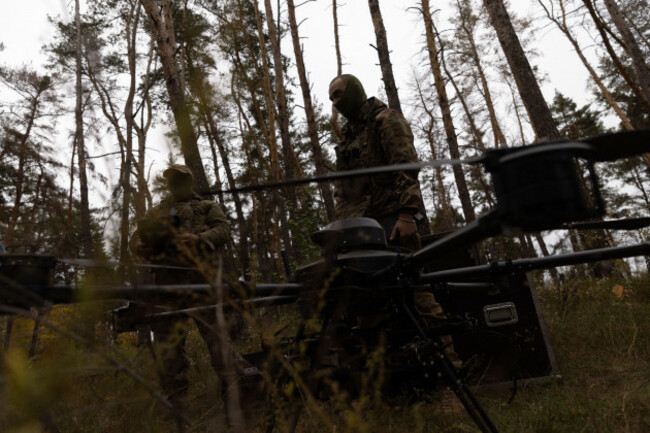
ukrainian-servicemen-set-up-a-poseidon-drone-before-flying-it-towards-russian-troop-positions-at-an-undisclosed-location-near-the-frontline-in-the-donetsk-direction-ukraine-on-september-24-2025 Ukrainian servicemen set up a ‘Poseidon' drone before flying it towards Russian troop positions at an undisclosed location near the frontline in the Donetsk direction. Alamy Stock Photo Alamy Stock Photo
C.J. Chivers reports from Kharkiv on the drone warfare that’s taking place on the frontline in Russia’s ongoing war on Ukraine. 

(The New York Times, approx 36 mins reading time)

The pilot chose Aleksandr, a silhouette holding a rifle in tall grass. The drone stopped above him and released a small explosive munition. After a brief free fall, it landed beside him on dirt. Light flashed in Aleksandr’s eyes, accompanied by a blast that threw him down. His luck was bad: Shrapnel tore through him; pain flared in his left leg. His luck was good: The drone did not linger for the finish. It darted away, chasing his peers as they bounded for trees. Bleeding, pressed to soil, he heard more explosions, off in the direction from where he had come. Quiet settled over the field. Aleksandr sat up. The Russian pilot, he thought, had mistaken him for dead. Or perhaps the drone, an improvised weapon based on a consumer gadget, was out of ammunition or needed a battery change. Whatever the reason, it no longer hunted here. Aleksandr was left wounded in the void of no man’s land, a zone surveilled by drones and roamed by animals scavenging the fallen. The darkness was almost total.

4. The baby whisperer

Marian Fraser ran the most popular daycare in a central Texas city, then she was arrested for the death of a child in her care. Michael Hardy looks at the mysterious case. 

(Texas Monthly, approx 44 mins reading time)

I first learned about Fraser from her brother James Bergman, a retired sales representative who lives in New Braunfels. He believed his sister had been scapegoated. “I think the police just got tunnel vision, decided it was her, and never looked at anybody else that had access to the baby,” he said. There was no direct physical or eyewitness evidence tying Fraser to Clara’s death. As I dug into the case, it seemed to have all the hallmarks of a wrongful conviction. During more than three dozen interviews and over multiple trips to Waco, I kept hearing versions of one refrain: Something about the story didn’t add up. How could a woman who loved children as much as Fraser did be in prison for murdering a four-month-old baby? “There is a missing piece somewhere,” insisted Michelle Franks, who sent her daughter Rachel to Spoiled Rotten in the mid-nineties. “Marian could never do something like that intentionally and live with herself.” As it turned out, there was a missing piece, a key detail that had been withheld from the police, the prosecutors, and the public for the past twelve years. The new information helped fill in the puzzle. But it also challenged everything I thought I knew about the case.

5. Dick Van Dyke

los-angeles-usa-07th-june-2024-dick-van-dyke-winner-for-guest-performance-in-a-daytime-drama-series-on-days-of-our-lives-pose-on-the-winners-walk-at-the-51st-annual-daytime-emmy-awards-held-at Dick Van Dyke at the Daytime Emmy Awards in 2024. Alamy Stock Photo Alamy Stock Photo

As he prepares to turn 100 next month, the legendary actor shares some of his tips and tricks on how to live a long and happy life. 

(The Times, approx 10 mins reading time)

Playing came naturally to all of us as kids. Then, somewhere along the way, some of us decided we had more important things to do with ourselves and so we gave up play. Luckily for me, I got to keep playing through my entire career. As seriously as I took it, comedy, singing and dancing were always just my way to feel and express simple pure joy. To this day, I hum through my whole daily routine, I crack jokes and pull pranks and I make my body go rubbery — just for the fun of it. You can tap into play to make practically anything more fun — a strained family visit, a boring car ride, a dreaded chore, an anxious wait at the doctor’s office. As all these little experiences accumulate, your whole approach to living can change. Your whole self becomes buoyant!

6. The Silicon Valley of Europe

Jessica Traynor writes about what US tech corporations have done to Ireland’s economy. 

(The Dial, approx 22 mins reading time)

I recently rewatched an RTÉ news segment about Facebook’s choice to locate its European headquarters in Ireland. At the time, the social media platform had 100 million users worldwide and about 300,000 in Ireland; it was still necessary to explain to the TV audience what Facebook was. The company was bringing just 70 jobs to the Irish economy, and yet its arrival was newsworthy. The RTÉ report included a clip of a speech by Tánaiste (deputy prime minister) and Minister for Enterprise Mary Coughlan about the benefits of Facebook. These were some of the darkest days of the recession. I remember completing the purchase of my first house amid huge fear that there would be a run on the banks. It seems quaint now, but during those first days in our new home, my partner and I spent each day repainting the rooms with the radio on, listening for the news that the country might fall deeper into the pit of financial ruin. Would I lose my job and have to post my keys back through the letter box and declare bankruptcy, like some friends of mine were having to do? Watching the news report again, I can see that the minister looks tired. Her voice is thin. I may be projecting, but she looks like someone clutching a life ring in a stormy sea.

…AND A CLASSIC FROM THE ARCHIVES…

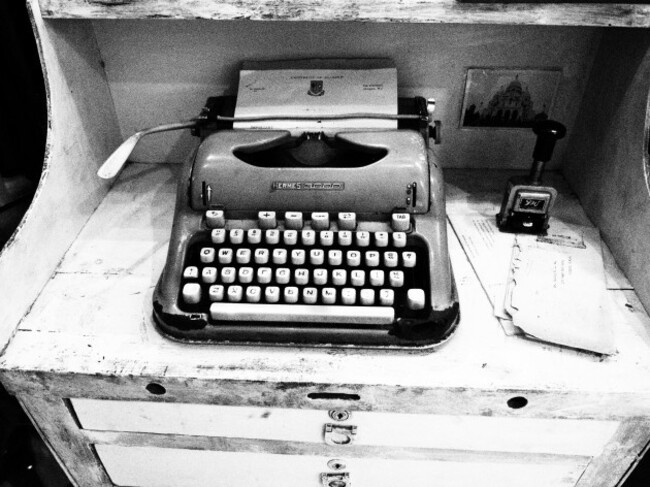
hermes-3000-typewriter An Hermes 3000 typewriter. Alamy Stock Photo Alamy Stock Photo

This essay by Ann Patchett about the things we accumulate in life and making the choice to part with them is brilliant, and might make you cry.

(The New Yorker, approx 25 mins reading time)

I had laid out my burden on the basement floor and Kerrie had borne it away. Or at least a chunk of it. There was still so much of the house to sort. “Don’t feel bad,” Karl said, as we watched them back out of the driveway. “If we hadn’t given it to her, she would have registered for it.” I did feel bad, but not for very long. The feeling that came to take its place was lightness. This was the practice: I was starting to get rid of my possessions, at least the useless ones, because possessions stood between me and death. They didn’t protect me from death, but they created a barrier in my understanding, like layers of bubble wrap, so that instead of thinking about what was coming and the beauty that was here now I was thinking about the piles of shiny trinkets I’d accumulated. I had begun the journey of digging out.

Note: The Journal generally selects stories that are not paywalled, but some might not be accessible if you have exceeded your free article limit on the site in question.

Readers like you are keeping these stories free for everyone...
A mix of advertising and supporting contributions helps keep paywalls away from valuable information like this article. Over 5,000 readers like you have already stepped up and support us with a monthly payment or a once-off donation.

Close
7 Comments
This is YOUR comments community. Stay civil, stay constructive, stay on topic. Please familiarise yourself with our comments policy here before taking part.
Leave a Comment
    Submit a report
    Please help us understand how this comment violates our community guidelines.
    Thank you for the feedback
    Your feedback has been sent to our team for review.

    Leave a commentcancel

     
    JournalTv
    News in 60 seconds