We need your help now

Support from readers like you keeps The Journal open.

You are visiting us because we have something you value. Independent, unbiased news that tells the truth. Advertising revenue goes some way to support our mission, but this year it has not been enough.

If you've seen value in our reporting, please contribute what you can, so we can continue to produce accurate and meaningful journalism. For everyone who needs it.


Sitdown Sunday: Police believed a missing kayaker had drowned. Then they made a discovery

Settle down in a comfy chair with some of the week’s best longreads.

IT’S A DAY of rest, and you may be in the mood for a quiet corner and a comfy chair.

We’ve hand-picked some of the week’s best reads for you to savour.

1. The missing kayaker

dock-or-pier-on-lake-in-summer-day-finland Alamy Stock Photo Alamy Stock Photo

When Ryan Borgwardt didn’t come home from a Wisconsin lake, his wife phoned the police. After weeks of searching, they found his kayak, his tackle box, his life vest, but not him. Then they discovered something that changed their investigation. Jamie Thompson’s terrifically-written mystery has a twist you won’t expect. 

(The Atlantic, approx 50 mins reading time/1 hour 10 minutes listening time)

The deputies, obsessive fishermen, leaned in to study the lures, to see what kind of man the tackle box belonged to. His was a random assortment, the stuff of Walmart value packs, including the clip-on bobber balls that amateurs use. They also saw two sets of keys and a brown wallet. Ward removed the wallet, flipped it open, and found a driver’s license. He read the name: Ryan Borgwardt. Judging by the fact that the kayak was found approximately three-quarters of a mile northeast of Ryan’s last known location, and that the tackle box had shown up farther northeast, about where they would have expected after two days of drifting, the deputies’ best guess was that Ryan had fallen out of the boat, picked the wrong direction to swim, and drowned. Deputies discussed whether to enter Ryan as a missing person, which would have triggered checks in state and federal databases to see if he’d been in contact with authorities in other jurisdictions. They decided against it; Ryan wasn’t a missing person—he was somewhere in the lake.

2. Knowledge collapse?

Deepak Varuvel Dennison writes about the loss of local knowledge as a result of society’s reliance on AI. 

(The Guardian, approx 17 mins reading time)

For many people, GenAI is emerging as the primary way to learn about the world. A large-scale study published in September 2025, analysing how people have been using ChatGPT since its launch in November 2022, revealed that around half the queries were for practical guidance, or to seek information. These systems may appear neutral, but they are far from it. The most popular models privilege dominant ways of knowing (typically western and institutional) while marginalising alternatives, especially those encoded in oral traditions, embodied practice and languages considered “low-resource” in the computing world, such as Hindi or Swahili. By amplifying these hierarchies, GenAI risks contributing to the erasure of systems of understanding that have evolved over centuries, disconnecting future generations from vast bodies of insight and wisdom that were never encoded yet remain essential, human ways of knowing. What’s at stake, then, isn’t just representation: it’s the resilience and diversity of knowledge itself.

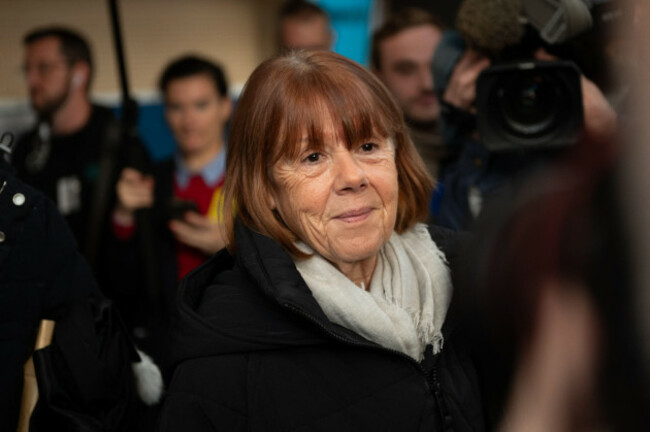
3. The police who saved Gisèle Pelicot

avignon-france-16th-dec-2024-gisele-pelicot-leaves-the-avignon-courthouse-after-hearing-the-defences-final-plea-at-the-trial-of-her-former-partner-dominique-pelicot-accused-of-drugging-her-for-ne Gisele Pelicot. Alamy Stock Photo Alamy Stock Photo

Almost a year after Dominique Pelicot was jailed for drugging his wife and inviting men to rape her, four police officers who worked on the investigation speak about how they discovered his crimes.

(The Times, approx 10 mins reading time)

His undoing began on Saturday, September 12, 2020, when he was apprehended by security staff in the Leclerc supermarket in Carpentras after taking “upskirting” videos of three female shoppers. The police were called and he was brought to the police station, a few minutes’ drive away. The officers took him with them to search his home in a quiet cul-de-sac in Mazan, a village five miles to the east, where he and Gisèle — who married in 1973 — had lived since retiring in 2013. He was then put in a cell for the night. “He said his wife was away in Paris, at her family’s place, and that he was satisfying an urge,” recalled Major Pierre Nadal, 56, the head of the unit. Pelicot was freed but obliged to consult a psychiatrist. The former electrician turned estate agent denied having done anything similar before, although Nadal was to discover that he had been arrested for the same offence in the Paris region in 2010, and given a fine. “He probably thought he would get off again,” he said, mimicking a gesture of someone being cuffed across the ear.

4. Free

Imagine serving nearly a quarter of a century in prison for a murder you didn’t commit. That’s what happened to George Bell. He was recently exonerated and paid a $17.5 million settlement. Now he’s trying to live a normal life again.

(Esquire, approx 28 mins reading time)

Did they remember the killings, these three on the corner? Oh yes, said the woman. Everybody loved Mike. The police had this all blocked off here for two, three days, right where we’re standing, one of the men said. Did they know George Bell? Hmph, the other man said. George Bell, yeah. He blowin’ all his money. Fancy cars and all-a that stuff. How would they know this? George hadn’t been back to the neighborhood in years. Had they seen him? The man bats away the question with his hand. Everyone knows. People talking about it. He ain’t gonna have no money left, he says. He shakes his head, and it looks like disdain. George doesn’t need that either—disdain. He doesn’t need your pity or your doubt, he doesn’t need your judgment, and he didn’t need all that damn money. He’ll take it—hell yeah, he’ll take it. But what he needs? From you and me and the cops and the prison guards and the old guy on the corner and his family and everyone? He needs what we all need, but especially him. He needs you to try to understand something that in your world is incomprehensible. He needs you, just for a few minutes, to listen.

5. How billionaires took over US politics

top-view-american-flag-on-us-dollars-background Alamy Stock Photo Alamy Stock Photo

They’re spending more money on political campaigns than ever before. This investigation by the Washington Post looks into how it’s been allowed to happen. 

(The Washington Post, approx 17 mins reading time)

“If you’re a billionaire, you want to stay a billionaire,” said Catsimatidis, whose net worth is estimated at $4.5 billion. It’s not just about his own wealth, he said, adding, “I worry about America and the way of life we have.” In an era defined by major political divisions and massive wealth accumulation for the richest Americans, billionaires are spending unprecedented amounts on U.S. politics. Dozens have stepped up their political giving in recent years, leading to a record-breaking surge of donations by the ultrarich in 2024. Since 2000, political giving by the wealthiest 100 Americans to federal elections has gone up almost 140 times, well outpacing the growing costs of campaigns, a Washington Post analysis found. In 2000, the country’s wealthiest 100 people donated about a quarter of 1 percent of the total cost of federal elections, according to a Post analysis of data from OpenSecrets. By 2024, they covered about 7.5 percent, even as the cost of such elections soared. In other words, roughly 1 in every 13 dollars spent in last year’s national elections was donated by a handful of the country’s richest people.

6. Olivia Nuzzi

If you’ve never heard of her, she is Vanity Fair’s West Coast editor and a former US political correspondent who lost the latter job after it emerged she was having an online affair with RFK Jr. This is an excerpt from her new memoir. 

(Vanity Fair, approx 14 mins reading time)

I did not like to think about it just as later I would not like to think about the worm in his brain that other people found so funny. I loved his brain. I hated the idea of an intruder therein. Others thought he was a madman; he was not quite mad the way they thought, but I loved the private ways that he was mad. I loved that he was insatiable in all ways, as if he would swallow up the whole world just to know it better if he could. He made me laugh, but I winced when he joked about the worm. “Baby, don’t worry,” he said. “It’s not a worm.” A doctor he trusted had reviewed the scans of his brain obtained by The New York Times, he said, and concluded that the shadowy figure was likely not a parasite at all. He sighed. It was too late to interfere with what had already vaulted from the sphere of meme to the sphere of screwy legend, but at least I did not have to worry about the worm that was not a worm in his brain.

…AND A CLASSIC FROM THE ARCHIVES…

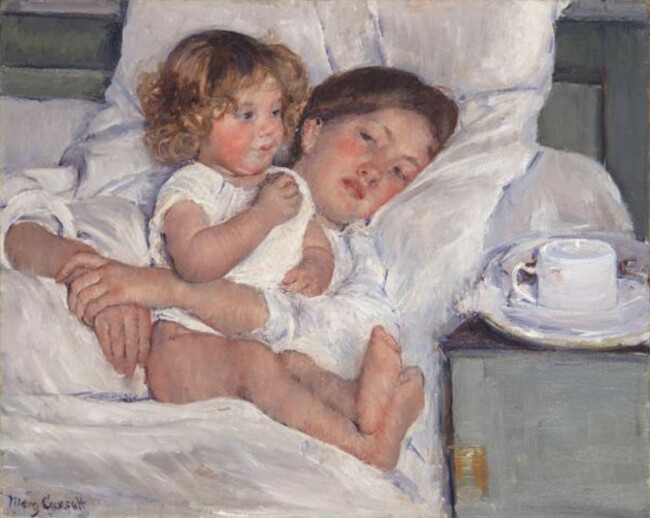
mary-cassatt-breakfast-in-bed Breakfast in Bed by Mary Cassatt. Alamy Stock Photo Alamy Stock Photo

A beautifully written essay about motherhood from 2022 by Honor Jones. 

(The Atlantic, approx 14 mins reading time)

There’s that corny line about motherhood being like walking around with your heart outside your body. If it were just my heart, I wouldn’t be fussed. I could throw my heart out a helicopter and watch it hurtle to the earth; my heart could use the thrill. But it’s my child’s heart, my child’s cold nose, his cheek with the almost imperceptible scar that his own newborn fingernail made before we’d even left the hospital. Sometimes I worry that I’m going to be a basket case when they grow up. What will I be for then? But I don’t really think the joy of them can dissipate. They are wonderful because they grow and change. Hopefully I can grow and change too. I want to be a better mother. But you can’t give yourself to another unless you have a full and free self to give. Well, no, that’s not quite true—of course you can—but the offering isn’t worth that much.

Note: The Journal generally selects stories that are not paywalled, but some might not be accessible if you have exceeded your free article limit on the site in question.

Readers like you are keeping these stories free for everyone...
A mix of advertising and supporting contributions helps keep paywalls away from valuable information like this article. Over 5,000 readers like you have already stepped up and support us with a monthly payment or a once-off donation.

Close
3 Comments
This is YOUR comments community. Stay civil, stay constructive, stay on topic. Please familiarise yourself with our comments policy here before taking part.
Leave a Comment
    Submit a report
    Please help us understand how this comment violates our community guidelines.
    Thank you for the feedback
    Your feedback has been sent to our team for review.

    Leave a commentcancel

     
    JournalTv
    News in 60 seconds