Sign in. It’s quick, free and it’s up to you.
An account is an optional way to support the work we do. Find out more.
Sign in. It’s quick, free and it’s up to you.
An account is an optional way to support the work we do. Find out more.
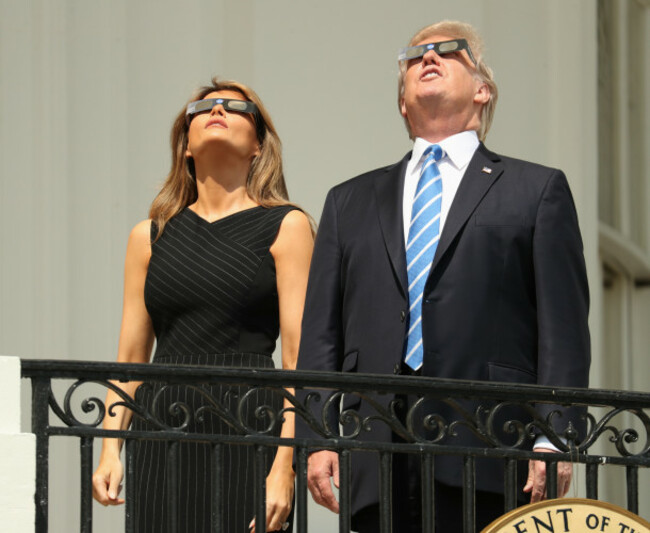
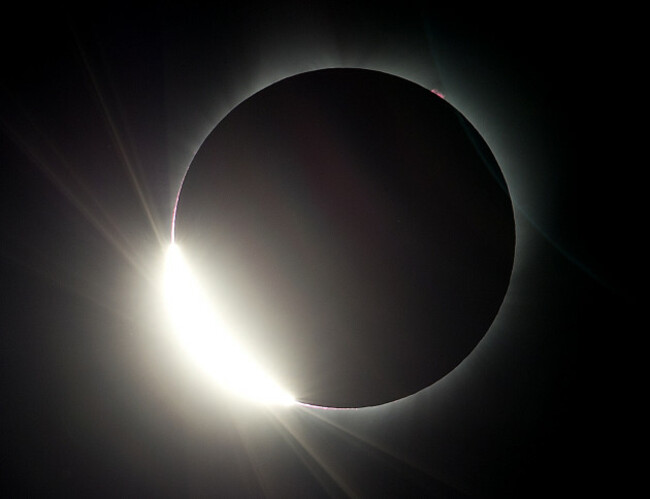
THIS EVENING, A solar eclipse plunged America momentarily into darkness.
With almost 12 million Americans living in the path in which the moon’s 113km-wide shadow fell – and some two-thirds of the country’s population living a day’s car journey away – a significant number of people were able to witness the event first-hand.
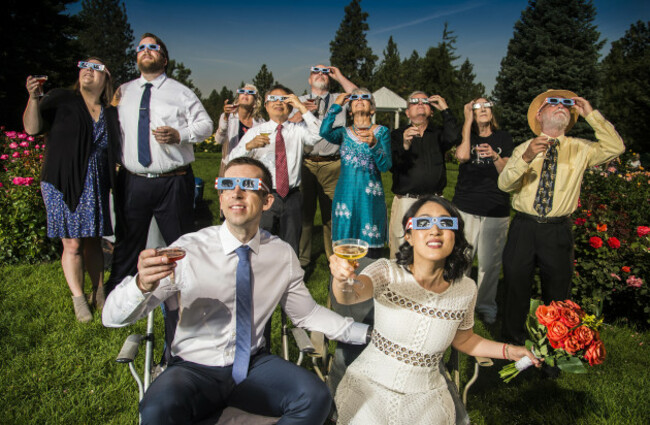
Festivals, rooftop parties, weddings, camping trips and astronomy meet-ups popped up nationwide for what NASA expected to be the most heavily photographed and documented eclipse in modern times, thanks to the era of social media.
The last time the United States witnessed an eclipse of this significance was in 1918 and its path wasn’t hugely dissimilar to today’s.
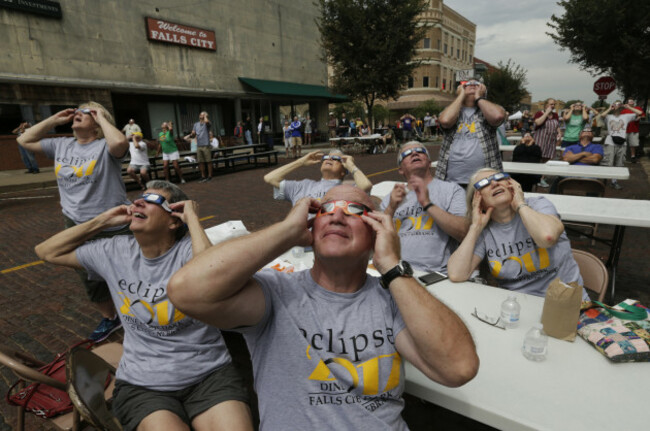
“It was incredibly beautiful. I am moved to tears,” said Heather Riser, a 54-year-old librarian from Virginia, sitting on a blanket in Charleston’s Waterfront Park in North Carolina where thousands had gathered on the grass to watch.
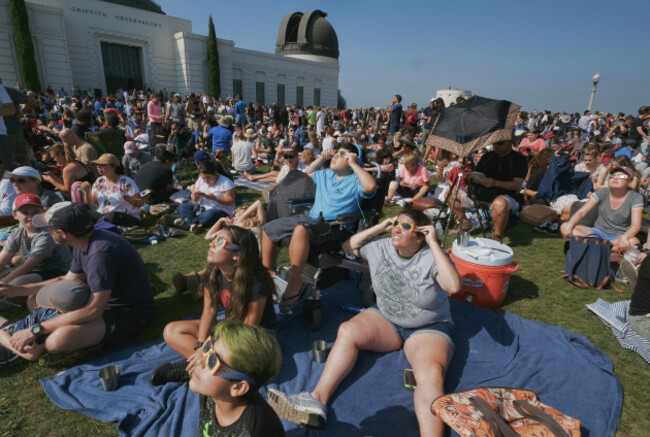
In Los Angeles, “oohs and aahs” emanated from the crowd of thousands of people gathered at the Griffith Observatory in the hills above the city as the partial eclipse began.
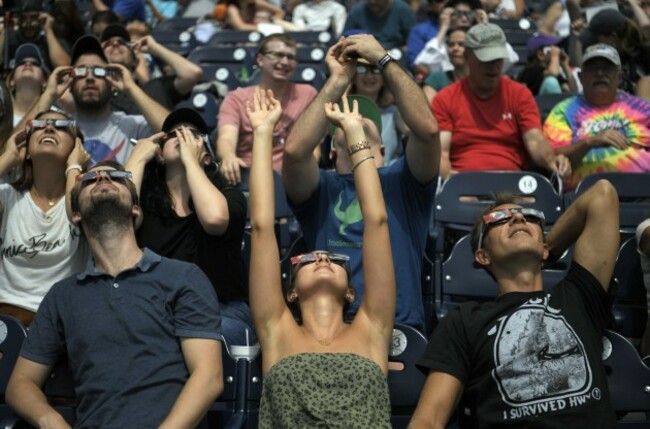
“This is a once in a lifetime event,” said 42-year-old Chad Briggs. “We have to start eating salad and be healthy if we want to make it till the next eclipse.”
Solar eclipses happen relatively frequently, and very few places on Earth haven’t experienced one in the past 1,000 years.
The next time a full eclipse, covering 100% of the sun, will be seen from Ireland, however, will be 23 September 2090, although even then it will only snip past the south west.
For millions of lucky stargazers today, it seems many would say it’d be worth the wait.
With reporting from Nicky Ryan, and AFP.

To embed this post, copy the code below on your site















have your say