We need your help now

Support from readers like you keeps The Journal open.

You are visiting us because we have something you value. Independent, unbiased news that tells the truth. Advertising revenue goes some way to support our mission, but this year it has not been enough.

If you've seen value in our reporting, please contribute what you can, so we can continue to produce accurate and meaningful journalism. For everyone who needs it.

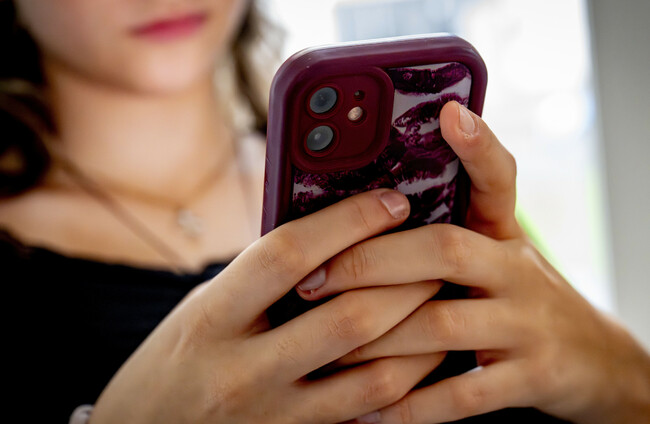
The findings show that girls reported poorer mental health than boys. Alamy Stock Photo

High social media use and sexting linked to poorer mental health in teenagers, study finds

Girls reported spending longer on social media than boys, while body dissatisfaction was reported by 60% of girls compared to 36% of boys.

HIGH SOCIAL MEDIA use, body dissatisfaction and sexting are strongly associated with poorer mental health and increased risk of self-harm among Irish teenagers, according to a new study. 

The study, which was conducted by the RCSI University of Medicine and Health Sciences, looked at survey data from over 4,000 teenagers mostly aged 15 and 16 from both urban and rural areas between October and December 2021. 

It found that adolescents who spent more than four hours per day on social media were significantly more likely to report symptoms of poor mental health.

Girls reported spending longer on social media than boys, while body dissatisfaction was reported by 60% of girls compared to 36% of boys and was strongly linked to self-harm and lower emotional well-being.

While the study did not examine which apps teenagers used or how they engaged with them, the authors speculate that image-focused platforms such as TikTok and Instagram, along with appearance-based content targeted at young women, may contribute to lower body image and poorer mental health in girls.

Sexting behaviours, including sending sexually explicit images and having such material shared with you without your consent, were also associated with poorer mental health and increased risk of self-harm in both boys and girls.

In total, 16.5% of participants reported having sent a sexually explicit image, while 19.9% reported having one shared without their consent.

Over 21% of girls reported sending a sexually explicit image compared to 11.9% of boys, while 28% of girls said they have a received a non-consensual image, more than double the 12.6% of boys who reported the same. 

Body dissatisfaction was twice as common among girls (60.6%) compared to boys (31.4%) and was linked to self-harm and worse mental health.

Nearly twice as many girls (50%) reported self-harm compared to boys (26%). 

The study was led by Professor Mary Cannon, Professor of Psychiatric Epidemiology and Youth Mental Health at RCSI, in collaboration with Trinity College Dublin and King’s College London. It was supported by the Health Research Board.

“Our study highlights how these common aspects of modern teenage life, like social media use and online sexual communication, may be contributing to declining mental health among young people in Ireland, particularly teenage girls,” Cannon said. 

“We need to take these risk factors seriously and ensure that young people are supported in developing healthy digital habits and emotional resilience.”

She said the findings offer “valuable insights for policy, education and public health strategies aimed at improving digital literacy and safeguarding adolescent well-being”. 

If you have been affected by any of the issues mentioned in this article, you can reach out for support through the following helplines. These organisations also put people in touch with long-term supports:

  • Samaritans 116 123 or email jo@samaritans.org
  • Text About It - text HELLO to 50808 (mental health issues)
  • Aware 1800 80 48 48 (depression, anxiety)
  • Pieta House 1800 247 247 or text HELP to 51444 – (suicide, self-harm)
  • Teen-Line Ireland 1800 833 634 (for ages 13 to 19)
  • Childline 1800 66 66 66 (for under 18s)

Readers like you are keeping these stories free for everyone...
A mix of advertising and supporting contributions helps keep paywalls away from valuable information like this article. Over 5,000 readers like you have already stepped up and support us with a monthly payment or a once-off donation.

Close
JournalTv
News in 60 seconds