TheJournal.ie uses cookies. By continuing to browse this site you are agreeing to our use of cookies. Click here to find out more »
Dublin: 7 °C Thursday 23 May, 2013

21 tips for parents on their child’s first day of school

Tens of thousands of children will go to school for the first time this week. Here’s one teacher’s advice to parents.

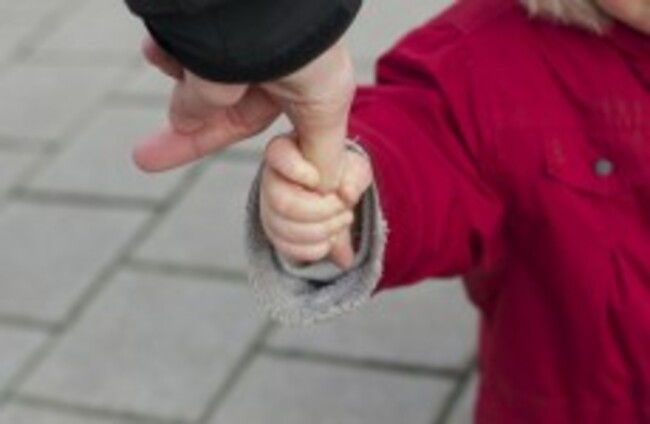
"Invent a secret signal with your child - like pinching their little finger, or squeezing their hand three times - which means 'I love you'."
Image: stephanski via Flickr

TENS OF THOUSANDS of children will this week begin the long road of formal education, as they congregate around the country for their first day of school.

The last census indicated that there were about 67,000 children who are old enough to be going to school for the first time this week.

Of course, it’s not just a big day for the children themselves – in many cases the child will be the eldest in the family, and it’ll be the first time that their parents have ever seen a child off to school, or seen them taken into the care of someone else.

That can, understandably, be a difficult thing for a parent to get to grips with – so we’ve asked a primary school teacher for some advice on how both you and your child can prepare for the big day.

  1. It’s pretty likely that your child will be a bit scared, but too nervous to say it. Invent a secret signal with your child – like pinching their little finger, or squeezing their hand three times – which means ‘I love you’. It’s a special and private thing that will reassure them as you let them go, whilst also avoiding any embarrassment.
  2. Don’t give your child a drink for lunch that they can’t open themselves. (I’m looking at you, unnamed pouched fruit drink with a fiddly straw). Also, any ‘strange’ or ‘new’ food, however convenient it might be – again, I’m looking at you, unnamed wax-covered cheese product – should probably be avoided.
  3. At home, practice eating out of a lunchbox and putting things in bin. Remind your child what should go in the bin, and what should be kept in their lunchbox and brought home. If their lunchbox goes somewhere special in the classroom, put it there with them on the first morning.
  4. Make sure the teacher has at least two correct numbers to call you, in case something happens. It won’t happen, but just in case.
  5. If your child has an inhaler, make sure the teacher knows about it, and put a sticker or tag on it with instructions for the teacher.
  6. Meet and chat to at least one ‘new’ parent. You’ll have a lot in common over the next eight years – and it’ll be very valuable to have an ally who’s going through the same process as you.
  7. Practice helping your child take their coat off, hanging it up in a special place, and putting it on again. This will really help the teacher in a cramped classroom and will make the child feel more independent at break-time.
  8. It is very common in infant classes for the teacher to ‘bring’ the class to the toilet together, so remind your little one to go then, even if they are absolutely positive they don’t need to go. They do, and they will! If they are prone to wetting themselves, make sure you are aware of the school policy on changing clothes if the issue arises. Show the child where the bathroom is on the first morning, and remind them to wash their hands.
  9. If your little one got a school diary, fill in all the details at the front, such as addresses and phone numbers. The teacher will have these details already, but it is good for other support services in the school to be able to get hold of such details at short notice.
  10. Label everything. And I mean, everything. You don’t want to be buying a new jumper and Peppa Pig lunchbox in October. Have all books and copies covered to keep them clean – but try to avoid the wallpaper-style covers where the child won’t recognise what book is underneath. The only way we can get 30 four-year-olds to pick out the right book is by holding it up and saying ‘Take out this book, boys and girls’. If the front of the book is covered up, the child won’t recognise it.
  11. If your child is allergic to anything, make a little card (laminated, if possible) and list those allergies. The teacher can then stick this to the desk and inform their colleagues on yard duty, to ensure that everyone knows how to care for your child properly.
  12. If you can at all, please teach your child how to write their name. This is a great aid to a teacher if a child can identify and label their own worksheet or book, and increases the child’s sense of ‘ownership’ of their work.
  13. Many schools operate a ‘line-up’ system in the yard. Most schools will let you walk into the room with your child (especially on the first day!) but don’t make a habit of loitering around afterwards. You mightn’t realise it, but the 30 minutes’ playtime at the start of the infant’s schoolday is not only important social time for your child – it’s also a recognised educational methodology for improving oral language and imagination. Don’t let them miss out!
  14. For the first few weeks, try to put your child in shoes that have Velcro clasps. Avoid laces, for obvious reasons.
  15. Empty the child’s bag everyday – especially in the first few days, where notes and envelopes may be sent home.
  16. If you have to pay a contribution charge to the school, don’t be anxious about paying it immediately, or even in full. Your first day should be spent concentrating on your little one, not on money. Revisit the payment on the second morning. If you have any trouble in making the payment just mention it to the teacher, if you feel comfortable doing so. We know how hard it is, and most teachers will never put you under pressure about any payment.
  17. Your little one will probably be exhausted after their first day, so a nap after collection isn’t a bad idea at all. Make time for this in your own schedule and plan this with any childminders, etc.
  18. On the subject of men being the ones bringing the kids to school: be assured that the school run isn’t just a ‘Mammy’ thing anymore. Don’t hesitate. It seems obvious, but it is something that appears time and time again as a discreet issue. There are other Dads there – and they might appreciate the company!
  19. When you’re leaving your child, explain to them that you will be back to collect them, at the very place you left them. Of course, if it won’t be you that will be collecting them, you need to tell this to them and of course, the teacher.
  20. Don’t worry, tears are totally normal. They aren’t upset with you, and you’re not a ‘bad’ parent for walking away.
  21. Enjoy the morning and don’t cry until you’re in the car/bus on the way home. Easier said than done! We’ll do all we can to help and we know that nothing will ever replace your love and devotion to your little one – we’re just here to help them get on their way to great things.

Good luck to you and your kids!

Do you have tips for other parents ahead of the big day? Share them in the comments below.

Read next:

Comments (15 Comments)

  • It was when my youngest began school that I cried. And then when she went to secondary, and did the L.C. And all the other ‘last times’ in my life.

    Reply
  • Great advice – unfortunately I have only one day to try it all out!

    Reply
  • Im a Montessori teacher and i always tell parents that a quick exit from the start is best. If a child is upset they get to a point that they just don’t listen to you trying to comfort and telling them you’ll be back soon, they know that already. I know it’s hard to leave your child upset but prolonging the exit is just prolonging the upset. In 11 years I’ve yet to have a child upset longer than 15min. I can’t speak for every school but in mine the teachers give fab cuddles and comfort.

    Reply
    • Sinead, thats a relief to hear, my 2 will start preschool next week and i am dreading it bcos they have never been far from me or my OH….and im terrified they are going to think we are abandoning them

      Reply
    • Don’t worry Laura!! Explain over the next few days about dropping and collecting them. But don’t harp to much. Be excited yourself if your anxious they will be too! I find that the first day mostly goes well bcos the kids are excited and it’s a novelty. That novelty can wear off in the second and sub weeks so don’t b surprised if a little reluctance comes in then! Hope all goes well

      Reply
    • On my son’s first day of school, 8 years ago ( he is 6th class) he was skipping happy as bird on his way. I left him in the class and seemed ok. I returned with a drink 5 minutes later and he was crying his heart out “mommy, don’t leave me here, take me home!”. Apparently, seeing all those other kids crying around him, he got scared and started crying too. He cried for a whole week, all the time he was in school. But I knew that if I would have taken him home even for a day, there was no way he would go back. So I cried too for a week, trying to occupy my self more with my then 7 months old girl. When she started play school, she cried every day for two weeks, every time I would take her home: she just wanted to spend more time with her new friends.

      Reply
  • It’s like heaven going to school today compared to the 60 & 70s when we were scared stiff of the wrath of the nuns.. I’m sure it wasn’t their fault they were always cross ( some of them were not) I think in those times it was the thing for a family to have a nun or priest and a lot of them didn’t really have the true vocation.. Hard times indeed for a child going to school for the first time.

    Reply
  • My mother wouldn’t leave for ages, it was really embarrassing. In fact I remember the others were trying to get rid of their parents too.

    Reply
  • Tommy 27/08/12 #

    How are you supposed to teach your child to write their name before school? I thought they learn the alphabet really slowly during the whole of Jnior Infants?

    Reply

Add New Comment