Sign in. It’s quick, free and it’s up to you.
An account is an optional way to support the work we do. Find out more.
Sign in. It’s quick, free and it’s up to you.
An account is an optional way to support the work we do. Find out more.
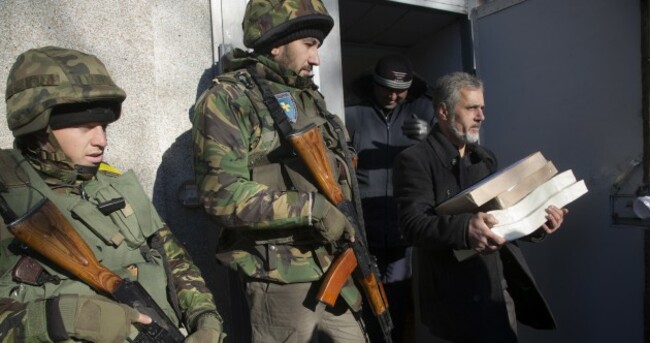
VOTING HAS BEGUN in the Ukrainian parliamentary elections today.
The snap election, coming eight months after a street revolt overthrew Moscow-backed president Viktor Yanukovych, is expected to result in a legislature filled with reformers and nationalists backing President Petro Poroshenko’s drive to bring Ukraine closer to the West.
Voters
However, Poroshenko’s party is unlikely to win a straight majority, meaning he may have to seek a coalition with more radical nationalists suspicious of his attempts to negotiate peace with pro-Russian rebels controlling a swathe of the country’s industrial east.
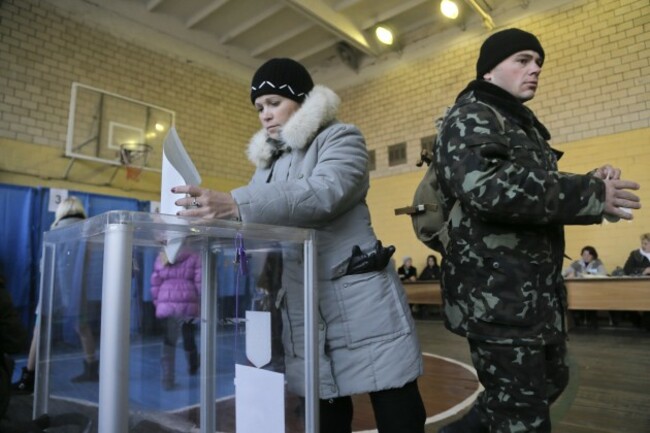
The trauma of some 3,700 deaths in the fighting, and Russia’s earlier annexation of the southern Crimean region, set a grim backdrop to an election originally intended as a finishing touch to Ukraine’s pro-democracy revolution.
Voters in Crimea and in separatist-controlled areas of Lugansk and Donetsk provinces — about five million of Ukraine’s 36.5 million-strong electorate — were effectively shut out from the election. Twenty seven seats in the 450-seat parliament will remain empty.
Country’s future
As a result, the previously peaceful divide between the mostly Russian-speaking and Russia-leaning east and the more Ukrainian-speaking west has become a deadly — and increasingly formal — faultline threatening the country’s future.
The Petro Poroshenko Bloc is forecast to emerge as the leading party of what Poroshenko described on the eve of voting as “an entirely new parliament” that was “reforming, not corrupt, pro-Ukrainian and pro-European, not pro-Soviet”.
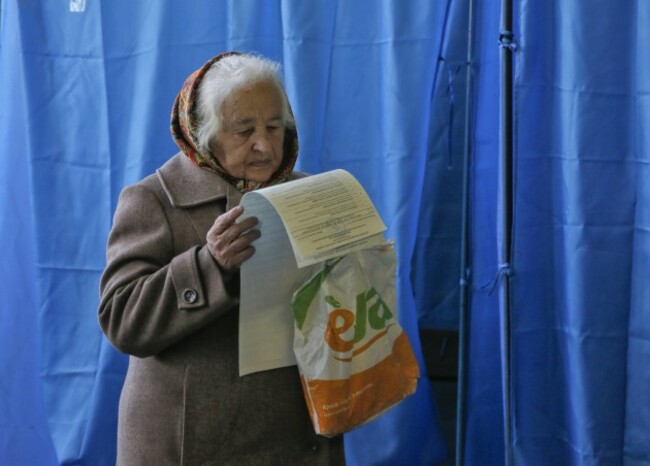
For the first time since the collapse of the Soviet Union, the Communist Party was not expected to clear the five-percent barrier for entering parliament under proportional representation. Poroshenko, elected president in May with 55 percent of the vote, hopes that failure represents an irreversible political shift.
Polls show a majority of Ukrainians support economic and democratic reforms — especially a crackdown on corruption — leading eventually to European Union membership.
Peace talks and nationalism
However, there is less unity over how to resolve the dismemberment of the country in Russia’s occupation of Crimea and the separatist battle in the east.
A Moscow-backed truce signed by Kiev and the separatists on September 5 has calmed the worst fighting, although there are daily violations around the largest rebel-held city Donetsk.
Insurgent leaders, who are not allowing polling stations to open in their areas, have announced their own leadership vote, which Kiev does not recognise, on November 2.
Poroshenko insisted Saturday that there could be “no military solution” to the conflict.
“No criticism, no matter how acute and painful, will stop me from finding a peaceful way out of the current situation,” Poroshenko said.
Polls opened at 6am (GMT) and close at 6pm (GMT).

To embed this post, copy the code below on your site











have your say