TheJournal.ie uses cookies. By continuing to browse this site you are agreeing to our use of cookies. Click here to find out more »
Dublin: 12 °C Saturday 25 May, 2013

Union says science education damaged by cutbacks

The Teachers’ Union of Ireland said our pool of highly skilled graduates is at risk of diminishing if the government fails to invest more in education.

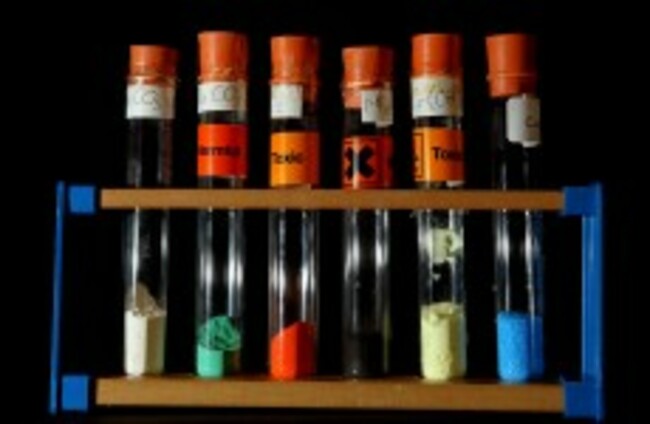
Image: David Davies/PA Archive/Press Association Images

THE TEACHERS’ UNION of Ireland (TUI) has warned that the fall in lecturer numbers at a time of huge increases in student numbers is having a damaging effect on science education in Institutes of Technology.

There has been a 20 per cent rise in the number of students on full-time student programmes in Institutes of Technology between 2007 and 2011. Meanwhile, there was a fall of over 8 per cent in full time lecturers in institutes between 2007 and 2012.

Speaking to TheJournal.ie, TUI General Secretary John MacGabhann said there has also been a marked decrease in core funding for the sector during that time and these deficiencies will have a negative impact on the quality of science education at third level.

“There has been a significant rise in class sizes and a steady rise in numbers being accommodated in practical classes,” he said. “At the same time there had been a steady erosion of tutorial support which leaves lecturers unable to deal with individual difficulties.”

MacGabhann said the increase in labour activation programmes to reskill unemployed people has also put a strain on lecturers.

“We don’t disagree with the idea of re-skilling people but these courses run on a shorter time scale than the norm and are made up of people from very diverse backgrounds,” he said. “This means lecturers are unable to give people the necessary personalised attention.”

MacGabhann said Irish science students are at a “significant disadvantage” as many highly skilled young lecturers have been shed from the system.

“If a knowledge economy is to be achieved, putting money into education should be considered an investment rather than expenditure”, he said. “Foreign companies praise our large pool of highly skilled graduates but we are in danger of diminishing our capacity to keep that pool filled.”

People who leave high skilled jobs to become lecturers in science or technology leave themselves in a “hugely vulnerable” position, MacGabhann said. Lecturers could be waiting for up to five years for a permanent position without any guarantees of full time hours.

MacGabhann said the inadequacies in science education in Ireland extended to secondary education, where science subjects are not compulsory at either Junior or Leaving Certificate levels.

There’s not a lack of graduates wishing to go into science, but many students are taking biology for the Leaving Cert and the effects of the cutbacks are that subjects struggling to hang on like physics and chemistry are at risk.

The TUI, which represents 3,500 Institute of Technology lecturers, also said the imbalance in student-lecturer numbers was having an adverse effect on the scientific and technological research capabilities of institutes.

“Lecturer workload involving assessment, examinations, feedback and administrative duties has increased exponentially, meaning that there is less time for research, scholarship and other vital academic duties such as engagement with industry and community,” MacGabhann said.

“In the current climate, it is damaging in the extreme that lecturers are being prevented from creating the new knowledge that the country requires through research projects, the same research that is so often demanded by government and assorted commentators,” he added.

Read: Ireland to become Nasa’s first international research partner>

Read next:

Comments (18 Comments)

  • It’s absolute madness that at least one science subject is not compulsory for the Leaving Cert, but Irish is. Making Irish compulsory for the Leaving Cert is like making Latin or classical Greek compulsory for the Leaving Cert.

    Reply
  • Clearly, teachers have a dog in this race. But that doesn’t mean that dog isn’t a winner we should all be betting on.

    There is no downside for the rest of us in the promotion of good science education, since good science is an essential tool for solving every kind of problem we face.

    Good science teaching involves a large lab and practical component, and a lot more could be done to improve the resources for this aspect of science learning.

    Reply
  • The cutbacks need to target the rich and wealthy. FG candidates who would raid the poor and middle class to transfer wealth to the 1%. The wealthy have more money each year. Today union members are few, top 1% (corporations) have billions in greed money, workers wages are declining, national debt is high, and Ireland is in steady decline.

    Reply
  • Does anyone actually care what unions think ? They are an outdated and overpaid people that prevent progression.

    Reply
  • I don’t think there’s a sector out there that genuine permanent status exists in anymore! Also I’m highly unlikely to take the opinion of a highly subjective organisation who are only interested in pursuing their own agenda!

    Reply
  • …says a union of grossly overpaid teachers that went on strike to rob the public purse !

    Reply
    • To rob the public purse? Seriously? I also seriously take issue with “grossly over paid”. You need to do some research.

      Reply
    • Humphrey why do we associate teachers with an beál bocht?

      Reply
    • You need to do a lot of research Charles…! Very uneducated comment I’m afraid….!

      Reply
    • Charles, I’m not going to get into this argument with you. If you think teachers have it easy, get yourself a H-Dip.

      The focus of this article is on funding for science education, at both second and third level, that is grossly underfunded. I don’t think anyone can dispute that, despite who puts the argument forward. It frustrates me to see individuals like yourself use the journal purely to voice their disquiet with the public service rather than dissect real issues. Look beyond your own under-stimulated little world.

      Reply
    • “IRISH teachers work some of the shortest school hours in Europe, but rank among the best paid.”
      http://www.independent.ie/national-news/teachers-top-of-eu-pay-class-1840270.html

      Mark and Humphrey if you are teachers don’t let the side down by making allegations that cannot be substantiated.

      Reply
    • Again Charles. If it’s such a cushy number, get yourself a H-Dip. But first I would suggest looking at the date of that article. A lot has changed since 2009!

      Reply
    • You obviously haven’t a notion what goes on outside of teaching time so you have some nerve! And I’m not wasting my time explaining to you!

      Reply
    • “Second-level teachers in Ireland are contracted for 735 hours of class contact time per year [..] According to the Eurydice report, the overall number of working hours for teachers in the Netherlands is 1,659 per year, while in the UK it is 1,265 hours per year.”

      Since 2009 ye have all started to work more hours? Yeah Right!

      Reply
    • Oh my God. You are actually an idiot. We are contracted to “teach” 22 hours per week. That is our class contact time. It does not include all the other aspects of our job, which you clearly don’t understand. I generally work close to 60 hours per week. Seriously. Take your head out of the sand.

      Reply
    • Puerile verbal abuse does not suggest the presence of a good intellect. Perhaps the puerility contained therein is inversely proportional to communicative skill. Expressed thus by Robert. Verdi “Good teachers are those who know how little they know. Bad teachers are those who think they know more than they don’t know.”

      If one has only a liking for research or statistics that do not contradiction one’s opinion would that be a confirmation bias?

      Reply

Add New Comment