TheJournal.ie uses cookies. By continuing to browse this site you are agreeing to our use of cookies. Click here to find out more »
Dublin: 10 °C Sunday 26 May, 2013

Key to healthy pregnancy weight gain? Low-GI foods

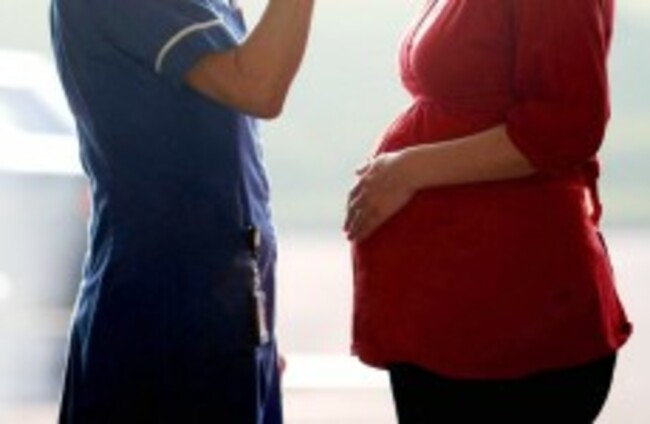
According to a study done by Dublin scientists and the National Maternity Hospital, women who changed to a low-GI diet gained less weight while pregnant.

Image: David Jones/PA Wire/Press Association Images

WOMEN WHO SWITCH to a low-GI diet during pregnancy can reduce their chances of excessive weight gain by up to 20 per cent, according to a new Irish study.

According to the findings published in the British Medical Journal, women who maintain their usual diet during pregnancy have a 48 per cent chance of excessive weight gain, but the likelihood can be reduced to 38 per cent by switching to a low GI diet.

The study was led by scientists from University College Dublin and the National Maternity Hospital, Ireland. It recorded an average weight gain of 13.7kg among women who remained on their usual diet during their pregnancy, against an average weight gain of 12.2kg among women who changed to a low GI diet.

Fionnuala McAuliffe, Professor of Obstetrics and Gynaecology at the UCD School of Medicine and Medical Science, University College Dublin, and the National Maternity Hospital, Dublin, said:

Our findings show that women who switch to a low GI diet during pregnancy are 20 per cent less likely to experience excessive weight gain. This type of excessive weight gain during pregnancy is associated with an increased need for delivery by Caesarean section, a higher likelihood of post pregnancy weight retention, and a higher predisposition to obesity in later life.

The study funded by the Health Research Board in Ireland involved over 800 mums-to-be who attended the National Maternity Hospital in Dublin over several years.

Low-GI diet

For the study, 400 of the pregnant women were selected to switch to a low GI diet. They were encouraged to eat wholegrains, brown bread, and brown rice instead of high GI foods like white rice, white bread, and cornflakes. They were not encouraged to reduce their calorie intake.

They also attended an education session early in pregnancy where they were introduced to general healthy eating guidelines for pregnancy and the glycaemic index (GI) index of foods. After the session, they were given information booklets on low GI foods which included recipes.

These 400 women met with the dietician again at 28 weeks and 34 weeks of their pregnancy to reinforce the messages about the benefits of a low GI diet and to answer any questions.

The remaining 400 pregnant women continued with their usual diet throughout their pregnancy.

Weighed

All 800 women were weighed and had their body mass index calculated at their first antenatal session, and this was repeated at 28 weeks of pregnancy, where their blood glucose was also measured.

The measurements were repeated again at 34 and 40 weeks of pregnancy.

Professor McAuliffe said that the women on the low-GI diet gained less weight:

Overall the 400 women on the low GI diet during their pregnancy reported that the diet was easy to follow and to shop for, and 80 per cent said that they followed the diet all or most of the time.

Read: More than a quarter of births in Ireland are to women aged 35 and over>

Read next:

Comments (17 Comments)

  • I didn’t realise weight gain during pregnancy was an issue for enough women for this to be highlighted. I couldn’t keep much down with the morning sickness and heartburn, lived on gaviscon and crackers for the last first 3 and last 4 months of it. I was constantly told I was not gaining enough, and lost weight over the last month with return of morning (all day) sickness.

    There are so many restrictions already there, no real cheese, no shellfish, no soft eggs, nothing with a sniff of alcohol, no tuna, no rare steak, no salad. And now no bread? Shag off. That’s all many of us could keep down.

    Reply
    • Maria 11/09/12 #

      I’m sorry for the tough time you went through. Weight gain in pregnancy is an issue for many women, although it’s not pc to talk about it. I’m determined not to put on excessive weight the next time. It was a shock to see myself in mirror after the labour . I had to work so hard to lose the 3 stone I had put on

      Reply
  • plus i was asked to participate in the research as my first baby was over 9lbs. i was told the research was to prove that a low gi diet during pregnancy would lower the weight of my second baby.

    Reply
  • This piece is misleading, it suggests that this is only the case during pregnancy. Eating low GI carbs at any stage of life prevents unhealthy weight gain.

    Reply
    • “Slow release carbohydrate”

      This makes no sense and it is wrong.

      Low GI means it is low on the glycemic index(which is practically useless anyway). This index measures the effect of a solitary carbohydrate on a diabetic’s blood sugar levels in a fasted state.

      Eating Low GI vs High GI has not been shown to prevent weight gain.

      Satiety is a determinant of weight loss. Fibre creates satiation.

      Reply
    • Aoife Barry 12/09/12 #

      Hi Pádraig – the article doesn’t suggest this. It is focused on a study that itself looked at pregnant women, and this is clear in the text. This doesn’t mean that a low-GI diet wouldn’t benefit anyone else and at no point does it say this.
      Thanks
      Aoife

      Reply
  • i was one of the 400 on the low gi diet and i thought it was great. during pregnancy generally i think women do start paying more attention to their diet. the low gi diet was easy to follow and not too strict. i felt no added pressure and loved knowing i was giving my baby a healthy start. the information session didn’t tell me anything i didn’t know already :0)

    Reply
  • Seriously? There isn’t enough pressure on pregnant women already? Now they’re supposed to be skinny as well?

    Reply
  • all that and I still don’t know what is Low GI food.?thanks

    Reply
  • (a) I think this :

    They also attended an education session early in pregnancy where they were introduced to general healthy eating guidelines for pregnancy

    might have slightly more to do with the results than the diet itself given our incredibly poor general knowledge of nutrition.

    and (b) Did anyone follow up with the post-natal mothers to look into the long-term health effects on the kids of this kind of dieting during pregnancy?

    Reply
  • Jane i could eat bread it just had to be wholegrain. Marie you should try the low gi diet. talk to your doc or midwife first but i would highly recommend it.

    Reply

Add New Comment