Sign in. It’s quick, free and it’s up to you.
An account is an optional way to support the work we do. Find out more.
Sign in. It’s quick, free and it’s up to you.
An account is an optional way to support the work we do. Find out more.
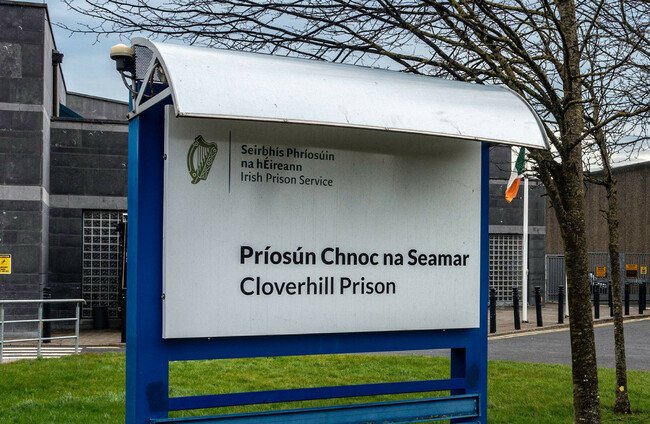
A REVIEW OF the treatment of prisoners in Ireland by Europe’s human rights watchdog has highlighted two cases in Cloverhill Prison in Dublin where inmates were improperly subdued with excessive force.
Its report from Ireland details how the flow of drugs in Irish prisons, along with extreme and record levels of overcrowding, is creating a dangerous and difficult working and living environment for staff and inmates.
A team from the Council of Europe visited five prisons in Ireland last year – Castlerea, Cloverhill, Limerick (male and female), the Dóchas centre and Mountjoy Prison High Support Unit - as part of ongoing reviews into the treatment of prisoners internationally.
Serious incident complaints, known in the Irish Prison Service as Category A complaints, were filed to management in both cases at Cloverhill, so that the conduct of the officers could be reviewed.
One of these accusations had been upheld at the time of the Council of Europe’s Committee for the Prevention of Torture’s visit last year. Its subsequent report notes that, in two separate incidents, officers were seen ‘jumping on the heads’ of inmates.
Experts conducting the review had serious concerns over the treatment of prisoners and deaths which have taken place at Cloverhill Prison in Dublin in recent years.
During one incident in July 2023, a prisoner was being restrained by a number of officers ‘in a relatively peaceful manner’ at Cloverhill when another officer intervened in the restraint and proceeded to ‘jump on the head’ of the man in the yard of the prison.
A review of the CCTV footage reportedly shows the officer pulling and holding the head of the prisoner, according to the Council of Europe report.
The prisoner later alleged that ‘unnecessary and unreasonable force was used’ to bring him into the prison and that he put into a ‘guillotine’ hold. He claimed that he received injuries to his torso, back and to the upper part of his spine during the ordeal.
An investigation into the incident only upheld that unnecessary and unreasonable force was used to remove him from the yard.
Members of the torture prevention committee have voiced concerns as two of the officers involved in the incident were kept in ‘direct contact’ with prisoners throughout the investigation into the Category A complaint.
In a separate case at the same prison one month before, an inmate claimed he was forcibly placed into his cell before officers allegedly ‘kicked him and punched his body, while he was prone on the ground’.
The prisoner was being relocated to a different wing of the prison, when he alleged he was beaten in the landing, and accused one of the officers of attempting to strangle him and drag him by his hair.
He alleged that he began bleeding from his mouth and his nose before he was moved again, punched and then verbally abused. The investigation into the incident had yet to conclude at the time of the Council of Europe’s visit.
However, internal documents and CCTV footage relating to the incident was reviewed as part of the Council of Europe’s investigation. Its report states that the footage ‘appeared to suggested that unnecessary and disproportionate force may well have been applied’.
It added: “CCTV coverage shows that a prison officer jumps on the head of the prisoner [...] pulling his head down and puts the prisoner on the floor.”
The Council of Europe has recommended that Cloverhill management have an increase in presence in detention areas and staff ‘demonstrate increased vigilance’ in their direct contact with prisoners.
It has also called for effective investigations of complaints made by prisoners and improved staff training, including a transparent selection procedure and restraint training.
In its response, the Irish government said: “The Irish Prison Service engage with and supports prison management and in particular those staff with the HR portfolio in the implementation of the Disciplinary Code.
“Ongoing support is also provided to management and staff in regard to the implementation of the Disciplinary Code,” it added.
It also said that, in order to ‘ensure greater visibility’ of senior members of prison staff on landings, ‘arrangements are being put in place to provide Chief Officers with administrative support’.
The Council of Europe also reviewed the deaths of four prisoners, which took place between 2020 and 2023, that it believes were preventable. Two of these fatalities happened at Cloverhill Prison.
Both deaths took place in close supervision cells, designed to for prisoners who are a danger to others or are disruptive, in the opinion of prison management.
One man, who died in April 2021, had been placed in the cell the day before after he was accused of concealing illegal drugs internally. He had not been reviewed by healthcare staff, the report states.
The torture prevention committee had ‘serious reservations’ around the quality of internal documents relating to all four deaths.
A logbook for the wing shows that the prisoner was asleep between 9.10pm the night before and 8.30am the morning of the death, but another prison officer claimed to have attended the cell between 9pm and 2am after the man activated a bell.
The report said: “The Committee finds it incongruous that one prison officer can set out that he attended a cell several times during the night, and yet another prison officer records in the CSC book that every 15 minutes during the night the prisoner was checked and was asleep.”
The prisoner was found dead when the cells were unlocked in the morning on 27 April 2021 and that rigor mortis was noted, ‘clearly indicating that he had been dead for some time before he was found’.
Another prisoner was found dead on the morning of 10 August 2022. He had been placed in a closed supervision cell ‘because he was mentally ill, rather than because he had been disruptive in the prison’, the report said.
Documentation details that the man had no had anything to eat or drink for 48 hours before his death. The report said it is ‘deeply concerned’ that there was no care plan for the man, ‘who was clearly mentally ill’, had not eaten and was placed in the cell.
Similarly to the case before, the logbook was also not reflective of the morning’s events. A review of the document found that it said the cell belonging to the man was checked every 15 minutes for almost 30 minutes after he died.
The report said the entries were clearly ‘made in advance of him being found dead’. It said that the committee was ‘deeply troubled by the falsification of records by prison officers’.
It has recommended that a review be conducted into the procedures following the deaths of prisoners in Irish prisons so that documents such as autopsy reports and accurate time sheets are included in an inmate’s file.
It also recommended that analysis be undertaken of each death to identify general lessons that can be learnt from the incidents. In its response, the Irish government said it has begun the work to fulfil some of the review’s recommendations.

To embed this post, copy the code below on your site












have your say