We need your help now

Support from readers like you keeps The Journal open.

You are visiting us because we have something you value. Independent, unbiased news that tells the truth. Advertising revenue goes some way to support our mission, but this year it has not been enough.

If you've seen value in our reporting, please contribute what you can, so we can continue to produce accurate and meaningful journalism. For everyone who needs it.

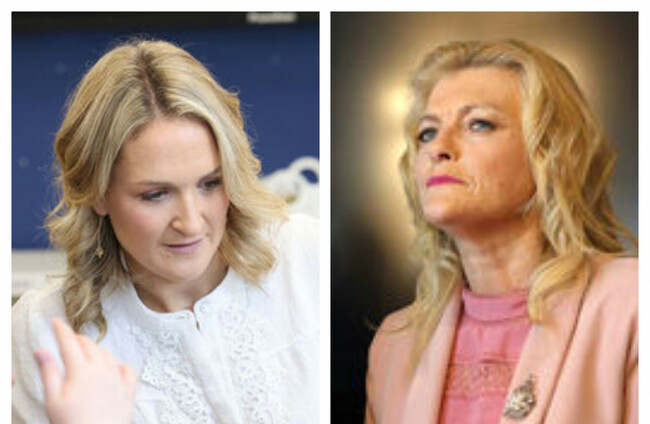
Tá an Fheisire Eorpach, Cynthia Ní Mhurchú(FF), tar éis a rá go bhfuil na polasaithe don nGaeloideachas a sheol an Aire Oideachais Helen McEntee (FG), 'gan fís gan uaillmhian" RollingNews

Lack of ambition in Government's new Gaeilge education policies criticised by Government MEP

Education Minister Helen McEntee’s new Irish language education policies have met with sharp criticism from FF MEP Cynthia Ní Mhurchú.

(Foireann Gaeltachta The Journal a chuir an scéal seo ar fáil. Tá leagan as Gaeilge anseo.)

WHILE THE MINISTER for Education and Youth, Helen McEntee, may have expected the mixed response she received from Irish language and education organisations to the two policies in the Irish medium education sector she launched yesterday, it is unlikely that she expected criticism from Cynthia Ní Mhurchú, MEP in Ireland South for Fianna Fáil, Fine Gael’s coalition partner.

Minister McEntee launched two major policies, one on Irish medium education outside the Gaeltacht and the other, an action plan for Irish in English medium schools, at an event on the shared campus of Gaelscoil Bhrian Bóroimhe and Scoil Náisiúnta Sord Educate Together on Thursday morning.

While the major organisations in the sector welcomed the extent of the two documents in terms of supports for teaching through Irish and the promotion of the language in English medium schools, they were also critical of the lack of vision and ambition in the documents.

Among the recommendations in the policy regarding teaching through the medium of Irish outside the Gaeltacht, it is stated that access to “high-quality Irish-medium education should be available to all, in educational settings that are inclusive and multicultural”.

This policy also includes a commitment to provide “language support hours for Irish, resource development, and professional guidance and learning opportunities for teachers” to support the realization of this goal. It is also stated that students would have the opportunity to spend more time improving their fluency by spending time in the Gaeltacht.

Now Fianna Fáil MEP Cynthia Ní Mhurchú has joined the criticism of Gaeloideachas, An Foras Patrúnachta and Conradh na Gaeilge of the policies issued by the Minister.

While Ní Mhurchú welcomed the organisations’ “effort or investment to promote the Irish language”, she also said that the policy announced by Education Minister Helen McEntee “lacked the ambition necessary to achieve real change”.

She said that “more focus should be placed on developing fluency and interest in the Irish language and Irish culture – both music and drama”.

She also said that it was “a missed opportunity to really address the crisis in Irish language education in our schools” and pointed to the increase in the number of pupils exempted from Irish, over 73,000 primary and secondary school pupils this year, as evidence that the current system was not working.

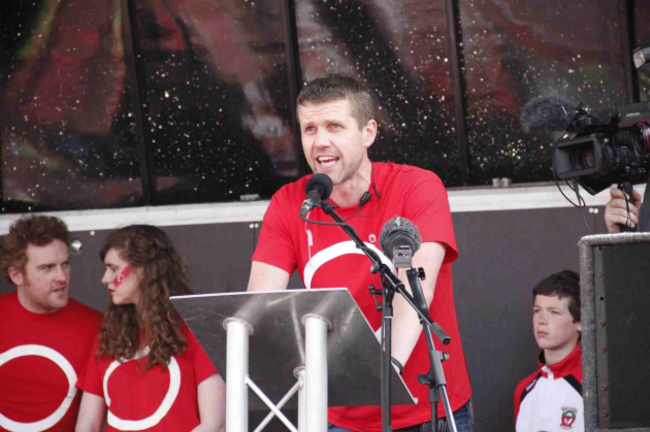
Ciarán Mac Giolla Bhéin Ciarán Mac Giolla Bhéin, Uachtarán/President, Conradh na Gaeilge Conradh na Gaeilge Conradh na Gaeilge

According to the President of Conradh na Gaeilge, Ciarán Mac Giolla Bhéin, the two documents launched by Minister McEntee yesterday were not enough “to tackle the current predicament of the Irish language in the education system”.

“The Irish language curriculum in the current education system is inflexible, unpleasant and is failing over 60,000 students at second level who are exempt from learning Irish.”

An additional 13,000 primary school pupils also receive an exemption from studying Irish. 

“During the consultation on the Action Plan, there was a demand for a new flexible system, based on the Common European Framework of Reference, which would be able to accommodate students with additional needs, students entering the system late and which would provide a satisfactory Irish language learning experience for all students.”

According to Mac Giolla Bhéin, the aim should be to set an ambitious target for the number of pupils learning through the medium of Irish, based on the target in Great Britain of 40% receiving education through the medium of Welsh by 2050.

“Only 6% of pupils are receiving their education through the medium of Irish, over 100 years since the State was founded.”

“Despite the fact that the new Policy for Irish-medium Education states that it is a ‘vision’ that ‘high-quality Irish-medium education would be available to all’, they have not set any measurable or ambitious target to significantly increase the number of pupils in Irish-medium schools.”

Conradh na Gaeilge is recommending that “an expert committee be established to develop a policy for the Irish language in the education system, based on the Common European Framework of Reference, without further delay”.

As part of the policy launched on Thursday, it was stated that a task force would be established to bring together “stakeholders and departmental officials to jointly design a way forward to grow the sector with the aim of expanding opportunities for children and young people to receive their education through Irish”.

The first meeting of the task force is to be held later this month.

In a statement from the INTO, a spokesperson said that it was vital that the Government fully resources the implementation of the policies announced yesterday.  The union was seeking the reinstatement of allowances that had been in place for teachers working in Gaeltacht and Island schools as well as Gaelscoileanna.

“The union also calls for the alignment of any early-years policy with the primary language curriculum specification to allow for seamless transitions from early-years settings to primary school.

“The INTO supports the formulation of a policy for the Irish language from early childhood settings to third level, based on the Common European Framework of Reference for Languages.
“We call on the Government to set out a timeframe for its plans to deliver a progressive support programme for Gaeilge during its term of office.”
The INTO has also said that the figure for students receiving exemptions from Irish at primary level was “too high” at 13,000.

According to Professor Pádraig Ó Duibhir, chairman of the Foras Patrúnachta, what the Minister announced was “a task force to answer a question that has already been answered” and he said that without measurable targets the task force would be working in a vacuum.

“It seems that everything is being done other than taking a decision to increase all-Irish provision.”

A statement from the Minister responding to the criticism of her announcement has been sought.

The Journal’s Gaeltacht initiative is supported by the Local Democracy Reporting Scheme

Readers like you are keeping these stories free for everyone...
A mix of advertising and supporting contributions helps keep paywalls away from valuable information like this article. Over 5,000 readers like you have already stepped up and support us with a monthly payment or a once-off donation.

Close
14 Comments
This is YOUR comments community. Stay civil, stay constructive, stay on topic. Please familiarise yourself with our comments policy here before taking part.
Leave a Comment
    Submit a report
    Please help us understand how this comment violates our community guidelines.
    Thank you for the feedback
    Your feedback has been sent to our team for review.

    Leave a commentcancel

     
    JournalTv
    News in 60 seconds