We need your help now

Support from readers like you keeps The Journal open.

You are visiting us because we have something you value. Independent, unbiased news that tells the truth. Advertising revenue goes some way to support our mission, but this year it has not been enough.

If you've seen value in our reporting, please contribute what you can, so we can continue to produce accurate and meaningful journalism. For everyone who needs it.

Irishphotodesk.ie

Child who died in 2021 had injuries associated with traffic collisions or punching and kicking

The child’s stepmother has pleaded not guilty to murder but guilty to the boy’s manslaughter.

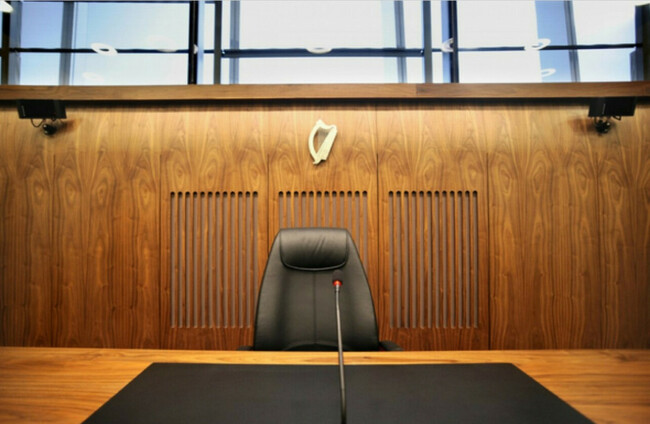
A CHILD WHO had suffered “extensive and unusual” bruising across his body died from injuries to the head and liver that are associated with road traffic collisions or trauma from punching, kicking, gripping or striking with a blunt object, a pathologist has told the Central Criminal Court.

State Pathologist Dr Heidi Okkers told Anne Rowland SC, for the Director of Public Prosecutions, that she was aware the child had been brought to hospital on 13 March, 2021 with suspected non-accidental injuries. The most severe injuries were to the head and a laceration to the liver while there were “extensive and unusual” bruises to the child’s face, back, chest, arms and legs.

The child was unresponsive when brought to hospital. He underwent neurosurgery but his condition did not improve so he was taken to Temple St Hospital in Dublin where he was placed on life support until March 16. Doctors told the family that the boy was not going to recover and they agreed to withdraw life support. The child died at 1.15pm that day.

The child’s stepmother, a woman in her 30s from the southwest of the country, has pleaded not guilty to murder but guilty to the boy’s manslaughter in March 2021. She cannot be identified to protect the identity of a child who is to give evidence in the trial.

Dr Okkers carried out her examination on 17 March, the day after the boy died. She detailed bruises of varying colours and ages on the child’s face, ears, chest, back, arms and legs.

The brain, she said, was significantly swollen with subdural bleeding above the right ear. There was also evidence of “axonal injury”, which is caused by the brain shifting from side to side. Such injuries are associated with road traffic collisions and assault, the pathologist said. In a child, she said it would be caused by shaking, punching or striking the head, causing it to rotate or move back and forth.

Dr Okkers said she was aware that the child’s father had said the head injury was caused by a fall from the top bunk of a bunk bed. You don’t get axonal injuries from falling off beds, Dr Okkers said, because a rapid rotation of the head is required. “The head has to move at some speed for the brain to move,” she said.

The subdural haemorrhage indicated that besides shaking, the head was struck against a flat surface such as a wall or floor, Dr Okkers said.

Studies have shown that children who fall from bunk beds would not suffer such significant trauma, she said. Subdural bleeding may occur in less than one percent of such cases, she said, but those did not cause death. “It is very rare to have a significant head injury from a fall from a bed,” she said.

Dr Okkers noted lacerations to the front and back of the child’s liver which would have been caused by direct trauma to the abdomen. She said the injury would have been caused by a punch, a knee or a kick or a blow with a blunt object. It would not be caused by a fall, she said. The liver injury would have been painful and would have caused the child to cry, Dr Okkers said.

The pathologist concluded that the cause of death was a traumatic head injury in association with blunt force trauma to the abdomen. Either injury to the head or the liver could have independently caused death.

The different ages and distribution of the bruises, she said, would not typically be found in a child. While children often have bruises to the knees, shins and forehead, the injuries to the child’s arms, legs, face, each side of the head, chest, sides and back are not typical.

A series of oval-shaped bruises to the right shoulder could be fingerprints as a result of someone handling the child, she said.

Under cross-examination, Dr Okkers agreed with Michael Lynn SC for the defence that she had previously said the injury to the liver could have been caused by gripping or compression. She said it would be “more likely a punch than a grip”. Some of the bruises on the child’s shins and knees could have been caused by the child using a trampoline that was in the garden of the house, she said.

Det Gda Treasa Kelly told Ms Rowland that she searched the house where the child had lived with his father and step-mother. In the child’s bedroom she found Neurofen for children, arnica ointment and a hot and cold pack for the treatment of minor injuries, sprains and swelling.

The packaging on the arnica ointment, Det Gda Kelly said, indicated that it is a homeopathic remedy for treating bruises.

Garda Michelle O’Carroll told Ms Rowland that she searched the master bedroom and found dirty laundry including soiled child’s underwear and socks, a soiled bedsheet and a Toy Story pajama top.

The trial continues tomorrow in front of Mr Justice Paul McDermott and a jury of four women and eight men.

Readers like you are keeping these stories free for everyone...
A mix of advertising and supporting contributions helps keep paywalls away from valuable information like this article. Over 5,000 readers like you have already stepped up and support us with a monthly payment or a once-off donation.

Close
JournalTv
News in 60 seconds