We need your help now

Support from readers like you keeps The Journal open.

You are visiting us because we have something you value. Independent, unbiased news that tells the truth. Advertising revenue goes some way to support our mission, but this year it has not been enough.

If you've seen value in our reporting, please contribute what you can, so we can continue to produce accurate and meaningful journalism. For everyone who needs it.

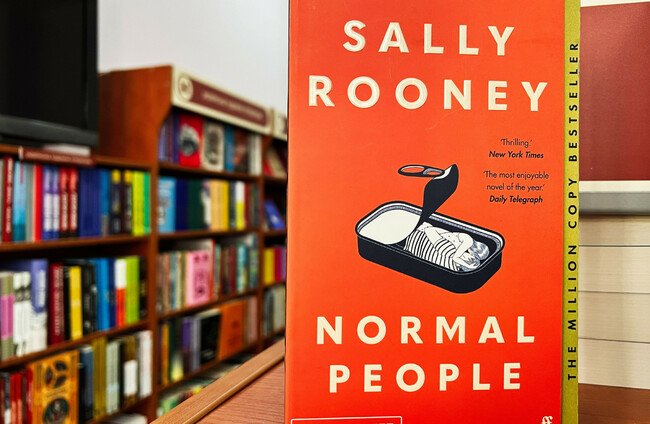
A copy of Sally Rooney's novel Normal People Alamy Stock Photo

Sally Rooney's books may be pulled off UK shelves due to her support for Palestine Action group

The author said it was “unclear” whether any UK company can make payments to her.

ACCLAIMED IRISH AUTHOR Sally Rooney’s books may have to be withdrawn from sale and none of her new works published in the UK due to “uncertainty” caused by the ban on Palestine Action, the High Court has been told.

Palestine Action’s co-founder Huda Ammori is taking legal action against the Home Office over then-home secretary Yvette Cooper’s decision to proscribe the group under anti-terror laws.

The UK Home Office is defending the claim.

The ban, which began on 5 July, made membership of, or support for, the direct-action group a criminal offence punishable by up to 14 years in prison.

A total of 143 people were arrested after demonstrations took place during the first day of the challenge at the High Court in London on Wednesday, London’s Metropolitan Police said.

Today, Ammori’s barrister Raza Husain KC said Rooney believes that publishers and producers could be committing a criminal offence by paying her due to her “vocal” support for the banned group.

In August, the UK government warned that she risked committing a terrorist offence after the award-winning author said she would donate earnings from her books and BBC adaptations of novels Normal People and Conversations With Friends to support the banned group, in a piece for the Irish Times.

And in witness statements for the legal challenge made public today, Rooney stated the producer of those programmes said they had been advised that they could not send money to her agent if it could be used to fund Palestine Action as that would be a crime under anti-terror laws.

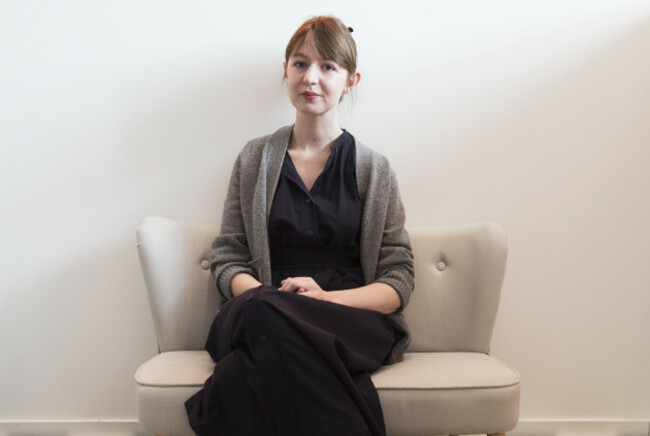
gothenburg-20170929-fileirish-writer-and-novelist-sally-rooney-visits-the-book-fair-in-gothenburg-photo-fredrik-sandberg-tt-kod-10080 Sally Rooney Alamy Stock Photo Alamy Stock Photo

The author said it was “unclear” whether any UK company can make payments to her and that if she was prevented from profiting from her work, her income would be “enormously restricted”.

She added: “If I were to write another screenplay, television show or similar creative work, I would not be able to have it produced or distributed by a company based in England and Wales without, expressly or tacitly, accepting that I would not be paid.”

The 34-year-old writer said that the “uncertainty” about how the ban affects her contracts also means she and her publisher cannot predict how it could impact upon her novels.

She described how the publication of her books is based on royalties on sales, and that non-payment of the royalties would mean she could terminate the contract.

“If, therefore, Faber and Faber Limited are legally prohibited from paying me the royalties I am owed, my existing works may have to be withdrawn from sale and would therefore no longer be available to readers in the UK,” Rooney added, saying this would be “a truly extreme incursion by the state into the realm of artistic expression”.

Rooney then said it is “almost certain” that she cannot publish or produce new work in the UK while the ban remains in force.

She continued: “If Palestine Action is still proscribed by the time my next book is due for publication, then that book will be available to readers all over the world and in dozens of languages, but will be unavailable to readers in the United Kingdom simply because no-one will be permitted to publish it, unless I am content to give it away for free.”

Rooney concluded: “I am of the view that the passionate opposition to this proscription is due not only to the broad base of support for direct action against genocide, but also to the unprecedented misuse of anti-terrorism legislation to curtail civil liberties.”

James Eadie KC, for the Home Office, said that a debate about how a terrorist organisation is defined was for Parliament to decide.

The barrister told the court: “Palestine Action is within the definition of a terrorist organisation applying the test that Parliament has determined that and provided for, we say compatibly, in the primary legislation.”

He continued: “In our democratic society, these issues are matters for Parliament to judge and Parliament’s judgment is expressed in the current legislation.”

In written submissions, he said that proscription’s aim is “stifling organisations concerned in terrorism and for members of the public to face criminal liability for joining or supporting such organisations”.

He continued: “That serves to ensure proscribed organisations are deprived of the oxygen of publicity as well as both vocal and financial support.”

He also said the ban “strikes a fair balance between interference with the rights of the individuals affected and the interests of the community”.

The barrister also emphasised that the ban has not prevented people from protesting against Israel’s actions in Gaza or in support of Palestinians.

He later said: “Whilst it has at all times been open to supporters of Palestine Action to protest against its proscription without breaking the law, certain individuals have instead repeatedly sought to flout Palestine Action’s proscription.”

The hearing before Victoria Sharp, Justice Swift and Justice Steyn is due to conclude on 2 December, with a decision expected in writing at a later date.

Need more information on what is happening in Israel and Palestine? Check out our FactCheck Knowledge Bank for essential reads and guides to navigating the news online.

Close
JournalTv
News in 60 seconds