We need your help now

Support from readers like you keeps The Journal open.

You are visiting us because we have something you value. Independent, unbiased news that tells the truth. Advertising revenue goes some way to support our mission, but this year it has not been enough.

If you've seen value in our reporting, please contribute what you can, so we can continue to produce accurate and meaningful journalism. For everyone who needs it.

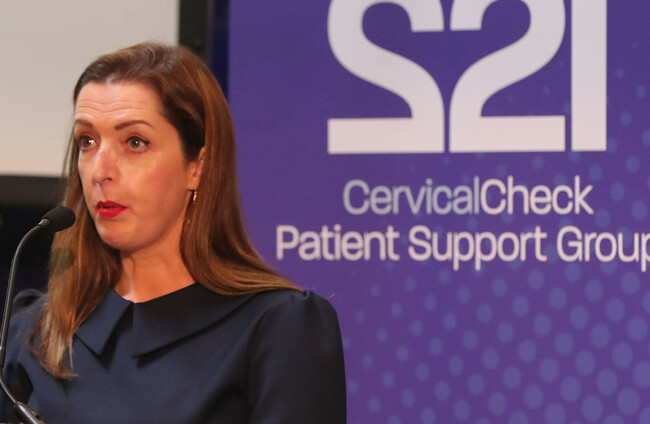
The CervicalCheck campaigner Vicky Phelan who died in 2022. (File) PA Images

Thirty years before CervicalCheck, sending smears abroad was being considered to save money

Concerns about cost and delays were already emerging in the late 1980s

A CONFIDENTIAL GOVERNMENT briefing from 1986 recorded that sending cervical smear samples abroad for analysis might be cheaper than investing in the training of laboratory staff for Irish hospitals.

Newly released State Papers show that concerns about the cost of cervical screening and delays in laboratory processing were already emerging in the late 1980s — nearly three decades before the CervicalCheck scandal.

CervicalCheck came under the microscope in April 2018, when it was revealed that some women diagnosed with invasive cervical cancer were not told that their previous smear tests had been reviewed.

The CervicalCheck controversy is about cell abnormalities, some of them pre-cancerous, that were misread or acted on incorrectly.

The late campaigner Vicky Phelan sparked the investigation into the controversy when she refused to sign a non-disclosure agreement as part of a High Court settlement.

Today, the State is paying out millions of euro in compensation to women whosecell abnormalities went undetected, many of which had been analysed by a laboratory in the United States.

Secret government documents are released annually and sent to the National Archives, providing journalists and historians with a fresh glimpse into historical events.

Among the records released is a December 1986 briefing document outlining the government’s early worries about test backlogs and screening costs.

It summarises a meeting between Department of Health official Dermot McCarthy and Junior Health Minister John Donnellan, convened to review cervical cancer screening services following reports of lengthy delays.

McCarthy emphasised that screening demand, not funding, was the primary challenge.

“The department (is) concerned that the available resources should be channelled towards women in the lower socio-economic groups who do not use the services to the same extent as those from the higher socio-economic groups,” the meeting note states.

A pilot study — which later formed the basis of what became CervicalCheck — was about to begin in Wicklow, Dublin, Longford and Westmeath, aiming to screen 20,000 women.

Some health boards were already reporting significant delays, with one pointing to a delay of “about 17 weeks” at the National Centre for smear testing at St. Luke’s.

The department planned to engage with St Luke’s on future service provision, with discussions to be held on the organisation of the lab. However, the document also raised the idea of outsourcing testing abroad:

“It might be an option to send some proportion of the smears to England (for testing). This, in fact, could be less expensive than the cost of training a technician,” the report states.

These technicians have to be trained in England at any rate. Furthermore, the laboratories in the maternity hospitals might be used to a greater extent.

The government was also unwilling to pay for a full nationwide review of screening. The 1986 note reveals a preference for a limited regional study:

“The study will cost £180,000 in 1987 and 1988. A full national study would cost about £3m to £4m and is not being considered at present.”

[National Archives document reference number: 2025/115/13]

Readers like you are keeping these stories free for everyone...
A mix of advertising and supporting contributions helps keep paywalls away from valuable information like this article. Over 5,000 readers like you have already stepped up and support us with a monthly payment or a once-off donation.

Close
22 Comments
This is YOUR comments community. Stay civil, stay constructive, stay on topic. Please familiarise yourself with our comments policy here before taking part.
Leave a Comment
    Submit a report
    Please help us understand how this comment violates our community guidelines.
    Thank you for the feedback
    Your feedback has been sent to our team for review.

    Leave a commentcancel

     
    JournalTv
    News in 60 seconds