We need your help now

Support from readers like you keeps The Journal open.

You are visiting us because we have something you value. Independent, unbiased news that tells the truth. Advertising revenue goes some way to support our mission, but this year it has not been enough.

If you've seen value in our reporting, please contribute what you can, so we can continue to produce accurate and meaningful journalism. For everyone who needs it.

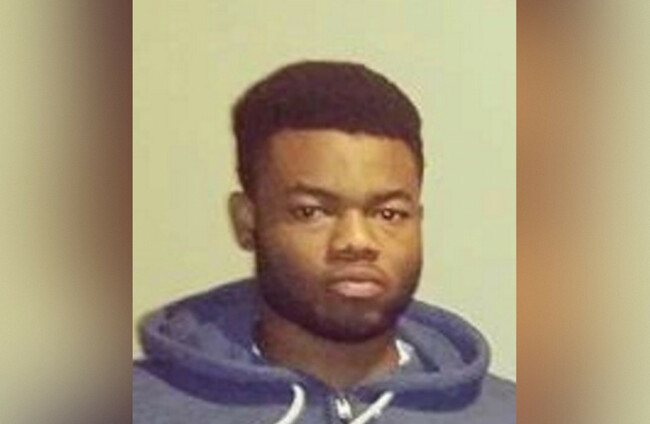
File image of George Nkencho Social media

Senior Garda tells George Nkencho inquest that training for mental health incidents was 'minimal'

George Nkencho’s family claim the level of force used against him was disproportionate.

A SENIOR GARDA in charge of armed officers involved in the fatal shooting of George Nkencho has admitted that their training for dealing with people with mental health problems would have been “quite minimal.”

Inspector John Holland of the Special Tactics and Operations Command told an inquest into the death of Mr Nkencho that the main priority of members of the Garda Armed Support Unit (ASU) during the incident was the threat posed to members of the public and gardaí by an individual with a large knife.

Inspector Holland said he believed the advice to try and keep a situation involving a disturbed person calm was not possible in the circumstances because of the immediate threat posed by someone with a knife and the risk to other individuals.

He told the ninth day of the inquest at Dublin District Coroner’s Court that he understood information about dealing with people with mental health issues was given as part of basic training for unattested gardaí attending the Garda College.

However, Inspector Holland said he believed it was “quite minimal.”

Mr Nkencho was fatally wounded by gardaí who had responded to emergency calls after the deceased had carried out an unprovoked assault on a manager at the nearby Eurospar store in Hartstown, as well as threatening staff with a knife.

The deceased’s family claim the level of force used against him was disproportionate.

However, the DPP directed that no prosecution should arise over the circumstances of Mr Nkencho’s death following an investigation by the Garda Síochána Ombudsman Commission (now known as Fiosrú).

As a qualified negotiator and on-scene commander, Inspector Holland told the coroner Myra Cullinane that he had received advice from the director of the Central Mental Hospital about dealing with individuals with mental health problems.

However, he did not believe such advice would have been given to members of the ASU.

The witness said gardaí were now trying to incorporate some learnings from incidents into judgemental and situational training which would include mental health issues.

Nevertheless, Inspector Holland stressed that the immediate threat posed by someone with a knife and the risk to people on the day took precedence over putting any protocol or procedures on mental health issues into practice.

He told counsel for the Nkencho family, Eanna Molloy SC, that he believed such advice would normally arise for use in “a protracted incident” where there was either a hostage or suicide situation.

Inspector Holland pointed out that the situation involving Mr Nkencho was “evolving” and “very fluid.”

He noted that the time between the ASU arriving on the scene and a firearm being discharged was less than a minute.

On hearing that the ASU had fired shots, Inspector Holland told the inquest that he had directed another garda to take possession of their weapons and to get the two armed gardaí to make contemporaneous notes without conferring with each other.

Asked by Mr Molloy why gardaí failed to resort to less lethal devices, Inspector Holland replied that tasers (and pepper spray) had been deployed.

The witness said he believed firearms were used because of “the urgency of the situation” and ASU members had “to deal with the threat in front of them.”

He reminded the hearing that Mr Nkencho was still in possession of a knife and advancing at gardaí when the firearm was discharged.

Inspector Holland stressed that the deceased’s intentions were “unknown.”

He said the ASU members, who put themselves in harm’s way to protect others, were the best equipped and best trained gardaí to deal with the situation.

He also claimed that the immediacy of the danger when the ASU arrived on the scene, with Mr Nkencho continuing to walk toward members of the public, meant there was an urgency which did not allow them to go to the boot of their vehicle to get other equipment such as a protective shield and a 40mm launcher which fired “sponge rounds.”

In reply to a question from Dr Cullinane, Inspector Holland said shields were generally used during planned house searches by a garda who would not generally be carrying a firearm.

The witness said having a garda carry a shield which required both hands removed the possibility that they could also carry a weapon.

The inquest heard that the ASU in Dublin dealt with around 4,200 incidents in 2020, of which 72% were “of substance.”

Inspector Holland told counsel for An Garda Síochána, Ronan Kennedy SC, that the incident involving Mr Nkencho was the only one where lethal force was deployed.

He said most incidents involving an individual with a knife were resolved by the mere presence of gardaí from the ASU.

Inspector Holland said there was a fear of a hostage situation if someone with a knife was able to get into a house which creates “a different risk.”

The witness said he was unaware that Mr Nkencho was outside his own house until he arrived at the scene about 30 minutes after the fatal shooting.

He said he believed the ASU members had deployed “the most effective tools” on Mr Nkencho.

Asked about the pepper spray used on the deceased being about a month out-of-date, Inspector Holland said ASU equipment was subject to an audit every six months but the normal timescale for biannual checks had probably been affected by the Covid-19 pandemic at the time.

In other evidence, the deceased’s aunt, Grace Anyanwu, described the events of the day her nephew was killed as “torture.”

However, Ms Anyanwu, who formally identified her nephew’s body to gardaí, said she felt at peace at seeing him because he was “sleeping like an angel.”

Ms Anyanwu said her heart “calmed down” after seeing his body in the Dublin City Mortuary in Whitehall on the day after the fatal shooting.

“He was just an angel. When I walked into that room, I felt peace but so sad that he didn’t come back,” she recalled.

Ms Anyanwu said she had been “expecting a horrible situation following the fatal shooting.”

“It is not a day I want to remember again,” she added. “It was torture.”

She gave evidence that she was alerted by a call from her niece, Grateful, on 30 December, 2020 to say “they are shooting.”

Ms Anyanwu recalled not really understanding what was happening but heard her own two daughters screaming, while her nieces were calling for her to go to their house as their mother was not at home.

The witness explained that she is not the biological sister of the deceased’s mother, Blessing Nkencho, but that they were best friends and like sisters.

When she arrived outside Manorfields Drive within ten minutes after getting the phone call, Ms Anyanwu said she was prevented by gardaí from going into the house because it was a crime scene but she could see her nephew on the ground.

Ms Anyanwu said George’s siblings – Gloria, Grateful and Emmanuel – were screaming at her from a window in the house to come in.

Grateful had shouted at her that George was dead but she believed, from what she could see, that he was still alive as ambulance crews were still working on him.

“It looked like he was going to be OK,” she recalled.

Ms Anyanwu said she met George’s brother, Victor, outside the house and he said he was going to go to the hospital.

She said Blessing was screaming when she arrived at the scene as gardaí were refusing to let her into her house.

Ms Anyanwu said she was pleading with gardaí until one officer arranged to have the children brought out of the house.

The inquest heard the Nkencho family learnt from gardaí about George’s death after they had gone to Ms Anyanwu’s home.

“It was very devastating and my heart was very broken,” said Ms Anyanwu “It was very traumatising. We were all shattered.”

Ms Anyanwu said Blessing did not eat or sleep for three days, while she had a pain in her shoulders “from holding everyone.”

The inquest before a jury of five women and four men will resume tomorrow.

Readers like you are keeping these stories free for everyone...
A mix of advertising and supporting contributions helps keep paywalls away from valuable information like this article. Over 5,000 readers like you have already stepped up and support us with a monthly payment or a once-off donation.

Close
JournalTv
News in 60 seconds