We need your help now

Support from readers like you keeps The Journal open.

You are visiting us because we have something you value. Independent, unbiased news that tells the truth. Advertising revenue goes some way to support our mission, but this year it has not been enough.

If you've seen value in our reporting, please contribute what you can, so we can continue to produce accurate and meaningful journalism. For everyone who needs it.

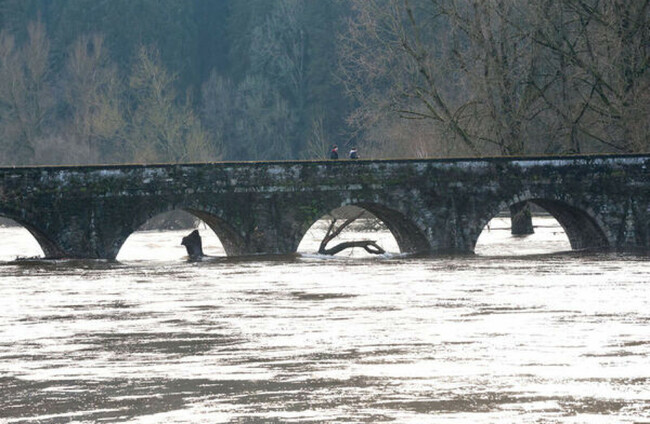
Inistioge, County Kilkenny, Leinster, Ireland, Irish. Storm Chandra Aftermath.

Future planning Storm Chandra and the price of hollowed-out Irish governance

Successive Irish governments have been too quick to outsource flood planning to consultants. Storm Chandra showed that this must change, writes Dr Paul Davis.

THERE WAS A quiet irony in Jack Chambers’ recent announcement that the National Development Finance Agency will rely less on external consultants and instead build internal delivery capability, using the NDFA to help transfer skills rather than simply produce reports.

On paper, it is exactly the right move. After years of outsourcing strategic thinking, project oversight and infrastructure planning to consultants, the State is finally acknowledging a hard truth. That is, you cannot outsource resilience. Capability has to live inside the system.

But Storm Chandra arrived with brutal timing. Because while the announcement spoke of future capability, the storm exposed the cost of not having it already.

As floodwaters rose across Dublin and the East Coast in recent weeks, what became obvious wasn’t just the vulnerability of roads, homes and rivers. It was the fragility of how we anticipate, coordinate and act. Warnings remained yellow even as the Dodder burst its banks in Rathfarnham, even as the M50 closed between Cherrywood and Firhouse, even as Enniscorthy town centre became impassable under several metres of water. Flood-prone areas flooded again, and communities were surprised by events that experts insist were foreseeable.

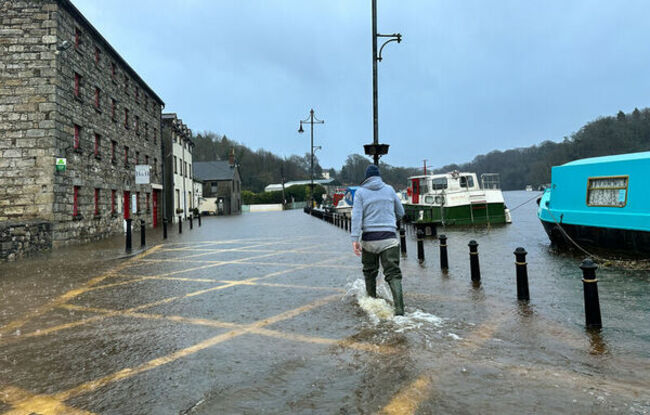
Graiguenamanagh flooding-8_90742110 The flooded quays in Graiguenamanagh on the River Barrow. Rolling News Rolling News

Keith Leonard, National Director for Fire and Emergency Management, was remarkably candid on RTÉ’s Morning Ireland. The flooding in south Dublin, he admitted, “caught authorities by surprise.” They “just weren’t expecting those levels of rainfall.”

This is not a meteorological failure. Ireland did not lack data about saturated ground, swollen rivers, or an approaching storm system. It lacked a joined-up institutional capacity to interpret that data, escalate risk and act decisively. That is a governance failure.

Too many consultants

Jack Chambers’ announcement acknowledges something many inside the system already know. That decades of heavy reliance on consultants have hollowed out State capability. Consultants are not the problem. Dependency is. When flood modelling, infrastructure planning, risk forecasting and delivery oversight sit largely outside the public service, the State becomes excellent at commissioning reports but slower at responding when reality arrives ahead of schedule.

Storm Chandra didn’t wait for a strategy refresh. It didn’t respect organisational silos. It didn’t care whether flood forecasting outputs were “public-facing” or “internal only.” It simply arrived, and the system hesitated.

The NDFA move towards internal capability is welcome, even overdue. But capability takes time to build. You need experienced engineers and planners who understand local river catchments, not just theoretical models. You need institutional memory that remembers what happened in Enniscorthy in 2017, in 2008 and in 2000. You need decision-making confidence, the kind that comes from having done this work yourself rather than reading about it in a consultant’s executive summary. And you need the ability to act without waiting for external validation.

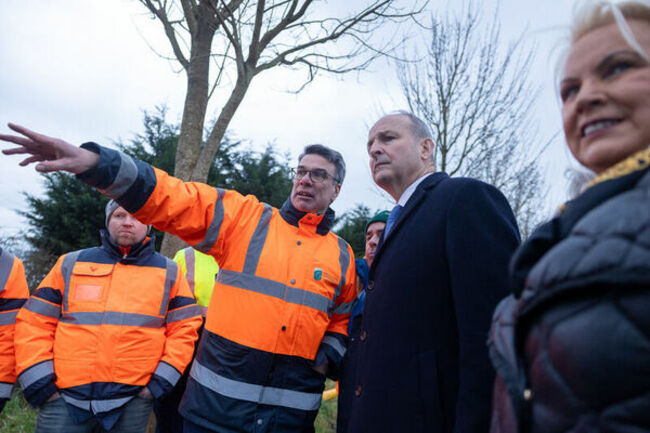
0583 Taoiseach Flooding_90742244 Photographs of Taoiseach Micheál Martin visiting Wexford, Kilkenny, Carlow and Wicklow, areas impacted by Storm Chandra. Rolling News Rolling News

Storm Chandra showed what happens in the gap between recognising the need for capacity and actually having it. Warnings hesitate. Responsibilities blur. Nobody quite owns the moment when a yellow warning should become orange, or when flood defences designed for “once in a century” events need to reckon with the fact that we’re now getting those events every few years.

And while consultants can help design future systems, they are not the ones standing in flooded control rooms at 3 am deciding whether to escalate a warning or close a road. They are not the ones integrating real-time rainfall data with river levels, tidal locks, and saturated ground conditions to make a call that could save lives or cause gridlock. Those are decisions that require people inside the system who have the mandate, the confidence, and the competence to act.

All-government involvement

We tend to talk about infrastructure as physical assets such as flood defences, drainage systems and transport networks. Storm Chandra reminds us that institutional infrastructure matters just as much. Who integrates weather data with flood risk in real time? Who has the authority to override standard thresholds when local context demands it? Who connects planning, transport, emergency response and local authorities when a storm is six hours away rather than six months?

Those questions don’t get answered by a report, however well written. They get answered by people inside the system who know their patch, trust their judgment and won’t be second-guessed for making the call. Other jurisdictions manage this. The Netherlands didn’t outsource its flood management capability after 1953. It built it, embedded it and refined it over decades. That institutional memory and confidence is precisely what Ireland has systematically dismantled through over-reliance on external expertise.

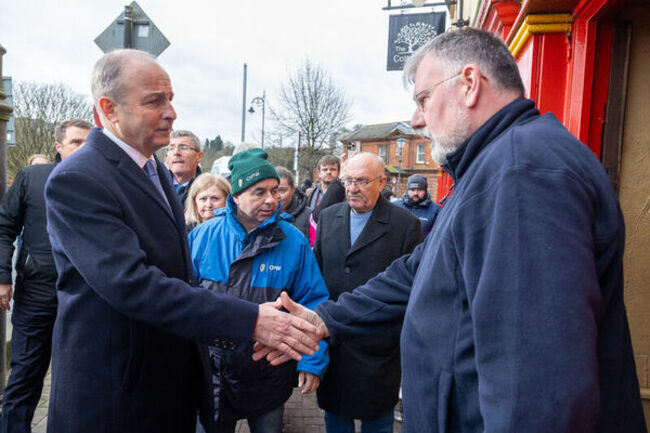
0261 Taoiseach Flooding_90742241 Photographs of Taoiseach Micheál Martin visiting Wexford, Kilkenny, Carlow and Wicklow, areas impacted by Storm Chandra. Rolling News Rolling News

Jack Chambers is right. Ireland needs to rebuild its internal capability. The expanded role of the NDFA to transfer expertise rather than simply outsource it is a step in the right direction. But Storm Chandra should force an uncomfortable reflection about timing and priorities.

We are no longer planning for hypothetical futures. The climate-adjusted present has already arrived. If capability building remains something we announce after each storm, commission a review for, and then defer for budget reasons, then every ministerial statement will sound faintly familiar and faintly too late.

The problem isn’t that we don’t know what needs to be done. The problem is that knowing has never been enough to drive action until the floodwaters recede and the cameras leave Enniscorthy.

The real test won’t be the next strategy document or the next announcement about building capacity. It will be the next storm, and whether the people tasked with protecting communities have the capability, the confidence, and the authority to act before the warnings turn into evacuations.

Dr Paul Davis is a lecturer at Dublin City University’s Business School. He specialises in supply chain management and procurement. 

Readers like you are keeping these stories free for everyone...
A mix of advertising and supporting contributions helps keep paywalls away from valuable information like this article. Over 5,000 readers like you have already stepped up and support us with a monthly payment or a once-off donation.

View 13 comments
Close
13 Comments
This is YOUR comments community. Stay civil, stay constructive, stay on topic. Please familiarise yourself with our comments policy here before taking part.
Leave a Comment
    Submit a report
    Please help us understand how this comment violates our community guidelines.
    Thank you for the feedback
    Your feedback has been sent to our team for review.

    Leave a commentcancel

     
    JournalTv
    News in 60 seconds