We need your help now

Support from readers like you keeps The Journal open.

You are visiting us because we have something you value. Independent, unbiased news that tells the truth. Advertising revenue goes some way to support our mission, but this year it has not been enough.

If you've seen value in our reporting, please contribute what you can, so we can continue to produce accurate and meaningful journalism. For everyone who needs it.

Alamy Stock Photo

Stuck in the past Ireland’s remote working policies are built for a world that doesn't exist

As housing, transport and climate pressures mount, the government’s remote working policy is dragging the workforce backwards, writes Labour’s George Lawlor.

IRELAND’S WORLD OF work has changed. Our laws have not. Fine Gael and Fianna Fáil have hardwired hesitation, delay, and employer vetoes into law, leaving workers with the illusion of flexibility but none of its protections.

The result is a system that talks about modern work while quietly forcing people back into habits that no longer make sense.

This retreat is deeply short-sighted. It ignores the housing crisis, clogged transport systems and our climate commitments. It forces people into longer commutes and higher costs for no proven economic gain. Worse still, it signals a lack of trust in workers and a refusal to accept the reality of how work is now done.

Our current work practices are still built on the misguided belief that Ireland operates the way it did 30 years ago: when homes were affordable on basic salaries, there were enough of them to go around, and employees had real choice about where they lived. When being close to your workplace — within commuting, walking or even skipping distance — was a realistic expectation, not a luxury. When work happened in offices, around the famous water cooler, because modern communication tools like Slack, Teams or Google Hangouts simply didn’t exist yet. Roads weren’t permanently clogged with traffic, commutes were manageable, climate change wasn’t yet shaping our daily decisions, and everyone worked a neat, predictable 9–5. That model simply no longer exists. Ireland’s modern workforce works differently, but our expectations haven’t caught up. If we really want to encourage a modern, highly educated, flexible and dynamic workforce, this is not the way to go about it. 

At present, Ireland’s employees do not have an embedded right to remote work. What exists instead is a right to ask politely and accept the answer. Since 2023, workers can bring a complaint to the Workplace Relations Commission, but only about whether an employer followed the correct process when refusing a request. The WRC cannot decide if the job can actually be done remotely. It cannot assess how reasonable the refusal is. It can only confirm that the refusal was properly documented.

That was a deliberate political choice. Instead of giving workers enforceable rights, Fine Gael and Fianna Fáil legislated for the employer’s right to say no. As long as the paperwork is in order, the refusal stands, no matter how arbitrary or outdated the reasoning. That is not balance. It is a blank cheque.

Proposed changes

That is why we in the Labour Party have brought forward the Work Life Balance (Right to Remote Work) Bill 2026. This legislation would give workers an immediate and enforceable right to work remotely where their role allows, and it would end the sweeping right employers currently enjoy to refuse flexible and remote working arrangements.

I have published this Bill because flexibility should not depend on the goodwill of an employer or the mood of a manager. It should be a legal right. This legislation is about dignity at work, quality of life and whether Ireland is serious about building a modern labour market or retreating to an outdated model built around control rather than productivity.

Labour’s Bill would change that. It would give workers certainty and clarity. If your job can be done remotely, you would have a legal right to do so. This is not about forcing remote work in roles where it does not fit. It is about ending refusals based on habit, suspicion or a fixation with visibility rather than outcomes.

We already know the benefits of flexible working. It has allowed more people to participate in the workforce, including carers, people with disabilities and those living far from major urban centres. For many, flexibility is not a lifestyle preference. It is the difference between being able to work at all and not.

There is no credible evidence that forcing people back into offices improves performance. What it does do is increase stress, reduce retention and make working life harder for people already juggling housing costs, childcare and long commutes.

Unnecessary pressure

Yet in recent months, we have seen a growing push to drag people back into offices, often without any clear rationale. Workers who reorganised their lives in good faith are now being told that flexibility was temporary and conditional, something to be withdrawn at will. This trend has exposed just how weak Ireland’s current protections really are.

If the Government were serious about flexible work, the public sector should be leading by example. Instead, we are seeing the opposite. Take Enterprise Ireland, which is reportedly requiring staff to return to the office for the majority of the week from June. It is also reportedly restricting the ability of staff to work in its network of regional offices, hauling them instead to its Dublin headquarters in EastPoint Business Park, which is difficult to access by public transport.

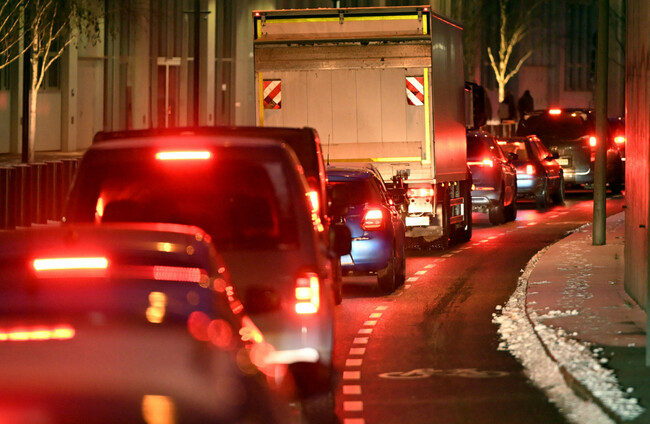
The predictable result is more people forced into cars, adding to congestion and emissions, all driven by a policy choice that directly undermines stated climate and transport goals. When State bodies behave like this, they normalise backsliding and give cover to the private sector to do the same.

We can’t complain about traffic gridlock and not see the connection here, surely?

At a time when skilled workers can choose where to live and work, this approach is economically reckless. Flexibility is no longer a bonus. It is an expectation. Countries and employers that refuse to adapt will lose talent, and those losses will be felt most acutely among women, carers and people already at risk of being pushed out of the workforce.

Labour’s legislation offers a clear alternative. It treats flexible and remote work as a core feature of a modern labour market, not a favour granted at management’s discretion. It would expand participation, support regional communities and give people back hours of their lives currently wasted in traffic.

Anyone who works from home knows the difference it makes. Less time commuting. More time with family and community. Stronger local economies. Lower emissions. These are real gains, not lifestyle slogans.

The risk of doing nothing is obvious. If Government continues to delay, it will lock people out of work, deepen regional inequality and undermine our climate goals, all while making Ireland less competitive in a global labour market that is already moving on. This Government’s refusal to act is not cautious or balanced; it is profoundly short-sighted, and workers are being asked to pay the price for that failure of imagination.

George Lawlor is a Labour Party TD representing Wexford, he is the Labour Party spokesperson on Enterprise, Tourism and Employment.

Readers like you are keeping these stories free for everyone...
A mix of advertising and supporting contributions helps keep paywalls away from valuable information like this article. Over 5,000 readers like you have already stepped up and support us with a monthly payment or a once-off donation.

Close
32 Comments
This is YOUR comments community. Stay civil, stay constructive, stay on topic. Please familiarise yourself with our comments policy here before taking part.
Leave a Comment
    Submit a report
    Please help us understand how this comment violates our community guidelines.
    Thank you for the feedback
    Your feedback has been sent to our team for review.

    Leave a commentcancel

     
    JournalTv
    News in 60 seconds