We need your help now

Support from readers like you keeps The Journal open.

You are visiting us because we have something you value. Independent, unbiased news that tells the truth. Advertising revenue goes some way to support our mission, but this year it has not been enough.

If you've seen value in our reporting, please contribute what you can, so we can continue to produce accurate and meaningful journalism. For everyone who needs it.

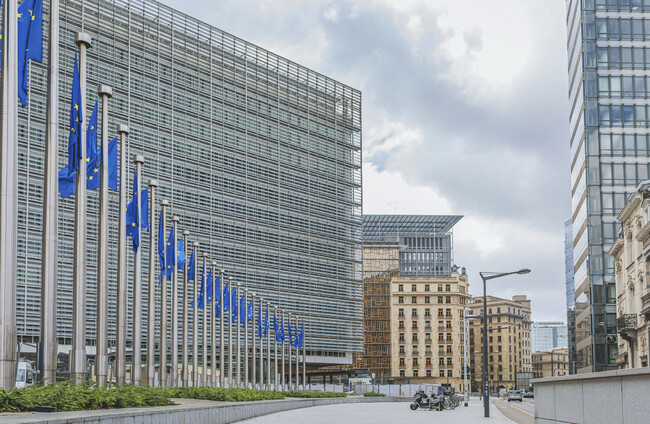
EU Institutions and Summits in the European Capital, Brussels. Alamy Stock Photo

Kafka with coffee Life in the European Parliament - it might be boring, but it still matters

Kevin Purcell, a former insider, on what it’s really like to work inside the European Parliament.

IT WAS WHILE I was negotiating the EU’s Carbon Removal Certification Framework that I began questioning my life choices.

By then, I was working as an adviser in the European Parliament, an Accredited Parliamentary Assistant. My main role was communications, but as anyone who has spent time in Brussels will tell you, those lines blur quickly. Stay long enough, and you find yourself doing policy whether you planned to or not.

I’d come from journalism, where urgency matters, and clear communication is essential. Suddenly, I was sitting in meetings where people calmly introduced mathematical equations into the discussion, as if this were entirely normal behaviour.

Drafts went back and forth endlessly. Language was negotiated word by word. Someone from a different political group would suggest a small tweak, and three meetings later, you would still be discussing the same sentence.

At one point, I remember thinking: do people actually enjoy this?

My background turned out to be useful. Journalists are trained to cut through complexity, get to the heart of something, and explain why it matters. That’s what I had to do here. Carbon removal certification sounds painfully technical, but in simple terms, it could offer a much-needed boost for Irish farmers, a new way of recognising and rewarding the work they are already doing on the land. Understanding that, and being able to explain it clearly, was the real work.

Democracy moves slowly

That, in many ways, is the EU in a nutshell: complex and slow, but impactful and built on compromise.

My first real encounter with the system came earlier, on my first trip to Strasbourg in 2019 as a journalist.

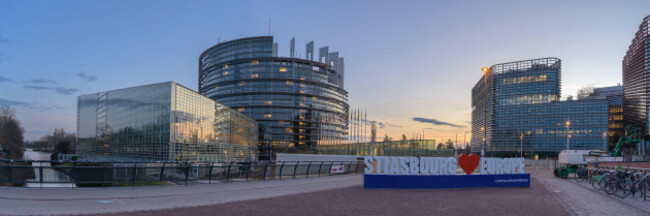
The European Parliament building there is vast and disorientating, made up largely of long, curved corridors that feed into other curved corridors. I once spent a good 30 minutes walking in what I thought was a straight line, only to realise I was circling the same space again and again.

strasbourg-france-january-16-2026-european-parliament-in-strasbourg-france-panoramic-cityscape-at-dusk Strasbourg, France – January 16, 2026: European Parliament in Strasbourg, France, Panoramic Cityscape at Dusk. Alamy Stock Photo Alamy Stock Photo

An Irish MEP I met described it as a “Kafkaesque nightmare”. I wasn’t entirely sure whether she meant the physical building, the system it housed, or both.

Once working on the inside, what struck me most was how many steps are involved in getting even the smallest thing done. Want to submit an amendment? There’s a process. Want to book a room? Another process. Want coffee served at a meeting? There is, inevitably, a form, or several, to fill out.

You also start to absorb the language. People talk casually about trilogues, shadow rapporteurs and delegated acts. Assistants talk about their legislative “files” like they are their children.

Then there is the anxiety of the monthly voting session. MEPs whiz through hundreds of votes and amendments in a single hour. Part of my job was ensuring the MEP didn’t press the wrong button, a simple slip of the finger that could trigger a bruising headline back home.

MEPs themselves cover vast constituencies while juggling committee work, negotiations and meetings in Brussels and Strasbourg. A senior political figure in Dublin once scowled at me that MEPs are “very well resourced”. He wasn’t wrong, but he was missing the point. Law-making at this scale is fundamentally different to what goes on in Leinster House. You need the staff.

The parliament on the hill

Part of the distance people feel from the EU is down to how poorly it is covered. In Ireland, political journalism is saturated. Reporters are everywhere, in corridors, trading gossip, cultivating contacts. Politics feels close because it is close.

Brussels is the opposite. There are only a handful of Irish journalists permanently based there, covering Europe as a whole rather than the day-to-day grind of the European Parliament. There is no dedicated Irish parliament reporter in Brussels. The result isn’t bad journalism; it’s distance.

That distance means many businesses or organisations only realise an EU decision affects them once the argument is already over.

When things go our way, the government takes the credit. When they don’t, we are told that “our hands are tied by Europe”.

Despite the frustrations, there’s another side to life inside the Brussels bubble.

There’s the buzz in the Parliament chamber as a file you worked on clears the final hurdle. The pride of seeing the Irish flag among 27 every morning on the way into work. The small ritual of stepping into an elevator and trying to guess which languages are being spoken.

There are also the connections you make: the unofficial Irish hub of Kitty O’Shea’s bar, the evenings spent eating frites and sampling Belgian beers while learning about different cultures with Spanish or Italian friends.

Over time, you feel connected. You are part of a shared system, a collective effort, something that tries to bring very different countries, parties and priorities together.
Working inside the EU cured me of the idea that it is a distant force acting elsewhere. The laws shaped there touch almost every part of daily life in Ireland. We still talk about decisions being made “over there in Europe”, as if Ireland were not very much part of the conversation. In reality, we have 14 MEPs in the European Parliament, 14 votes, 14 voices, sitting at the table.

This isn’t about blind loyalty, far from it. It is about recognising that in a world becoming more divided by the day, cooperation matters more than ever.

We don’t need to be experts or enthusiasts. The EU may be bureaucratic and often boring, but it is also inclusive and consequential. And having seen it up close, flaws and all, I would still rather be part of the conversation. The least we can do is pay attention.

Kevin Purcell is a former journalist and EU adviser, and the founder of Treaty Media.

Readers like you are keeping these stories free for everyone...
A mix of advertising and supporting contributions helps keep paywalls away from valuable information like this article. Over 5,000 readers like you have already stepped up and support us with a monthly payment or a once-off donation.

Close
6 Comments
This is YOUR comments community. Stay civil, stay constructive, stay on topic. Please familiarise yourself with our comments policy here before taking part.
Leave a Comment
    Submit a report
    Please help us understand how this comment violates our community guidelines.
    Thank you for the feedback
    Your feedback has been sent to our team for review.

    Leave a commentcancel

     
    JournalTv
    News in 60 seconds