We need your help now

Support from readers like you keeps The Journal open.

You are visiting us because we have something you value. Independent, unbiased news that tells the truth. Advertising revenue goes some way to support our mission, but this year it has not been enough.

If you've seen value in our reporting, please contribute what you can, so we can continue to produce accurate and meaningful journalism. For everyone who needs it.

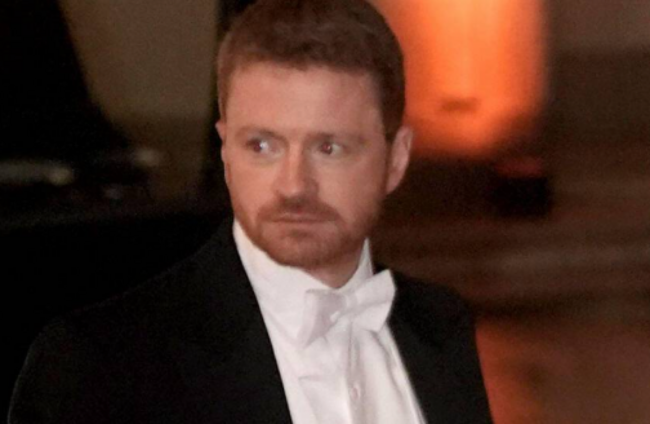
McSweeney at the annual Lady Mayor's Banquet in London last month. Alamy

Morgan McSweeney, from the fields of Macroom GAA to the corridors of 10 Downing Street

McSweeney was not particularly interested in politics as a young man, he was more into GAA.

LAST UPDATE | 5 hrs ago

(Seo alt ónár bhfoireann Gaeltachta. Is féidir an bunleagan as Gaeilge a léamh anseo)

THERE IS OLD saying about Macroom, the town on the edge of the Muskerry Gaeltacht in Cork where Keir Starmer’s former chief of staff, Morgan McSweeney, was born and raised, which goes: ‘Macroom, the town that never raised a fool’.

While McSweeney’s tenure at Number 10 Downing Street came to a disastrous end on Sunday due to pressure over his support for the appointment of Peter Mandelson as ambassador to the US and the fallout from the Epstein files, it was clear that this Cork native was no fool as few fools reach the top of British politics as he did.

Four years ago, when he was appointed director of elections by Keir Starmer, then leader of the opposition in Westminster, McSweeney spoke to this journalist about his role. He stressed that he was a man who wanted to stay out of the spotlight but consented to the interview because it was a local newspaper, The Corkman, which is sold in his hometown.

He said he would tell me his life story but that he would not speak ‘on the record’ himself because he worked for the party and, in his view, it was the elected representatives and candidates who had the role of speaking for the party. He was happy to speak to me because I was from the same area. So far, I believe no other Irish journalist has had the opportunity to interview him.

McSweeney comes from a family that was – and is – central to Macroom politics. Growing up there, his parents canvassed for Donal Creed and his son, Michael Creed. They were both Fine Gael TDs for North West Cork and Michael spent a period as Minister for Agriculture and his father, Donal, was a Minister of State.

McSweeney was not particularly interested in politics as a young man – he was more interested in football and played for Macroom GAA under-age teams. During the 1980s, he was the mascot of the club’s intermediate team when they won the Cork championship. He was also a member of the Rylane Boxing Club.

When he went to England in the 1990s, it was not because he was pressured to go, but because he was driven by a sense of adventure. He spent time working on construction sites and also went to Israel to work on a kibbutz.

On the London construction sites, he gained an understanding of the challenges faced by older workers, low pay, lack of stability in the workplace. On the kibbutz he was inspired by the satisfaction he got from working shoulder to shoulder with others towards a common goal.

The turning point that set him on the path to politics that would eventually lead to Downing Street was that he undertook a degree in politics at Middlesex University as a mature student. He joined the Labour Party because of that party’s role in the Good Friday Agreement.

Luckily, he got the chance to work at the Labour Party headquarters in London and Margaret McDonagh, a woman of Irish descent who was the party’s General Secretary, was the one who had been working on the reception desk.

No one who had been working on the reception desk was up to the task and McSweeney was appointed to work there in his place. He clearly made an impression on the various figures who came to the leadership, including Peter Mandelson.

He later held various roles in the party – he worked on the ground in north Wales and supported a Labour candidate in the then Senedd election. He also helped the party’s candidates in various elections but it was his pivotal role in Labour’s victory in Lambeth in 2006 that ensured that the party leaders would take notice of him.

After that, he had an involvement in Labour’s successful Barking and Dagenham council elections, where they defeated far-right BNP candidates.  He felt he had a certain affinity with Dagenham as it was home to many from Cork who had moved to work in the Ford factory there after the facility in Cork closed in the 1980s. 

Corbyn 

He enjoyed working on the election frontline but was soon to be at the heart of the factional wars inside the Labour party. 

When Jeremy Corbyn was elected Labour leader in 2015, Labour was in a slump and managed to make a significant dent in the 2017 general election – although the Conservatives won and returned to power with Theresa May back in Downing Street.

As Labour became ravaged in rows over antisemitism, Morgan McSweeney is widely credited with the campaign to oust Corbyn and replace him with Starmer. A fierce civil war was raging within the party – between the ‘Corbynistas’ who linked the party to many radical external causes and the McSweeney and Starmer wing who believed the party should be more moderate in outlook. 

To achieve this aim, the party needed to ditch radical ideologies so it could connect with middle England and win back the votes it had previously gained during Tony Blair’s time. 

Labour returned to Downing Street with a huge majority after the 2024 election.  Starmer appointed Sue Gray, a former senior civil servant when Boris Johnson was PM,  to be his Chief of Staff originally but she was forced to resign within four months.  That led to McSweeney’s appointment.

During his rise in the party, McSweeney had made many friends and cultivated useful alliances but he also made a lot of enemies. Margaret Thatcher once said that your efforts were not worth much if you didn’t have enemies as a result.  

Ultimately, however, when the crunch time came and his role in Mandelson’s appointment emerged, he had no choice but to resign, collateral damage from the fallout from the Epstein files revelations.

It is not that he is leaving politics altogether, however, as his wife, Imogen Walker, is one of a handful of Labour MPs elected in Scotland and may yet be appointed to even higher office. 

Back home in Ireland,  parties such as Fine Gael would certainly be interested in his advice. His cousin, Clare Mungovan, is an advisor in the Tánaiste’s Office. What is certain, however, is that McSweeney is no fool and will not be idle for long.

The Journal’s Gaeltacht initiative is supported by the Local Democracy Reporting Scheme


Readers like you are keeping these stories free for everyone...
A mix of advertising and supporting contributions helps keep paywalls away from valuable information like this article. Over 5,000 readers like you have already stepped up and support us with a monthly payment or a once-off donation.

Close
16 Comments
This is YOUR comments community. Stay civil, stay constructive, stay on topic. Please familiarise yourself with our comments policy here before taking part.
Leave a Comment
    Submit a report
    Please help us understand how this comment violates our community guidelines.
    Thank you for the feedback
    Your feedback has been sent to our team for review.

    Leave a commentcancel

     
    JournalTv
    News in 60 seconds