We need your help now

Support from readers like you keeps The Journal open.

You are visiting us because we have something you value. Independent, unbiased news that tells the truth. Advertising revenue goes some way to support our mission, but this year it has not been enough.

If you've seen value in our reporting, please contribute what you can, so we can continue to produce accurate and meaningful journalism. For everyone who needs it.

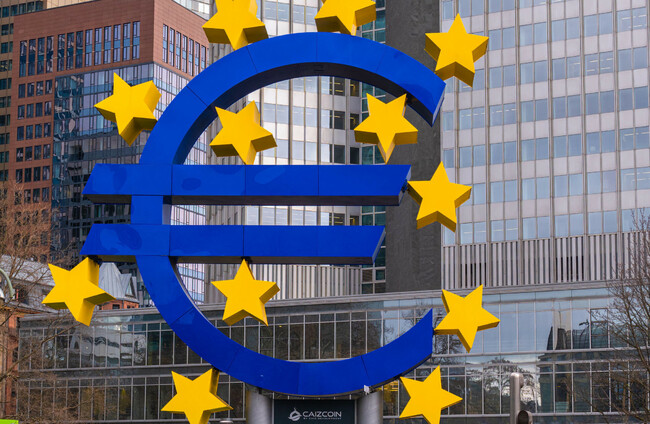
The euro sign outside the European Central Bank in Frankfurt, Germany Alamy Stock Photo

EU Parliament votes in favour of digital euro but ECB chief insists 'cash is queen'

Today’s vote is only an expression of support at this stage but shows where MEPs currently stand on an issue that has divided Europe.

THE EU PARLIAMENT has backed plans for a digital euro, a project that has split the bloc but has gained greater urgency as Europe seeks to bolster its financial sovereignty.

MEPs voted in favour of two amendments to an annual report on the European Central Bank (ECB), expressing support for the introduction of the digital currency.

The electronic version of the money used in the 21-nation currency area would be available to use free of charge in shops, online or from person to person.

“The introduction of a digital euro… is essential to strengthen EU monetary sovereignty, reduce fragmentation in retail payments and support the integrity and resilience of the single market,” one of the amendments said, approved by 438 MEPs with 158 against.

First suggested by the ECB, the project has been some six years in the making.

The European Commission formally proposed a digital euro in June 2023 but any law to make it a reality needs the support of member states and MEPs.

EU countries in December gave their green light, putting pressure on the parliament to grant its formal approval too.

Today’s vote is only an expression of support at this stage but shows where MEPs currently stand on an issue that has divided Europe.

Supporters say it would let Europeans make online payments without relying on US card companies or payments systems – as Europe ramps up efforts to break its dependence on foreign firms including US giants such as Visa and Mastercard.

Critics fear it would allow governments to surveil citizens’ payments or even cut them off from the money supply.

ECB chief Christine Lagarde yesterday sought to assuage privacy fears, telling MEPs that the bank “would not have access to personal data”.

She also said it was in “no way intended to replace cash”.

“Cash is queen,” Lagarde said, as she urged MEPs to move forward.

Lagarde also echoed sovereignty arguments, saying: “It will be built on a fully European infrastructure, avoiding an excessive dependency on foreign providers for payment systems that are critical to the functioning of our economy.”

- © AFP 2026

Author
View 24 comments
Close
24 Comments
This is YOUR comments community. Stay civil, stay constructive, stay on topic. Please familiarise yourself with our comments policy here before taking part.
Leave a Comment
    Submit a report
    Please help us understand how this comment violates our community guidelines.
    Thank you for the feedback
    Your feedback has been sent to our team for review.

    Leave a commentcancel

     
    JournalTv
    News in 60 seconds