Sign in. It’s quick, free and it’s up to you.
An account is an optional way to support the work we do. Find out more.
Sign in. It’s quick, free and it’s up to you.
An account is an optional way to support the work we do. Find out more.
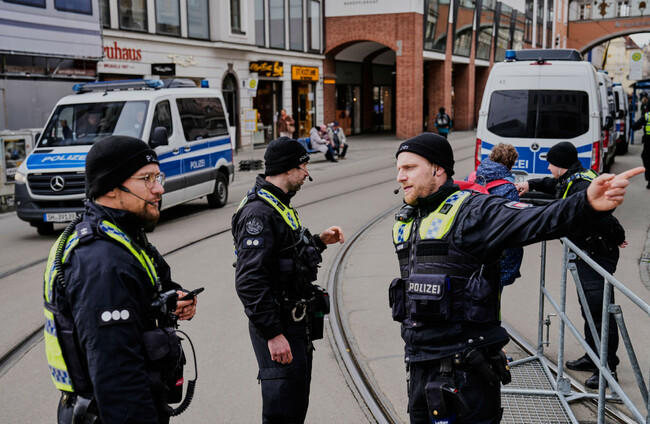

IRELAND SHOULD BE open to using foreign police forces to help gardaí provide security for events taking place during the upcoming EU Presidency, the European Minister has said.
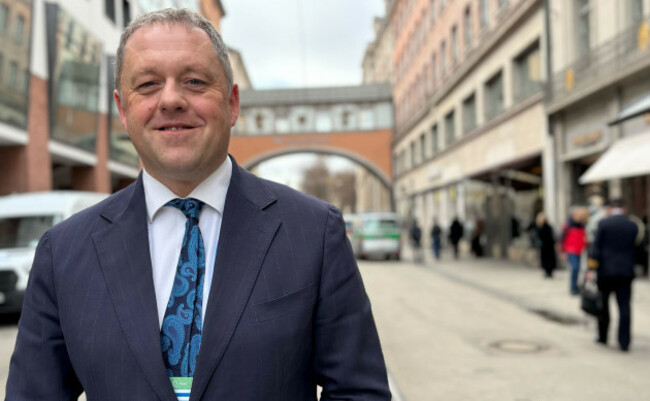
Thomas Byrne, the Minister for State for European Affairs, was speaking to The Journal at the Munich Security Conference in the German city yesterday.
Concerns have been raised that gaps in Ireland’s military and security capabilities could put events held during the six-month presidency of the bloc, which begins in July, under threat.
During the recent visit of Ukrainian President Volodmyr Zelenskyy there were French, Portuguese and PSNI officers assisting gardaí with counter-drone operations near Government Buildings in Dublin.
“The gardaí are responsible for the security of the presidency, and I’m absolutely confident that they will do a good job.
“They’ve been working really, really hard on that, and I’ve had quite a number of engagements with them as part of our presidency planning.
“I have full confidence in An Garda Síochána but I can’t comment on any specific situations,” Byrne said.
Byrne said the visit went well, despite the drone incident off the coast of Dublin shortly after Zelenskyy landed, when military-style drones were spotted circling above an Irish naval vessel.
“President Zelenskyy came and went very, very safely. I met some of the Ukrainian politicians since, and they’re very grateful for the visit, and felt it went really well from their perspective,” he said.
Byrne believes that cooperation is a cornerstone for a country the size of Ireland to successfully pull off events such as the EU Presidency.
“I think that cooperation is something that’s very positive. I think we’re part of the European Union, we work with European colleagues,” he added.
He rubbished any suggestion of criticism of the use of foreign police forces to assist Irish security forces during the events and said gardaí had been sent to take part in operations in other countries in the past – albeit on a smaller scale.
“I think that type of cooperation should be seen as very natural. But of course, it should be left for the gardaí to decide to the extent that they need it.”
Ireland’s neutral status precludes it from getting involved in mutual defence pacts. A constitutional provision could prevent, for instance, the presence of large-scale military assistance from abroad. There have been concerns about Ireland’s lack of capability and and suggestions that a naval frigate from an EU country would provide air defence capability.
But Byrne said that our neutral status should not preclude Ireland interacting with European countries on security.
Asked about shortfalls in Ireland’s military cababilities, Byrne admitted that there was “a lot more to do” in terms of building up defence and that he would continue to advocate for that.
“We have to make sure that we can protect ourselves. It’s quite simple,” he added.
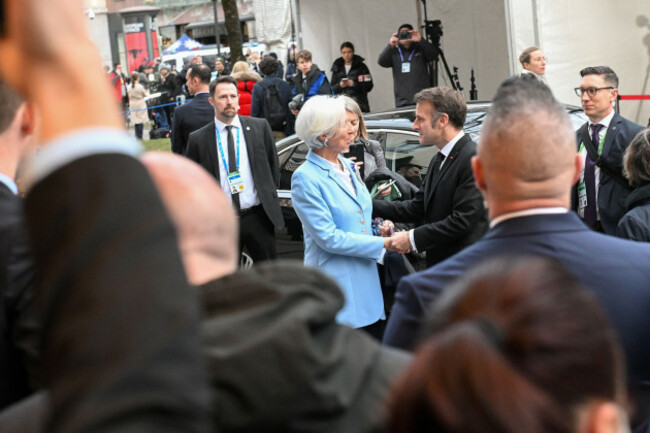
Speaking to officials from various countries here in Munich the one contentious issue is the problem of the American pivot away from Europe and the open hostility shown by Vice President JD Vance last year.
Byrne said it is “absolutely essential” that Ireland continues to engage with the US.
He said he had met with a group of US senators who were “quite engaged” on the European Union and were “pretty positive” about Ireland and that he was encouraged by the meeting.
“I just think the European Union needs to continue to engage with [US] politicians, including those who disagree with us, and we [Europe] need to stand together on key issues, like we did on Greenland recently.
“At the same time, the engagement is really, really important to keep talking to them and that’s certainly what the Irish government does anyway. And I think most European countries are in that sort of space as well,” he added.
Byrne said the Government’s plan for the upcoming presidency is to look at the expansion of the Union.
He said he would be meeting the Montenegro Government, Serbia and Bosnia Herzegovina. He believes that Montenegro will likely get to the “critical point” of becoming members of the EU during Ireland’s presidency.
Foreign Affairs and Defence Minister Helen McEntee is also in Munich while Chief of Staff of the Irish Defence Forces Lieutenant General Rossa Mulcahy is in the city for meetings too.
The Journal has also learned, from multiple sources, that senior officers in the Irish Military Intelligence Service (IMIS) are also in Munich for meetings with other agencies from across Europe and elsewhere.

To embed this post, copy the code below on your site






have your say