We need your help now

Support from readers like you keeps The Journal open.

You are visiting us because we have something you value. Independent, unbiased news that tells the truth. Advertising revenue goes some way to support our mission, but this year it has not been enough.

If you've seen value in our reporting, please contribute what you can, so we can continue to produce accurate and meaningful journalism. For everyone who needs it.

SNA cuts U-turn This has exposed the deep faultlines in our education system

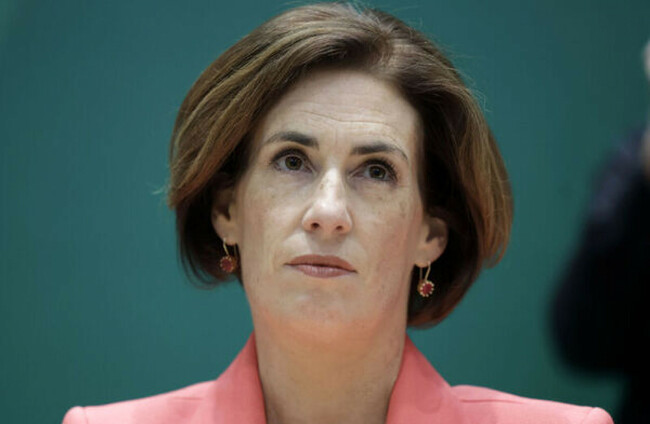
Real inclusion demands long-term leadership, systemic reform and schools built around every child — not crisis management, writes Derval McDonagh.

HEARING ABOUT THE changes in Special Needs Assistant allocations across the country, and the potential for reduced numbers in some schools, many families felt the now-familiar tightening in their chests.

For disabled children, changes to supports in school are never abstract policy debates — they have real world effects, real world consequences.

When changes happen, it is children and families the state needs to talk to first, but they are the ones often left to pick up information from social media. This does not build trust.

Last night, Education Minister Hildegarde Naughton announced that “there would be no cuts to SNAs for the 2026/2027 school year” amidst the backlash.

It is fair to say that the SNA controversy is one part of the ongoing challenges that disabled children and their families have faced for many years. We are heart sore at Inclusion Ireland as we listen daily to children and families telling us about their experiences in trying to access their basic rights.

Children travelling 1.5 hours in a taxi to school each day. Children on reduced timetables. Children quietly pushed out of their local school. The very real hurt and frustration that people feel as they fight for what should be universally accepted, the right to a high-quality education, in your local community, alongside your siblings and peers.

SNA allocation

The SNA allocation debate is an important part of the deeper, systemic issues that face our education system today. Two years ago, we had the Special Education Teacher (SET) allocation debacle, a year before that was the special education “centre”  controversy. Every year, we can expect the school place battle.

The pattern is familiar across all of these issues. Where is the strategic thinking from the government? Where is the plan for a progressive realisation of a better model of education?

The focus continuously shifts to managing allocations, reviews and appeals rather than addressing the deeper structural question of whether our education system truly includes every child. Instead of working towards the long-term goal of building inclusive cultures -where all children are valued and supported to thrive – families are forced into defensive battles simply to preserve supports.

This keeps the conversation at the level of minimum provision rather than meaningful inclusion. And while families fight to protect what should never have been in question, the deeper work of building a system where every child genuinely belongs remains unfinished.

The key role of the SNA

The role of the SNA is deeply valued by families and schools alike. We have heard many people describe this week how the role of the SNA goes way beyond care needs and is about emotional regulation and support for distressed children.

While we pause the review of the allocations, we also need to pause and ask ourselves – why are children so distressed in our school environments? What else is going on that needs to be meaningfully addressed?

One of the many things that SNAs, teachers, children and families all agree on is that genuine inclusion will only be fully realised when we take a broad, whole-school approach that supports every child to belong and thrive.

Real inclusion requires adaptive mindsets, reflective school cultures, confident, supported and adequately resourced teachers and SNAs, access to multidisciplinary teams, accessible buildings where children can move freely, child-centred policies and flexible curricula.

Most importantly, it requires leadership. Leadership that understands – inclusion is not a favour to be granted but a right to be upheld.

There are many who feel cynical about the pause in the review. Messaging has been obtuse. The National Council for Special Education (NCSE) was doing the job it was assigned to do in its review process – so why the shock from the Government?

Through this fray, it is possible to see the pause as presenting an opportunity – if our leaders choose to see it that way. Rather than narrow the discussion to a technical recalibration of hours and allocations, we should widen the lens.

A broader look at the system

Strategic thinking demands that we move beyond crisis management and incremental adjustments. Ireland has ratified the UN Convention on the Rights of Persons with Disabilities. That commitment requires us to progressively realise inclusive education at all levels.

It is not optional. It is not aspirational rhetoric.

Our schools are the epicentres of our communities. They must be resourced to support every child and young person, not just some. Just because we have set up our systems in this way, does not mean we can’t reimagine them, especially when children are telling us so clearly what they need.

The upcoming Convention on Education, which will strive to inform the future of state education, is another opportunity to tackle some of these issues. It cannot become another forum for rehearsing familiar constraints. It must grapple honestly with workforce planning, reducing classroom sizes, training and professional development, school leadership, inclusive school policies, capital investment, cross-departmental coordination and integration of services.

The convention must listen directly to disabled students and their families. And it must push for a roadmap with measurable milestones.

Inclusion is not achieved by pausing reviews without a full analysis of the whole picture. It is achieved by courageous leadership that is willing to redesign systems around children rather than continuously asking children to adapt.

We owe it to this generation — and the next — to think bigger. To move from allocation debates to transformation. To ensure that every child can say with confidence: this school was built for me too.

Derval McDonagh is CEO of Inclusion Ireland.  

Readers like you are keeping these stories free for everyone...
A mix of advertising and supporting contributions helps keep paywalls away from valuable information like this article. Over 5,000 readers like you have already stepped up and support us with a monthly payment or a once-off donation.

Close
6 Comments
This is YOUR comments community. Stay civil, stay constructive, stay on topic. Please familiarise yourself with our comments policy here before taking part.
Leave a Comment
    Submit a report
    Please help us understand how this comment violates our community guidelines.
    Thank you for the feedback
    Your feedback has been sent to our team for review.

    Leave a commentcancel

     
    JournalTv
    News in 60 seconds