Sign in. It’s quick, free and it’s up to you.
An account is an optional way to support the work we do. Find out more.
Sign in. It’s quick, free and it’s up to you.
An account is an optional way to support the work we do. Find out more.
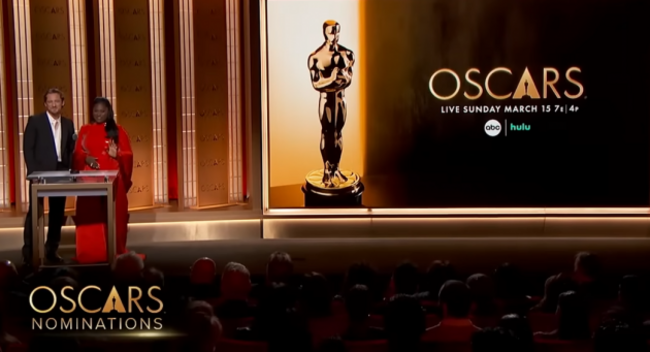
ON SUNDAY 15 March, the great and the good of the movie business will gather at the Dolby Theatre in Hollywood for the 2026 Oscars. By the end of the night, some lucky filmmakers and stars will walk away with the coveted golden statuettes.
But winning the most feted award in the movie business is no easy task. Sometimes, whether your film is amazing or not doesn’t even come into whether you win. It’s all about the sort of Oscar campaign you run.
Campaigning means getting your film in front of the 10,000 or so members of the Academy of Motion Picture Arts and Sciences, who vote for the Oscars. The aim is to get people talking and thinking about your film – to make it look like your win is a dead cert. To make it appear like not voting for your film would be a stupid idea.
So a studio can shell out millions on an Oscar campaign, ensuring their film’s name is on everyone’s lips. The money can go towards: paying for specialist PR consultants, print ads, billboards (which are ubiquitous in LA), TV commercials, flying the talent to events, screening films and hosting Q&As, and sending out approved emails called ‘e-blasts’ to members of the Academy.
You might even spend tens of millions of dollars, as Netflix is rumoured to have done last year on the campaign for the film Emilia Pérez, only to find the movie mired in controversy. Still, even that won two Oscars in the end.
There are rules in place to make sure that campaigns don’t go too far and we’re a long way from the days of the now-disgraced Miramax producer Harvey Weinstein and his notorious Oscar campaign tactics.
Few film fans don’t know about the 1999 ceremony, when John Madden’s film Shakespeare in Love (produced by Miramax) nabbed Best Picture ahead of the favourite, director Stephen Spielberg’s World War II drama Saving Private Ryan.
Weinstein’s plan of attack to derail Saving Private Ryan’s win had included trying to persuade the New York Times to write that Saving Private Ryan “peaked after the first twenty-five minutes”, writes Michael Schulman in Oscar Wars: A History of Hollywood in Gold, Sweat, and Tears. This was despite the fact that negative campaigning is against Academy rules.
Following the Shakespeare in Love win, Weinstein-style tactics became more popular in Hollywood. Rules were subsequently put in place by the Academy.
They include not giving promotional materials at screenings, not sending “pleas” to watch a film or using “language that lobbies members”. There are also rules on being “mindful” on social media and not disparaging the techniques or subject matter of a film.
How do the Irish campaign?

This year, Ireland’s Oscar hopes are pinned on a few films, most particularly on Chloé Zhao’s Hamnet, which stars our own Jessie Buckley – who it’s presumed will win Best Actress.
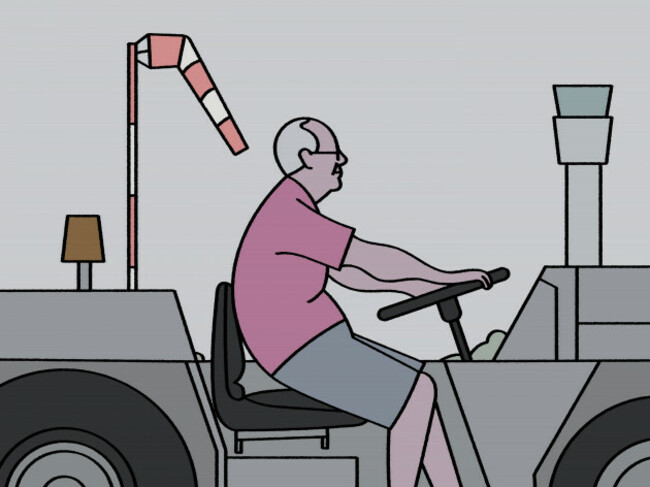
But hopes are also very high for the animated short Retirement Plan, directed by John Kelly and co-written with Tara Lawall.
So how does an Irish film like Retirement Plan campaign for an Oscar?
First, you need to get your film in a good place to be nominated at all.
In order to be eligible for a nomination, a short film needs to win an award at a qualifying festival or have the film shown at a theatre for seven days.
“We got very lucky – we got five times Oscar-qualified, from five different festivals,” says Andrew Freedman of Venom Films, which produced Retirement Plan. The festivals included Galway Film Fleadh and SXSW in Texas.
Freedman had long believed the film has Oscar potential. “As soon as I read the script from Johnny [John Kelly] – and I’ve worked with him over the years, and I know his calibre – I basically said to him ‘there’s no point making the film unless it’s gonna win an Oscar’,” he says with a laugh.
Retirement Plan was funded via the Frameworks animated shorts scheme, run by Screen Ireland in partnership with RTÉ, so Screen Ireland has been working closely with the film on its campaign.
An Oscar campaign “takes huge commitment, ambition and time from a filmmaker”, says Louise Ryan of Screen Ireland. It involves building a network of international contacts – which Screen Ireland can help with – and having a sales agent who will push your film out.
“You need champions for your film. A US distributor is absolutely key,” says Ryan.
While Screen Ireland and Irish producers can put funds towards a campaign, they can’t match the likes of Netflix’s deep pockets. “We’ll put some funding down so that it will entice a US distributor to also go, ‘Okay, I’m getting a bit of support here. I’m going to match this funding’, and usually go much further,” says Ryan.
“To really have a successful campaign, you need to be raising money from a number of different areas. You need a number of different partners at the table,” she adds.
“You need to garner a huge amount of goodwill – people with influence who are leaning in to help you”.
Phases of the campaign

Retirement Plan marks Venom’s first Oscar nomination. “It’s been a real eye-opener and a speedy learning curve,” says Andrew Freedman of campaigning.
“You’ve got three different phases of the Oscar campaign. You’ve got the application, and trying to get on the shortlist phase. Then you’ve got from the shortlist to the nomination phase, and then you’ve got from the nomination to the actual awards. Each of those phases, as we’ve discovered, requires a lot of effort and work.”
The first phase involves creating awareness of the film. “We were very fortunate that we managed to sell the film to Disney+, and that helped our exposure quite a bit at quite critical timing. We also got The New Yorker on board, which really helped the prestige of the film. They’ve been incredibly strong partners. And obviously Screen Ireland and RTÉ have been amazing throughout the whole process,” says Freedman.
Finding out about the nomination was “a surreal moment”. Venom quickly began working with specialist companies London Flair PR and strategy agency The Animation Showcase, who help with things like sending ‘e-blasts’ with information on events to all Academy members. This itself costs money, as does putting on screenings and Q&As.
There’s an entire industry built up around Oscar campaigning. “You are being pitched [by strangers] literally every five minutes with ‘we can offer you this for $5,000′,” says Freedman.
The American scale is quite big. The spend that goes into [features] is insane – a big player might spend more money promoting a film than making it.
Another key is media coverage, especially in the trade publications that are likely to be read by Academy members.
“Every sale, every win, every success, it’s really important to get it to the trades. Screen Ireland will often work with the trades with regard to overall pieces on Ireland, to profile as much talent as possible. That leans into the fact that people are watching what comes next. They don’t want to miss the next Saoirse Ronan or the next An Cailín Ciúin,” says Ryan of Screen Ireland.
Another aim is to get media coverage from major outlets like the BBC.
“A lot of that, when you get into the nuts and bolts of it, you need a celebrity talent there to really get a good slot or get a little bit of interest,” says Freedman.
Then there’s the social media campaign.
“I would definitely put a lot of emphasis on social media, because you can really almost [drill] down to the exact area you want to target. So that’s become a very important part of the whole plan,” says Freedman.
Having celebrity supporters is also a huge boon. Because the New Yorker partnered with the film last year, Retirement Plan caught the eye of its writer David Sedaris. He’s since become “a big champion of the film”.
“He’s actually going to come with us to the Oscars,” reveals Freedman.
In turn, when Sedaris posted on Instagram about the short, Sarah Jessica Parker followed suit, reposting it to her 10 million followers.
“A lot of them may not be voters, but the coup of having that happen a little bit is increasingly important,” says Freedman.
We’re in a culture right now where if you’re not shouting, no one’s going to hear it – which I hate, but it’s the reality.
The Irish factor
But is being from Ireland a help or a hindrance with campaigning? After all, we’re an Atlantic Ocean away from the US.
“Originating from Ireland is only a plus. We are so lucky to have the support we have from Screen Ireland, on not only the financing of some of the projects, but in this case, to help us push the boat out that bit further and try and compete with other countries and other films who have huge machines behind them,” says Freedman. “It gives us a real shot at trying to get word out there.”
Ryan adds: “People are watching what’s coming out of Ireland. You’ve got this variety of films coming out, from The Quiet Girl to Kneecap. Sinéad O’Shea’s documentary All About The Money was at Sundance recently. There’s such a diversity of filmmakers here.”
The finances
How does a campaign work financially?
“A lot of it comes down to support from the likes of Screen Ireland. Our own investments also, funds which are generated by making the film. When you do sell to the likes of Disney, etc, it does generate some income, and all of that can be reinvested back into all our efforts,” says Freedman.
Collectively, we’ve seen it as a pinnacle moment in a 20-year career. It’s the time to try and just go that extra mile and maybe spend some of those savings and hope that overall it nets out to be a really worthwhile thing to do. Which I think so far it totally has been.
Given that some of the Academy are based in Europe, screenings of Retirement Plan have been hosted in LA, New York and London.
“Johnny’s been back and forth [to LA], because for each of these screenings, the difference of having the director – and in our case Domhnall Gleeson helping us as well, who’s in the film,” says Freedman.
But the flights come with their own costs, which is where support comes in and Freedman says they approached Aer Lingus who have been helpful “to get us there and back”.
Meanwhile, the Irish manager of a hotel in Hollywood helped to reduce the cost of the team’s stay during the Oscars.
The nomination also comes with its unexpected perks, one of which has been the Oscar nominees luncheon in LA. “It was probably the most incredible part of my career so far,” says Freedman. He even chatted to fellow nominee Steven Spielberg. “He’d seen the film. He gave me lovely feedback. It was quite surreal.”
An Oscar win for Retirement Plan would be incredible, but both Freedman and Ryan are delighted with the film’s performance so far.
“I always treat the longlist like the nomination, and the nomination like the win. They have a lot of exposure and an amazing personal experience. If they win, that’s just the icing on the cake,” says Ryan.
To embed this post, copy the code below on your site
















have your say