We need your help now

Support from readers like you keeps The Journal open.

You are visiting us because we have something you value. Independent, unbiased news that tells the truth. Advertising revenue goes some way to support our mission, but this year it has not been enough.

If you've seen value in our reporting, please contribute what you can, so we can continue to produce accurate and meaningful journalism. For everyone who needs it.

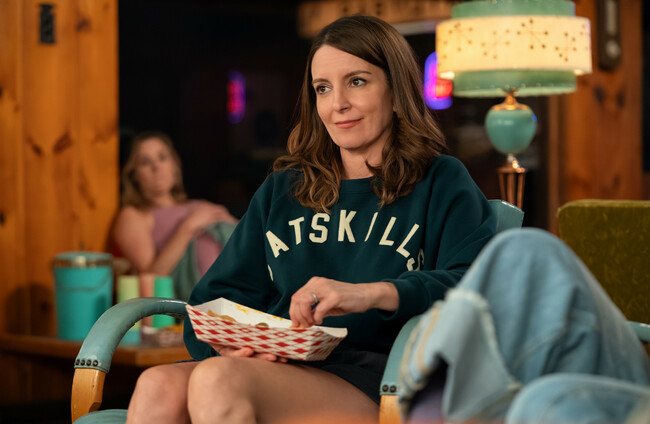
Tina Fey as Kate Emily V. Aragones

Review: Is The Four Seasons worth watching?

Its second season is kicking off on Netflix.

MARRIAGE AND FRIENDSHIP are very different, yet contain many similarities. Sure, there’s the obvious stuff in a marriage that a friendship doesn’t offer (for most couples anyway – let us not judge). But both relationships are about maintaining connection even through the tough times.

They’re about getting to see what another person is like, way beyond your initial meeting, when you both were likely on your best behaviour. They’re also about keeping a deliberate bond intact, even if you at times annoy or confound each other.

Both of these types of relationships come together in The Four Seasons, the second season of which is streaming on Netflix now. The first season of the show, created by Tina Fey, Lang Fisher, and Tracey Wigfield, was inspired by the 1981 film of the same name directed by Alan Alda.

Group dynamics

The conceit is the same: three couples from affluent backgrounds meet up four times a year to holiday together. Isn’t it well for some, etc. Through these holidays – each meet-up gets two episodes, meaning each season is eight episodes long – we get to see how the couples have changed or not, what is troubling them, and how their personal and group dynamics shift.

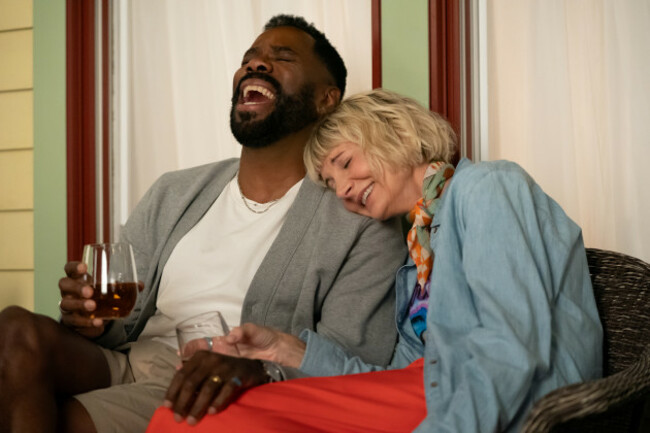
In the modern retelling, season one brought us Kate (Tina Fey), the fairly uptight but hopeful wife to Jack (Will Forte), a sweet, well-meaning teacher. Then there was Nick (Steve Carell), a hedge fund manager married to the stylish Anne (Kerri Kenney-Silver), and Danny (Colman Domingo, with a wardrobe to die for) and his husband Claude (Marco Calvani, doing a lot with a broad ‘cute Italian’ character).

During season one, Nick and Anne broke up, and the group had to contend with a new member: Ginny, a 32-year-old dental hygienist and yoga teacher whom Nick had begun dating.

And then things got more complicated: by the time the first season came to a close, Nick was dead, and Ginny was pregnant with his child.

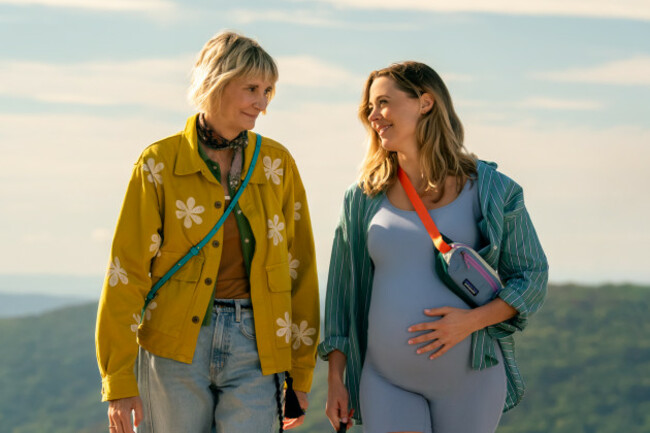
the-four-seasons-season-2 Kerri Kenney-Silver as Anne and Erika Henningsen as Ginny Emily V. Aragones Emily V. Aragones

At the beginning of season two, that’s where we meet these six people. They’re all grieving and have travelled to the top of a mountain in the Catskills to spread Nick’s ashes. Ginny is heavily pregnant, and Anne is struggling to negotiate her relationship with her ex’s bereaved partner. 

More issues start being added into the mix: Claude and Danny discuss whether to have children or not, and discover they both have been making wrong assumptions about each other’s stance on parenthood.

Kate and Jack are closer this season than in season one, when they had marital issues, but she still worries about whether he is hiding things from her. Anne is trying to move on from Nick, but she and Ginny end up bonding after Ginny gives birth.

Clocking in at around 30 minutes, every episode of The Four Seasons takes from the American sitcom tradition of one central plot and a small number of subplots. There’s a simplicity to it that’s relaxing. In telling stories from midlife, about parents of adult children who themselves are still figuring their own lives out, viewers will see some of their own dilemmas reflected. (If your dilemma is not being able to afford one holiday a year, never mind four, you might find their privileged lives a little frustrating, however.)

And yet behind the privilege are characters that feel human. They can certainly be selfish. They all make mistakes by assuming things or saying stupid things. They all wonder about how to keep their long-term relationships going, or in Anne’s case, how to move on after being dumped. Their concerns are, for the most part, the concerns a lot of people in their 50s and beyond have.  

Cringe comedy

But the easeful simplicity also extends to the jokes and the script. There’s a streak of cringe comedy running through The Four Seasons, and with Tina Fey at the helm, the script is crammed full of one-liners.

These one-liners are often excellent – “This is the town Tracy Chapman sped away from”, says one Danny about a poky hamlet in the Catskills – but sometimes it can feel as though the conversations are so loaded with one-liners that the whole thing is in danger of tipping over.

As a result, the dialogue can at times feel unnatural. There’s an echo of Fey’s brilliant sitcom 30 Rock to all of this, but when that heightened approach is applied to a series that’s more domestically focused, the effect can be to put the viewer at a remove. For this reviewer, while I connected with the personal issues that the group were experiencing, I didn’t always feel like I was watching real people ahead of watching characters reciting lines from a page, moving from story beat to story beat.

the-four-seasons-season-2 Colman Domingo as Danny and Kerri Kenney-Silver as Anne Emily V. Aragones Emily V. Aragones

And yet, one episode in particular showed me how good The Four Seasons can get – and what do you know, it’s the one written by Tina Fey herself. It’s episode six, a flashback bottle episode set during Covid, when the group go to Nick and Anne’s house for Thanksgiving.

As you’d expect from Fey, she manages to highlight the absurd and anxiety-filled world we were plunged into during the pandemic, but also how human connection helped many of us get through such a strange time. The scenario speaks to how, as we age, we find ourselves looking back at the past and noticing the tiny moments of joy that become more meaningful the further we get from them.

That this particular episode also pulls together some threads that have been dangling throughout the two series is a clever move. The episode makes you miss Steve Carell’s presence, and Fey cleverly allows Nick to remain the selfish, duplicitous yet lovable husband and father he was in season one.

When seeing the gang back together again, we witness The Four Seasons at its best, reminding us that family and friendship are what make life worth living, but also that, as in Nick’s case, sometimes we make relationships more complicated than they warrant.

The Four Seasons itself isn’t a complicated watch, and can sometimes feel a little stretched thin. You might find it wafting past you for a few episodes – and then, in episode six, it finally lands. But if you’re drawn to shows that are gentle and human, and you don’t want anything too heavy but still like a little dose of reality, there’s plenty to enjoy in The Four Seasons.

The Four Seasons is streaming on Netflix now.

Close