We need your help now

Support from readers like you keeps The Journal open.

You are visiting us because we have something you value. Independent, unbiased news that tells the truth. Advertising revenue goes some way to support our mission, but this year it has not been enough.

If you've seen value in our reporting, please contribute what you can, so we can continue to produce accurate and meaningful journalism. For everyone who needs it.

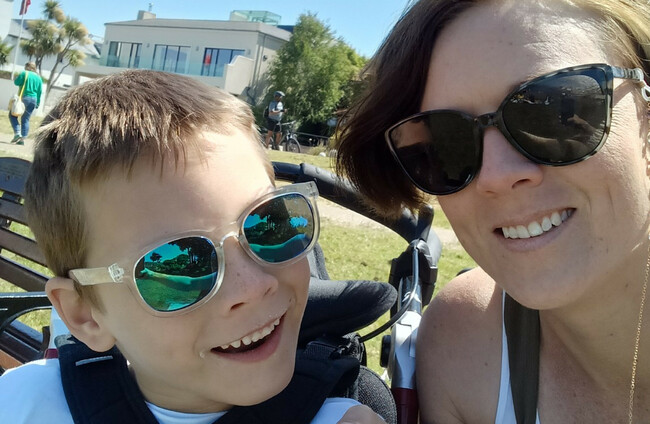
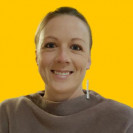
Stephanie with her son, Oliver. Stephanie Park

Mother and carer You don't appreciate public services until your child needs them to survive

Stephanie Park has cared for her son Oliver, who has cerebral palsy, in two very different countries. In Zambia, support was out of reach. In Ireland, the system helps carry the weight.

WHEN YOU BECOME the parent of a disabled child, you start noticing things most people never think about.

Not big philosophical things necessarily. Very practical things.

Door widths. Pavements. Waiting lists. Accessible bathrooms. Wheelchair ramps. The emotional atmosphere inside hospitals. Whether a building has automatic doors. Whether there is funding available for equipment that allows your child to exist more comfortably in the world.

You begin noticing the invisible architecture of a society.

And strangely, I think one of the biggest things I have learned since moving to Ireland is that people often do not realise the value of something until they have experienced life without it.

Now, before anybody panics, this is not a political article. I am not here to start lecturing people about tax while dramatically waving spreadsheets around. I can barely keep track of my glucose levels at the moment, never mind national fiscal policy.

But I have lived in two very different systems, and that perspective changes the way you see almost everything.

Zambia to Ireland

I grew up in Zambia and later raised my son Oliver there during his early years. Oliver has cerebral palsy. When we lived in Zambia, he had a stroller. 

Not because that was ideal, but because the next stage up from a stroller — a proper supportive mobility device — was financially inaccessible to us.

Those types of supports existed, technically. In the same way that yachts technically exist for most ordinary people. You can look at them online. You just are not bringing one home.

And when you are raising a disabled child in a country where support systems are limited, every aspect of life becomes a calculation.

Therapy becomes a calculation. Equipment becomes a calculation. Assessments become a calculation. Accessibility becomes a calculation. Every decision carries financial weight.

At the time, living there, I think I simply accepted that reality because it was normal to us. Human beings adapt incredibly quickly to whatever environment they are in.

Then we moved to Ireland.

And suddenly, we entered a society where some of that weight was being collectively carried.

What became increasingly clear to us in Zambia was that disability care wasn’t simply under pressure; it was largely inaccessible unless families had significant financial means, private connections, or the ability to create alternatives themselves.

Therapy was inconsistent, and specialised equipment was difficult to source. Assessments and developmental support often depended entirely on what parents could privately arrange and fund. In many cases, there simply was no obvious pathway.

As Oliver grew older, one of the hardest realities we faced was that he didn’t just need medical support; he needed community. He needed peers. He needed an educational environment where his disability was understood rather than accommodated as an afterthought.

Eventually, my husband and I reached a point where we realised we could not keep waiting for a system to appear around him. We privately funded and helped build a special needs school ourselves, simply because there were so few viable options available for children like Oliver.

It was never something we imagined doing. We were parents trying to raise our child, and yet suddenly we found ourselves navigating construction, staffing, fundraising and educational planning alongside hospital appointments and everyday caregiving.

Looking back now from Ireland, I think people sometimes assume the hardest part was the physical care itself. In truth, it was the constant responsibility of having to build the structures around your child that other families often take for granted already exist.

Paying for disability services

Now, is Ireland perfect? Absolutely not. Anyone who has sat in A&E for 11 hours beside a vending machine that only sells emotionally devastating sandwiches knows that. 

But it is not, by far, the worst.

Irish people are exceptionally good at identifying what is broken in Ireland. Sometimes I think complaining may actually be one of the country’s national sports.

But underneath the noise, there is something here that is profoundly valuable.

There is infrastructure.

And infrastructure is one of those things that becomes almost invisible when it works consistently. People notice when systems fail. They do not always notice the quiet dignity created by systems that function reasonably well.

My husband pays a very high rate of tax. Around 45%. On paper, that sounds painful. And yet, strangely, neither of us feels particularly resentful about it because we can physically see where the money goes.

It goes into Oliver’s care.

Into therapies.

Into respite services.

Into support workers.

Into specialist schools.

Into medical equipment.

Into children whose parents are already carrying impossible emotional loads.

And once you begin seeing the human reality behind public spending, it changes your emotional relationship with taxation completely.

Tax stops feeling like an abstract punishment and starts feeling more like collective infrastructure for survival.

The pressures of care

I think one of the difficulties in public conversations around disability care is that the discussion often becomes trapped inside politics. Politicians argue about overspending. Commentators argue about inefficiency. Headlines become louder and louder until eventually people who are not directly affected by disability begin emotionally tuning out altogether.

The conversation becomes noise.

But behind all of those political arguments are ordinary families trying to survive their lives.

Families trying to figure out how to lift growing children safely into beds.

Families trying to navigate school systems. Families trying to balance employment with caregiving. Families trying to keep marriages intact while operating under extraordinary levels of logistical and emotional pressure.

Disability support is not theoretical to those families. It is physical. Immediate. Daily.

And perhaps because I have lived outside Ireland, I see certain things differently.
Many Irish people have grown up surrounded by systems they understandably take for granted because those systems have always existed around them. Public healthcare. Disability allowances. Equipment grants. School supports. Community care structures.

These things become part of the background of life.

But when you have experienced life without them, you realise how fragile ordinary family stability actually is.

One diagnosis can financially destabilise an entire household. One accident. One illness.

One child requiring lifelong support.

My own health

And increasingly, I think my own recent diabetes diagnosis has deepened this awareness further. Because suddenly I was no longer only navigating medical systems as a parent. I became a patient myself.

To be honest, my first thought after the diagnosis was not fear. It was irritation. Pure inconvenience. I remember thinking, “This is really inconvenient timing.” Which probably says quite a lot about the psychological state of most parents.

But it has forced me to become more aware of how quickly health changes, how vulnerable human beings really are, and how dependent all of us are on systems we barely think about while we are healthy.

And maybe that is the thing I wish more people understood.

Social care infrastructure is not charity for “other people”. It is the quiet framework that allows ordinary families to continue functioning when life becomes difficult.

Because eventually, disability, illness, ageing, injury or vulnerability touches almost every family in some form.

And despite all of Ireland’s flaws — and there are certainly many — there remains something deeply humane underneath the noise.

There is still an underlying belief that people should not simply be abandoned because life has become complicated.

As the parent of a disabled child, I do not think I will ever stop being grateful for that.

Stephanie Park is a writer, podcaster and self-proclaimed domestic anthropologist living in Dublin with her husband and two children. Originally from Zambia, she writes about parenting, disability, humour, family history and the strange emotional architecture of ordinary life. More at StephaniePark.co.uk.

Readers like you are keeping these stories free for everyone...
A mix of advertising and supporting contributions helps keep paywalls away from valuable information like this article. Over 5,000 readers like you have already stepped up and support us with a monthly payment or a once-off donation.

Close
JournalTv
News in 60 seconds