We need your help now

Support from readers like you keeps The Journal open.

You are visiting us because we have something you value. Independent, unbiased news that tells the truth. Advertising revenue goes some way to support our mission, but this year it has not been enough.

If you've seen value in our reporting, please contribute what you can, so we can continue to produce accurate and meaningful journalism. For everyone who needs it.

The European Commission President Ursula von der Leyen says the approach is about restricting access that social media companies have to young people. Alamy

No outright age-based social media ban, but 'graduated approach' on the cards – McGrath

‘It’s not necessarily a ban under a certain age. Full stop,’ says European Commissioner Michael McGrath.

A GRADUATED APPROACH to regulating young people’s access to social media will be rolled out by Europe, according to European Commissioner Michael McGrath. 

Speaking to The Journal, Ireland’s European commissioner for justice ruled out an outright age-based ban for children using social media. 

His comments come after European Commission President Ursula von der Leyen said on Friday that she is awaiting a “comprehensive concept about social media delay for different age groups”.

She said: “It is not a question of when children or teenagers would have access to social media.”

It is more a question of when “social media has access to our children and teenager”, von der Leyen said.

She added that after the report is handed over in 10-days time, work will begin “to have a concept for the whole of the European Union”, whereby a legal proposal will then be put forward.

McGrath said the Digital Fairness Act, which he is driving in Europe, will play a role in child protection online. 

Putting more meat on the bones about what Europe is considering, McGrath said it is likely there will be a “graduated approach, where you have potentially certain settings off by default, you make parental control easier, that for certain age bands you have, you have different depths to the regulation and the safeguard”.

He added:

It’s not necessarily a ban under a certain age. Full stop. I think the approach will need to be more considered and broad based than that.

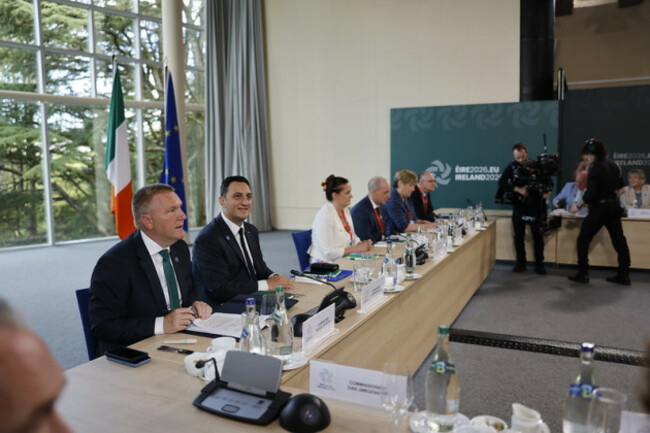
55371954686_fbf8558a69_c European Commissioner and former finance minister Michael McGrath at a meeting in Cork on Friday. DFA DFA

The former finance minister said it is complex issue, but he believes a common EU-wide approach is best.

“I think we do need to listen to young people too, and make sure their voice is heard. But the direction of travel, I think, is clear. It is about strengthening protections for kids online. 

‘Playing catch up’

He acknowledged that regulators are “playing catch up”, adding that while many parents are very tech-savvy, and know how to put parental controls and oversight in place, others do not. 

“We need to understand the potential harms that can be caused to children online. We know it’s a big part of their lives that will, I think, continue in different forms, but I welcome the fact that there is now a very open debate within the EU generally, and across member states about different initiatives,” said McGrath. 

As part of his work on the Digital Fairness Act, he said “unfair personalisation” is a key focus, whereby companies are targeting children with certain advertisements based on their profiling. 

That is banned under the Digital Services Act, he said, but it only applies to the platforms that are within the scope of the act.

“We think it needs to be looked at more broadly, and then on the broader question of age restrictions and young people on social media and addictive design functionality, the Digital Fairness Act could be an important vehicle to deliver some of the recommendations that the expert panel will make,” concluded the commissioner. 

A ban on the use of social media by under-16s is due to be in place in the UK by next spring, and similar measures were introduced in Australia in December last year.

Communications minister Patrick O’Donovan has previously said it would be “very embarrassing for the European institutions” if Ireland brought forward social media restrictions for children because of a lack of progress at a European level.

Readers like you are keeping these stories free for everyone...
A mix of advertising and supporting contributions helps keep paywalls away from valuable information like this article. Over 5,000 readers like you have already stepped up and support us with a monthly payment or a once-off donation.

Close
JournalTv
News in 60 seconds