We need your help now

Support from readers like you keeps The Journal open.

You are visiting us because we have something you value. Independent, unbiased news that tells the truth. Advertising revenue goes some way to support our mission, but this year it has not been enough.

If you've seen value in our reporting, please contribute what you can, so we can continue to produce accurate and meaningful journalism. For everyone who needs it.

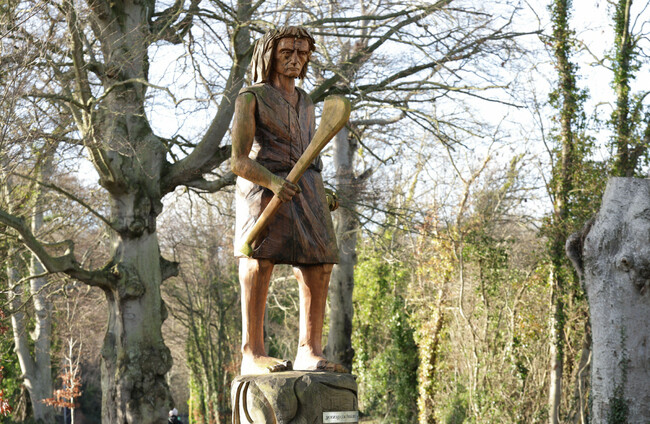
A large tree trunk carved wooden sculpture of young Cu Chulainn with hurley stick and sliotar on a woodland road leading in to Saint Catherine's Park in Lucan in December. Alamy Stock Photo

Permanent scheme to financially support Irish artists to finally see the light of day

The proposed Basic Income for the Arts scheme will go before Cabinet today.

THE TIMELINE FOR a new, permanent scheme to financially support artists will be brought to Cabinet by Minister for Arts and Culture Patrick O’Donovan later today.

The proposed Basic Income for the Arts scheme provides for 2,000 artists to receive €325 per week for three years to mediate the inconsistent financial nature of the arts.

Applications for the 2026 scheme will open in May and artists approved for the scheme will begin receiving the payments in September, which will continue through to September 2029.

A further three months’ tapering off period is also included – payments will be made at 75% of the previous amount, to 50%, to 25% to remove a “cliff’s edge” off the scheme.

A pilot version of the scheme commenced in 2022 and ran for three years before it was extended for a further six months. In Budget 2026, it was announced that the pilot scheme would be developed into a successor scheme in 2026.

The payments are taxable and an annual audit will be carried out to ensure participants are compliant with the guidelines.

O’Donovan is expected to outline to Cabinet the strengthened eligibility proofs to ensure that applicants are artists who demonstrate an active, Irish, professional creative practice.

A cost-benefit analysis published in September found the pilot scheme produced over €100m in socio-economic benefits. O’Donovan said the report showed the scheme had a “positive economic impact”.

Readers like you are keeping these stories free for everyone...
A mix of advertising and supporting contributions helps keep paywalls away from valuable information like this article. Over 5,000 readers like you have already stepped up and support us with a monthly payment or a once-off donation.

View 10 comments
Close
10 Comments
This is YOUR comments community. Stay civil, stay constructive, stay on topic. Please familiarise yourself with our comments policy here before taking part.
Leave a Comment
    Submit a report
    Please help us understand how this comment violates our community guidelines.
    Thank you for the feedback
    Your feedback has been sent to our team for review.

    Leave a commentcancel

     
    JournalTv
    News in 60 seconds