Share your views on our Irish-language content

We need your help now

Support from readers like you keeps The Journal open.

You are visiting us because we have something you value. Independent, unbiased news that tells the truth. Advertising revenue goes some way to support our mission, but this year it has not been enough.

If you've seen value in our reporting, please contribute what you can, so we can continue to produce accurate and meaningful journalism. For everyone who needs it.

Alamy Stock Photo

Good news! Nasa dramatically reduces the chances that 'city killer' asteroid will hit Earth

The astronomical community expects the probability to fall to zero.

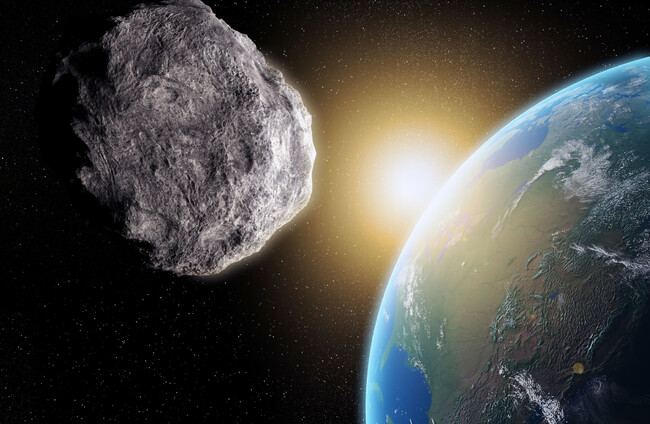
THE CHANCE THAT an asteroid capable of wiping out a city will hit Earth in eight years has been cut in half to around 1.5%, according to new calculations from NASA.

The drop in odds had been widely anticipated by the global astronomical community, which now broadly expects the probability the asteroid will hit Earth on 22 December, 2032 to fall down to zero.

For more than 24 hours, the asteroid did have the highest probability of hitting Earth of such a big space rock in modern forecasting.

Updated calculations posted by NASA late Wednesday said the odds of a direct hit had fallen to 1.5% from 3.1%. 

This reduces the chances from one in 32 to one in 67

The European Space Agency’s separate calculations plunged further to 1.38%.

Richard Moissl, head of the ESA’s planetary defence office, told AFP this had been expected as the “uncertainty region” where the asteroid could strike starts to “slip off” Earth.

The percentage chance will likely still “wiggle slightly up and down a bit” but is now expected to soon fall below 1%, he added.

It is not clear whether that will happen before the James Webb Space Telescope turns its powerful gaze to the asteroid next month.

There is still an 0.8% chance that the asteroid will hit the Moon, according to NASA.

The asteroid, which is known as 2024 YR4, was first detected in December.

It is estimated to be around 40-90 metres wide, which would not cause a global catastrophe, but would still be capable of causing significant destruction to a city.

The last time an asteroid of greater than 30 metres in size posed such a significant risk was Apophis in 2004, when it briefly had a 2.7% chance of striking Earth in 2029 — a possibility later ruled out by additional observations.

© – AFP 2025

Author
View 41 comments
Close
41 Comments
This is YOUR comments community. Stay civil, stay constructive, stay on topic. Please familiarise yourself with our comments policy here before taking part.
Leave a Comment
    Submit a report
    Please help us understand how this comment violates our community guidelines.
    Thank you for the feedback
    Your feedback has been sent to our team for review.

    Leave a commentcancel

     
    JournalTv
    News in 60 seconds