Sign in. It’s quick, free and it’s up to you.
An account is an optional way to support the work we do. Find out more.
Sign in. It’s quick, free and it’s up to you.
An account is an optional way to support the work we do. Find out more.
A DECADE AGO today, hundreds of children flocked to a Russian school near the Georgian border for their first day back in the classroom after their summer holidays – many never to emerge again.
Two days later and after a tense standoff between Chechen insurgents and Russian troops, School Number One in Beslan, a medium-sized town in the province of North Ossetia, would be leveled in explosions and ravaged with gunfire as scores of children, parents and teachers lay dead.
The Beslan siege – also known as the Beslan massacre – became one of the most infamous terrorist incidents the world had seen and forever left the town’s name synonymous with the horrific events of September 2004.
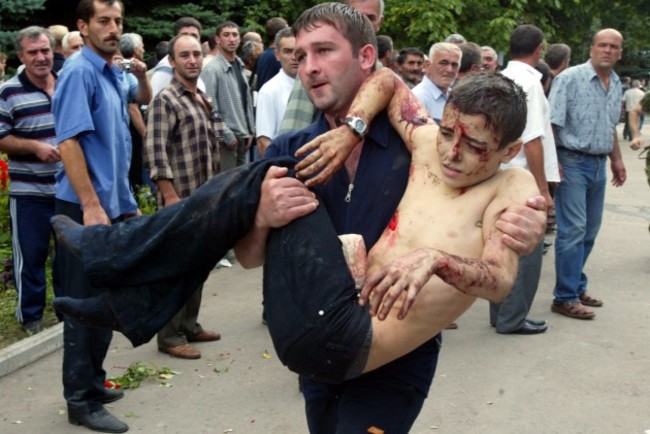
It resulted in the deaths of nearly 400 people during the initial hostage crisis and the bloody aftermath as a series of blasts rocked the school and troops stormed the complex.
The toll included the loss of a claimed 334 hostages, at least 10 Russian special forces soldiers and 31 of the 32 militants reportedly involved in carrying out the hostage plan.
The lead-up
More than 1000 people were at the Beslan school on the morning of September 1, 2004, for traditional return-to-school activities, which featured many parents and other relatives accompanying the students.
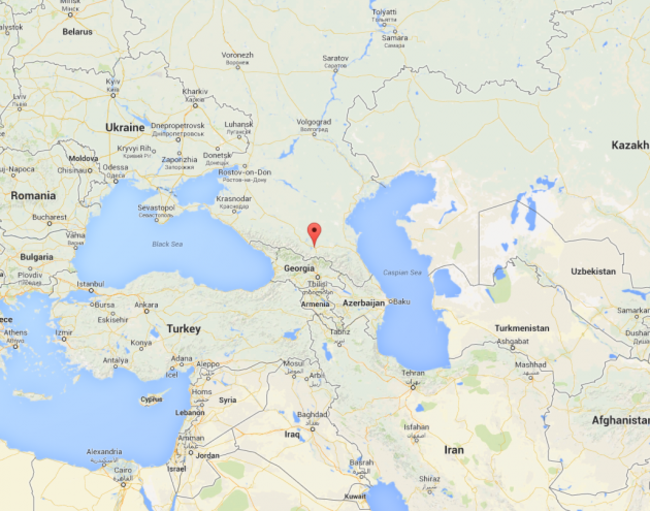
Meanwhile, a gang of heavily-armed rebels – some with explosives strapped to their bodies – left a neighbouring province en-route to the school.
The militants were members of a separatist group which was demanding recognition of Chechnya’s independence from Russia after years of bloody conflict between pro-Russian forces and paramilitary rebels in the nearby region.
Two years earlier, Chechen rebels had held more than 700 hostages inside a Moscow theatre, with the standoff only ending when Russian forces used poison gas to finish the siege.
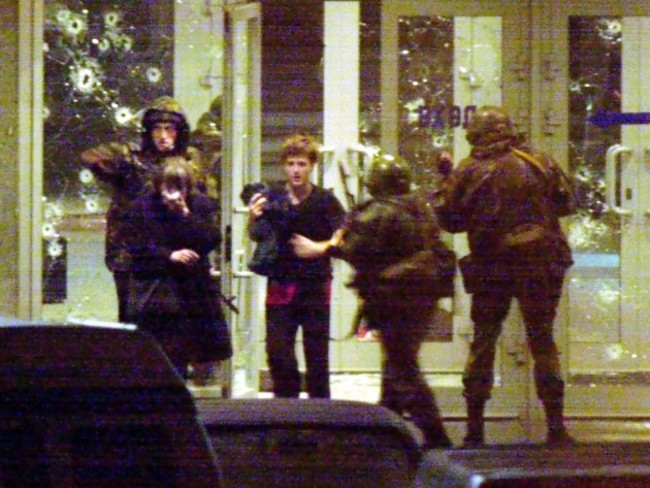
More than 120 hostages were killed during the earlier incident.
How the crisis unfolded – day one
Just after 9am, up to 1200 children and adults were herded at gunpoint into the school’s hall, where bombs were attached to a series of tripwires.
A number of people managed to escape during the initial chaos and alert officials about the attack, with police and army forces quickly setting up a security perimeter around the school.
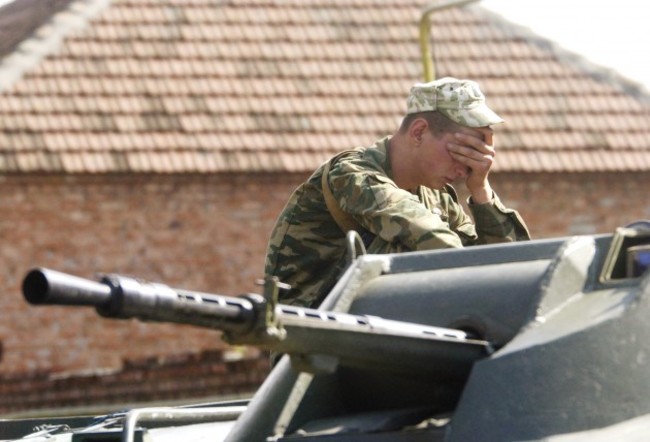
Official estimates for the number of hostages initially ranged between 100 and 400 people, but the full figure was later revealed to be much higher.
The attackers quickly singled out a number of the strongest hostages and murdered most of the group, threatening to execute a further 50 children for every insurgent killed in any rescue attempt.
The Russian government said it would try to negotiate a peaceful resolution to the crisis and would not launch an assault on the complex.
Day two – negotiations
But early negotiations were unsuccessful and the hostages continued to be refused all water and food while they were held in the gymnasium for the second day.
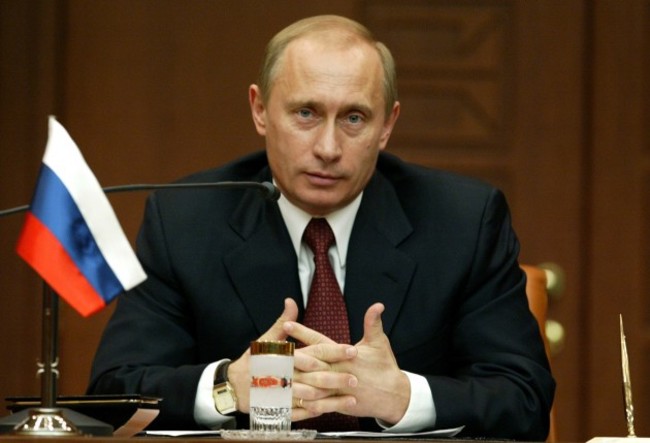
Russian President Vladimir Putin made his first statement about the siege, telling the public: “Our main task, of course, is to save the lives and health of those who became hostages.”
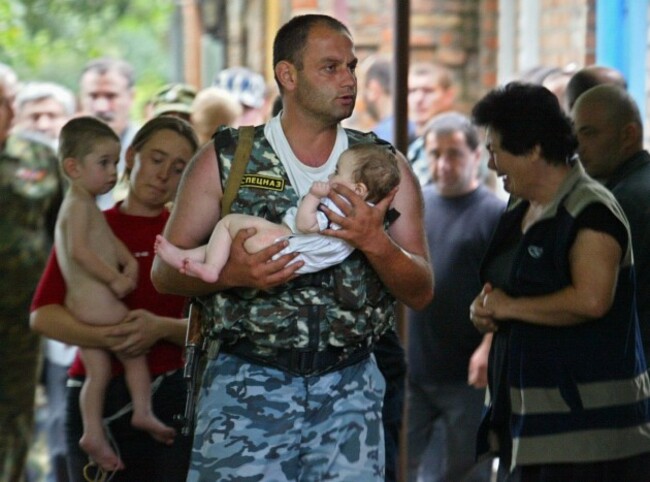
Talks between the hostage-takers and officials continued throughout the day and in the afternoon a group of babies and nursing mothers were freed.
Day three – the siege ends
Chechen independence leader Aslan Mashhadov was contacted and agreed to meet with the militants, but before he arrived at the school explosions and gunfire broke out at the site as paramedics approached the grounds to retrieve several bodies.
The source of the initial explosions remains in dispute – with Russian investigators blaming the militants for suddenly letting off bombs among the hostages, while other witnesses claim official forces were the first to open fire.
A fire broke out in the hall’s roof and debris began raining on hostages trapped inside as Russian forces began a full-scale assault on the complex.
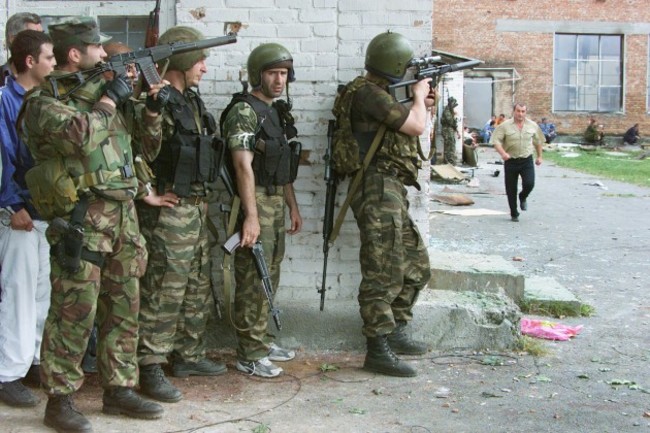
Local police, armed civilians and tanks also joined the chaotic battle against the militants and it was several hours until the Russian military claimed control of the area, although shots and blasts continued to be heard into the night.
The fallout
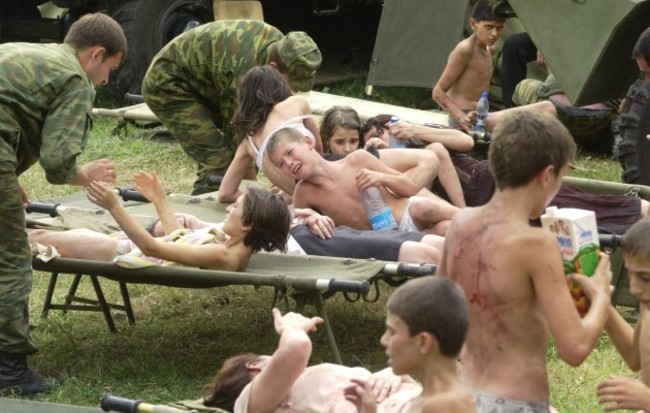
Up to a quarter of the hostages were killed in either the explosions and gunfire or the gym fire and the building’s subsequent collapse, with the majority of the survivors suffering wounds during the traumatic events.
All except one of the known militants were killed in the siege.
The Russian government’s botched handling of the assault drew widespread criticism, including from survivors of the tragedy and victims’ families, while the militants’ actions in targeting children were also condemned.
In 2006, the only hostage-taker believed to have survived the attack, Nur-Pashi Kulayev, was sentenced to life in prison after a court declared him guilty of causing the deaths of 330 people and terrorism.
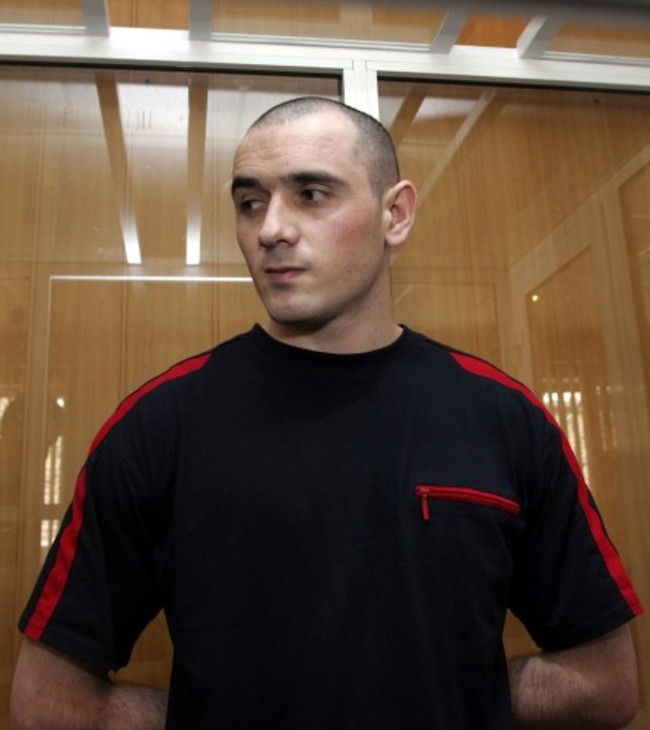
Later in 2006, the last reported victim of the hostage crisis, librarian Yelena Avdonina, 33, died of internal injuries she suffered during the siege – more than two years after Russian troops stormed the building and the crisis was brought to an end.
In 2009, thousands returned to the school’s gymnasium to mark the fifth anniversary of the tragedy.
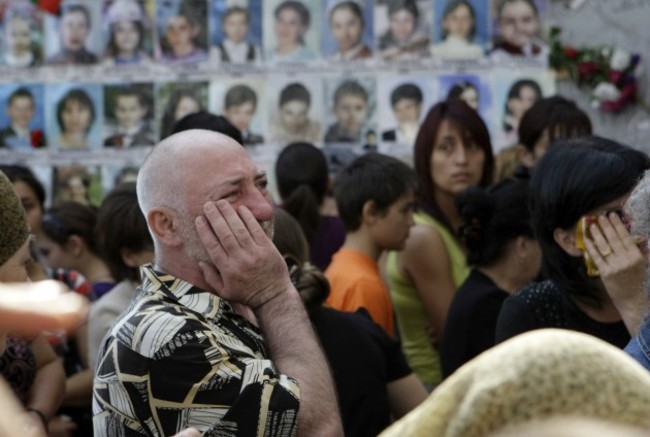
Many survivors remain traumatised by the events they witnessed as young children. One girl, Christina, told the BBC in 2009:
“I am scared of my dead friends. They come to me in my dreams. They have changed. They are dressed in black. They are angry and say ‘Why us? We wanted to live too!’”
Another, Chermen, remembered a militant dying in front of him in a grenade blast:
“A terrorist grenade was hit by a bullet. He blew up and his brains hit me in the face. It was horrible. It was fatty and slippery.”
A group of former hostages and relatives of siege victims have accused the Russian government in the European Court of Human Rights of failing to properly probe what caused the tragedy and denying their right to an objective investigation.

To embed this post, copy the code below on your site








have your say