We need your help now

Support from readers like you keeps The Journal open.

You are visiting us because we have something you value. Independent, unbiased news that tells the truth. Advertising revenue goes some way to support our mission, but this year it has not been enough.

If you've seen value in our reporting, please contribute what you can, so we can continue to produce accurate and meaningful journalism. For everyone who needs it.

Soldier F: Here's what's known about what actually happened in Glenfada Park on Bloody Sunday

The 2010 report of the Bloody Sunday Inquiry carefully examined the events that were the subject of Soldier F’s trial.

LAST UPDATE | 25 Oct

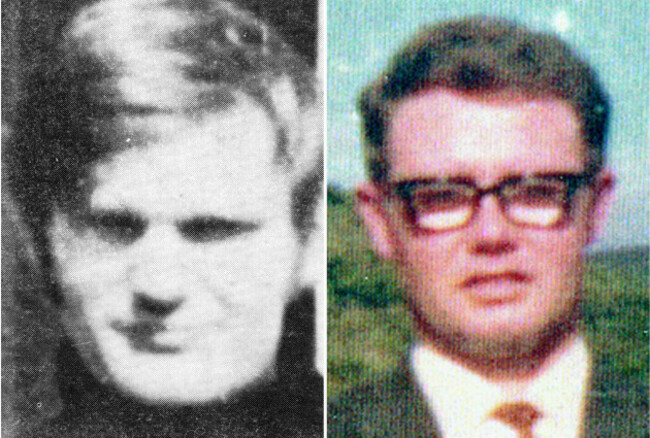
bloody-sunday-prosecutions James Wray (left) and William McKinney were shot dead in Glenfada Park on Bloody Sunday, 1972. Bloody Sunday Trust / PA Bloody Sunday Trust / PA / PA

BRITISH SOLDIERS WHO shot unarmed civilians in the back as they fled from them on the streets of Derry should “hang their heads in shame”, Judge Patrick Lynch told Belfast Crown Court yesterday.

He was speaking as he acquitted one of their number, Soldier F, of two murders and five attempted murders on the afternoon of 30 January 1972, Bloody Sunday.

The four-week trial came 15 years after the landmark report of the Bloody Sunday Inquiry, also known as the Saville Report, which brought a formal apology from then British Prime Minister David Cameron for the “unjustified and unjustifiable” killings.

Here’s what Soldier F’s trial found, and what we know about his activities on Bloody Sunday.

What charges did Soldier F face?

The case centred on what Soldier F was alleged to have done in Glenfada Park, the courtyard of a flats complex. Witnesses said they went into this area on the afternoon of 30 January 1972 after trouble broke out after a civil rights demonstration. Soldiers entered the courtyard after them and opened fire.

Soldier F, who was a lance corporal in the Parachute Regiment, was charged with the murders of James Wray (22) and William ‘Willie’ McKinney (26). Both men died in Glenfada Park. Both were shot in the back.

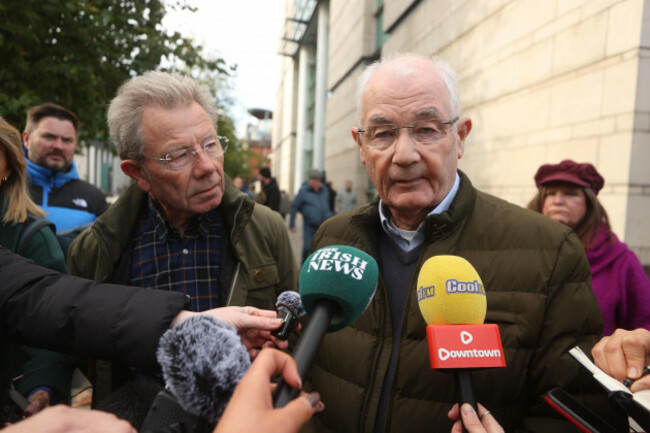
joe-left-and-mickey-mckinney-brothers-of-bloody-sunday-victim-william-mckinney-speak-to-the-media-outside-belfast-crown-court-where-former-paratrooper-known-as-soldier-f-has-been-found-not-guilty Joe (left) and Michael McKinney, brothers of William McKinney, speaking to reporters outside Belfast Crown Court yesterday. Alamy Stock Photo Alamy Stock Photo

James Wray was a civil rights activist who was engaged to be married. He was shot twice in the back. The Saville report found that he was lying on the ground when he was shot.

“He was on his own. There is nothing to suggest that he could have been hit by mistake or by accident,” the Saville report stated.

William McKinney was a compositor at the Derry Journal and a keen amateur film-maker. He was engaged to be married.

Soldier F was also charged with the attempted murders of five people: Joseph Friel, Michael Quinn, Joe Mahon, Patrick O’Donnell and a person unknown.

Twenty-year-old Joseph Friel (known as Joe) suffered a gunshot wound to the chest, at the side of the sternum, according to medical records reported on by the Saville Inquiry. He was in Glenfada Park when he was shot.

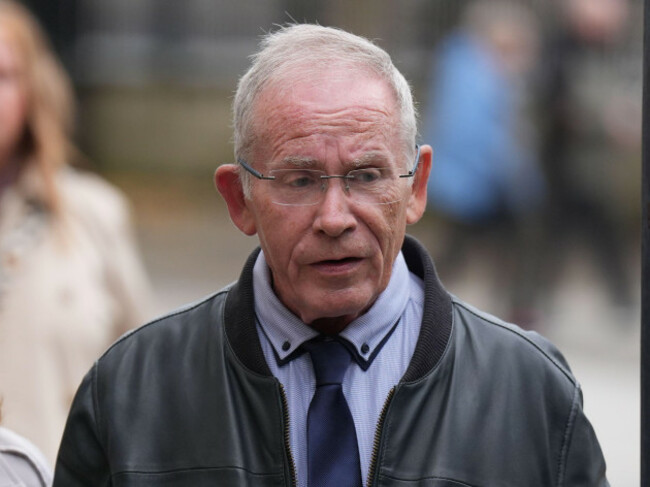
joe-friel-a-survivor-of-bloody-sunday-leaves-belfast-crown-court-after-giving-evidence-at-the-trial-of-a-former-paratrooper-accused-of-the-murder-of-two-men-on-bloody-sunday-soldier-f-who-cannot Joe Friel, a survivor of Bloody Sunday, after giving evidence in the trial of Soldier F. Alamy Stock Photo Alamy Stock Photo

Michael Quinn was 17 and still at school at the time of Bloody Sunday. He was shot in the face in Glenfada Park.

He told the trial he tried to get out of the Glenfada Park courtyard when he heard someone shout that soldiers were coming in.

He told the court: “I ran crouching across the courtyard. I remember jumping over the raised ground. As I was approaching the exit to Abbey Park, I felt myself being struck by the bullet.

It grazed my shoulder, the jacket I was wearing, and then went through my face and exited through my nose.

“For some reason, I slowed down, and I could actually see the flesh and blood breaking away from my face.”

Joseph Mahon was 16 and due to begin an apprenticeship as a joiner. He was shot at the top of his right thigh and the bullet penetrated his abdomen. He was running or possibly walking away from the soldiers when he was shot, the Saville Inquiry found. He was probably hit by a bullet that had also hit William McKinney.

He told Soldier F’s trial that he lay on the ground pretending to be dead after he was shot.

The Saville report noted that his injuries had life-long effects on him, physically and mentally. He spent a month in hospital and lost his apprenticeship as a result. 

Patrick O’Donnell was shot in the shoulder as he sheltered behind a fence on the east side of Glenfada Park North. He was 41 and had six children. He worked as a roofing contractor.

The Saville Inquiry found “none of those shot in Glenfada Park North was armed or doing anything that could have led anyone to believe that any of them was posing a threat”.

There was “no evidence from any source” that the soldiers gave “any warning” before opening fire.

What did the Saville Inquiry find in relation to Soldier F?

It’s worth noting first that, apart from the casualties at issue in this trial, the Saville Inquiry was “sure” that Soldier F shot three people who died on Bloody Sunday: Michael Kelly (17), Bernard ‘Barney’ McGuigan (41) and Patrick Doherty (31). 

Soldier F, called Lance Corporal F in the Saville Inquiry report, probably also shot two men who were seriously injured, Daniel McGowan and Patrick Campbell.

Soldier F was questioned about these deaths and injuries at the Inquiry. Witnesses were not granted blanket immunity from prosecution, but they were immune from prosecutions on the grounds of self-incrimination.

Soldier F was one of the first soldiers to go into Glenfada Park North, along with Corporal E, and Soldiers G and H (known as Privates G and H in the Saville Inquiry report).

The Saville Inquiry stated in its final report: “We have no doubt that between them these soldiers shot and mortally wounded Jim Wray and William McKinney; and shot and wounded Joe Friel, Michael Quinn, Joe Mahon and Patrick O’Donnell, all in Glenfada Park North.”

The Inquiry went on to draw possible conclusions on which soldiers shot which individuals in Glenfada Park, with the proviso that these suggestions were based on accepting the soldiers’ own accounts of the number of shots they claimed to have discharged.

The Inquiry formed the view that it was “more likely than not ” that either Soldier F or Soldier H fired the shot that mortally wounded William McKinney and therefore also wounded Joe Mahon (since they were probably hit by the same bullet).

Either Soldier F or Soldier G may have shot Joe Friel, according to the Inquiry’s analysis.

The Saville Inquiry found that it was “probable” that Corporal E was responsible for the injury to Patrick O’Donnell. The Saville Inquiry found it was more likely than not that Soldiers G or H fired the first shot to hit Jim Wray, and the second when he lay on the ground, and that it was more likely than not that Soldier G or H wounded Michael Quinn.

The Inquiry found these four soldiers, including Soldier F, had knowingly given untruthful accounts of what they saw and did on Bloody Sunday. 

“Our overall assessment of what happened in Glenfada Park North is that the soldiers who went in, led by Corporal E, fired at fleeing civilians, and then, in the knowledge that what they had done was unjustified, proceeded to invent false accounts of what they had seen and done,” the Inquiry found.

The Inquiry did not accept Soldier F’s claim to it that he had completely forgotten what he did in Glenfada Park.

What was the trial evidence in relation to Soldier F?

The key evidence in the trial was the statements of two soldiers, referred to as Soldier G and Soldier H, who were in Glenfada Park with Soldier F. 

It was the prosecution’s case that these statements placed Soldier F in Glenfada Park North, and having opened fire.

These statements were made to military police on the night of the shootings and to the Widgery Inquiry later in 1972. The prosecution also used evidence given by Solider H to the Saville Inquiry in the 2000s. 

The prosecution’s barrister described these statements as “both truthful and untruthful”, with some of their contents consistent with other eyewitness evidence and in accordance with known facts. Soldier F’s lawyers unsuccessfully tried to argue that hearsay statements were not admissible.

Soldier G has died and Soldier H did not give evidence at the trial. He was approached to give evidence but indicated that if he was compelled to attend he would exercise his privilege against self-incrimination.

Soldier F did not give evidence on his own behalf either before the trial or during it.

His solicitor gave a statement to the PSNI in 2016 that he was “sure” he had “properly discharged [his] duties as a soldier on that day” but he no longer had “any reliable recollection” of the events in question, and would not answer any questions or be “drawn into speculating or guessing”.

He made no comment to all questions put to him during police interviews in 2016.

Why was Soldier F acquitted?

Soldier F was found not guilty because the evidence presented by the prosecution fell “well short” of the standard required in a criminal case, the judge said yesterday.

The standard of proof needed for conviction in a criminal case is proof beyond a reasonable doubt.

“Whatever suspicion” the court may have about the role of Soldier F, the court was constrained and limited by the evidence presented, the judge said. A conviction would have required evidence that was “convincing and manifestly reliable”.

The statements of Soldiers G and H were the “sole and decisive” evidence. However, these two had been “serially untruthful”, and they had a motivation to implicate Soldier F.

Furthermore, the long delay in bringing the trial meant the veracity and accuracy of hearsay statements from Soldiers G and H could not be tested.

The prosecution failed to establish that Soldier F was “knowingly and intentionally assisting in the shootings, with intent to kill, or was shooting himself with that intention”.

The judge said members of the Parachute Regiment “totally lost all sense of military discipline” on Bloody Sunday.

“Shooting in the back unarmed civilians fleeing from them on the streets of a British city. Those responsible should hang their heads in shame,” the judge said.

However, the judge noted that there is no concept of “collective guilt” in the courts.

With reporting by Press Association.

Readers like you are keeping these stories free for everyone...
Our Explainer articles bring context and explanations in plain language to help make sense of complex issues. We're asking readers like you to support us so we can continue to provide helpful context to everyone, regardless of their ability to pay.

Close
JournalTv
News in 60 seconds