We need your help now

Support from readers like you keeps The Journal open.

You are visiting us because we have something you value. Independent, unbiased news that tells the truth. Advertising revenue goes some way to support our mission, but this year it has not been enough.

If you've seen value in our reporting, please contribute what you can, so we can continue to produce accurate and meaningful journalism. For everyone who needs it.


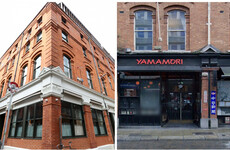
The researchers identified many establishments offering unlimited alcohol with brunch. Shutterstock

Are boozy 'bottomless brunches' breaking the law? Academics say they may be

Unlimited mimosas and bottomless prosecco may be illegal in Ireland, according to TUS academics.

THE POPULARITY OF bottomless brunches across Ireland is exposing weaknesses in the Government’s laws designed to curb excessive drinking, it has been claimed.

A group of academics from the Technological University of the Shannon said it is arguable that public health regulations are being breached by the provision of so-called “bottomless brunches”, where unlimited alcohol is provided along with food for a set time period.

Drinks provided routinely with such promotions include prosecco, mimosas and bellinis.

The Public Health (Alcohol) Act 2018 allows regulations to be made by the Minister for Health to prohibit the sale and supply of alcohol at a reduced price.

Since January 2021, it’s illegal to offer alcohol at a reduced price or free of charge by the purchase of other alcohol products. It is also unlawful to advertise or promote such offers.

In an article for the medical journal, Epidemiology, Biostatistics Public Health, the TUS academics claim it can be argued that the sale and supply of alcohol in the form of “bottomless brunches” represents a violation of the regulations.

They pointed out that a cursory internet search which lasted less than four hours had identified 18 establishments in Ireland offering bottomless brunches – including unlimited alcohol.

Examples of such promotions were found in Dublin, Cork, Limerick, Galway, Kilkenny, Sligo, Tipperary and Athlone.

One of the article’s main authors, Frank Houghton of TUS’s Social Sciences ConneXions Research Institute, said “bottomless brunches” bring attention “to the crucial issue of the enforcement of legislation in Ireland.”

Dr Houghton noted that Alcohol Action Ireland, a charity advocating for reducing alcohol harm, claimed they have repeatedly raised the issue with the HSE “without any real result.”

He said it was “disconcerting” that no action appears to have been taken on the issue, despite it being reported to the HSE.

Dr Houghton said a lack of enforcement was also evident in other public health-related areas including tobacco control, road traffic laws and environmental protections.

The academics noted that it has been suggested that the enforcement of alcohol legislation in Ireland might be impeded by legal complexities and apprehension relating to judicial enforcement.

“The result may be an orientation towards soft mandates rather than prosecution,” they added.

Dr Houghton said Ireland had exhibited a lack of leadership in relation to alcohol control in the past.

However, he added: “Direct and purposeful leadership is now required to promote health and combat the threat posed by practices that actively promote excess alcohol consumption.”

Dr Houghton said alcohol remains “a clear and present danger” to public health in Ireland.

It is estimated that alcohol is the 8th leading cause of death in Ireland, and is responsible for 8 per cent of all deaths annually.

He said the Public Health (Alcohol) Act 2018 was passed by the Government to address the damage wrought by alcohol with the legislation allowing for minimum unit pricing and alcohol warning labels.

Although the Government has been criticised for deficits in the legislation and the slow enactment of elements of the act, Dr Houghton said it remains a significant piece of alcohol control legislation.

The article noted that the World Health Organisation had identified alcohol as an important “commercial determinant of health” – a term used to describe how private sector activities affect public health.

Dr Houghton said “a robust response” was needed from both the HSE and the Government to respond to such a classification.

Readers like you are keeping these stories free for everyone...
A mix of advertising and supporting contributions helps keep paywalls away from valuable information like this article. Over 5,000 readers like you have already stepped up and support us with a monthly payment or a once-off donation.

Close
83 Comments
This is YOUR comments community. Stay civil, stay constructive, stay on topic. Please familiarise yourself with our comments policy here before taking part.
Leave a Comment
    Submit a report
    Please help us understand how this comment violates our community guidelines.
    Thank you for the feedback
    Your feedback has been sent to our team for review.

    Leave a commentcancel

     
    JournalTv
    News in 60 seconds