Sign in. It’s quick, free and it’s up to you.
An account is an optional way to support the work we do. Find out more.
Sign in. It’s quick, free and it’s up to you.
An account is an optional way to support the work we do. Find out more.
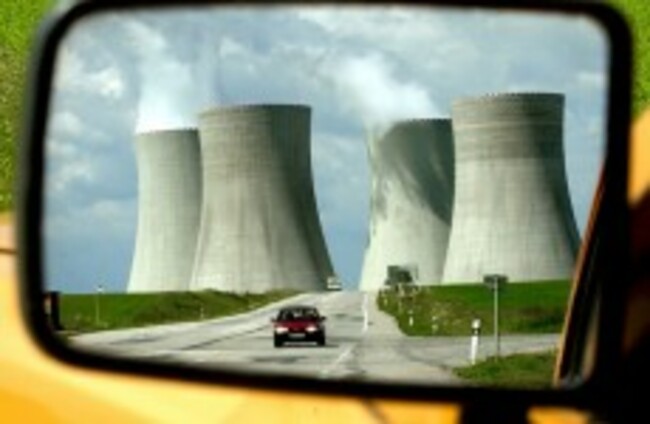
A REPORT INTO the potential impact the building of eight nuclear sites in the UK would have on Ireland found that the affect on human health would be “very low”.
Eight new nuclear sites are planned for the UK before 2025. The Radiological Protection Institute of Ireland (RPII) report examined possible impacts the new nuclear plants would have on Ireland or on the Irish marine environment. The report examined possible affects these plants day-to-day operations could have, as well what would happen in the event of severe accident taking place.
Five severe accident scenarios were assessed as part of the study, focusing on what the possible threat would be to the east coast of Ireland over timescales ranging from 48 hours to one year after a release.
The report also examined the consequences of a large accidental release of radioactivity into the Irish Sea equivalent in size to that after the Fukushima accident. It found that the resulting radiation dose to people in Ireland, who eat very large quantities of fish and shellfish, would be less than the annual radiation dose limit for the public.
The weather was found to be the most significant factor in estimating the impact on Ireland, but the report states that 90 per cent of the time, during the 48 hours after a potential accident scenario, radioactivity was not transported by wind over Dublin.
“This report concludes that severe radiological effects in Ireland are unlikely as a result of building new nuclear power plants in the UK, but a socio-economic impact will be seen in the event of a very severe accident,” according to Dr Ann McGarry, Chief Executive of the RPII.
One issue of note from the review was that although plans are in place for the establishment of a deep geological disposal facility in the UK, no suitable final repository for spent nuclear fuel exists at the moment.
The report finds that in the absence of a final repository being built within the necessary time frame, the spent fuel would remain a long-term hazard and would need to be managed on site after the proposed nuclear power plants have ceased operating.
The findings from this assessment will be used to inform the RPII’s and Ireland’s emergency planning arrangements for nuclear accidents.
(YouTube/RPIIre)

To embed this post, copy the code below on your site















have your say