We need your help now

Support from readers like you keeps The Journal open.

You are visiting us because we have something you value. Independent, unbiased news that tells the truth. Advertising revenue goes some way to support our mission, but this year it has not been enough.

If you've seen value in our reporting, please contribute what you can, so we can continue to produce accurate and meaningful journalism. For everyone who needs it.

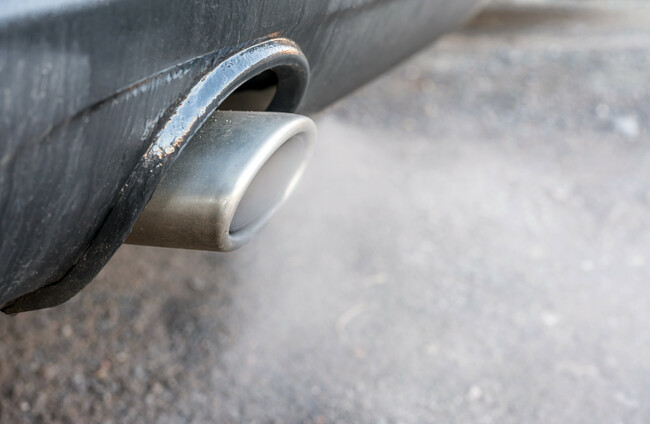
Canada recently abolished its carbon tax. Shutterstock

The inconvenient truth for opponents of carbon tax is that it actually works

On the the question of whether it actually reduces emissions – the verdict is a near-unanimous yes.

LAST UPDATE | 11 Jan

AT A TIME when the negative impacts of pollutants are all around us, a carbon tax might seem like a sensible move.

The measure is simple. Apply a levy to fossil fuels – oil, petrol, coal, and so on.

These are substances which emit harmful pollutants when burned and used. A carbon tax makes them more expensive, in an effort to reduce this.

It is generally priced in terms of tonnes of CO2 (carbon dioxide) released when a fuel is consumed.

The Irish government has steadily increased the carbon tax in recent years. It rose again in Budget 2026, increasing by €7.50 to €71 per tonne of CO2 emitted. The plan is to raise it to €100 per tonne by 2030.

For an example of how this works in practical terms – the extra €7.50 will add about 2.5 cents to the price of a litre of diesel.

The money raised from the tax goes to two main sources.

The first is increased social welfare payments. These are generally measures aimed at mitigating how carbon tax raises heating costs.

The second is for pro-environmental projects, such as retrofitting buildings to make them more energy efficient.

However, many people have a negative view of the carbon tax, as it makes the likes of driving and home heating more expensive.

The measure was recently scrapped in Canada, after becoming a ‘political football’ in the run up to last year’s election. Newly-installed prime minister Mark Carney said it had become ‘too divisive’ and he removed the charge. 

This has led to questions over the tax, with many focusing on its effectiveness – specifically, whether the tax actually reduces emissions.

A new study from the ESRI (Economic and Social Research Institute) asks just this.  Spoiler alert, it estimates the tax will be effective.

The report looks at the long term impact that the measure will have on emissions. It did this by considering three different scenarios.

  1. ‘Business as Usual’ – the carbon tax is set at just €48.50 per tonne, the level it was at in 2023
  2. The charge goes to €100 per tonne by 2030. This is the Irish government’s current plan
  3. It increases by more than expected, to €150 a tonne by 2030

It then looked at the expected impact on emissions under the three scenarios. It tracked their likely impact to 2040.

Specifically, it did this by looking at six pollutants. These include PM2.5, which is emitted mainly from the burning of solid fuels, such as coal and peat.

The EPA (Environmental Protection Agency) has said that PM2.5 is “the more important pollutant [which] causes most health issues”.

The ESRI study projected that under scenario 2, which Ireland is currently working towards, emissions will fall significantly for all major pollutants.

As expected, researchers predicted that CO2 levels will fall, dropping by over 6% due to the tax.

However, the model predicted that the tax will be effective at reducing most pollutants. For example, it found that PM2.5 will reduce by about 8.5% by 2040 because of the charge.

It’s worth noting that the research is based on forward-looking models – it’s a best estimate for now.

So some might be tempted to dismiss it as an educated guess. Or overly optimistic.

However, the findings line up with plenty of other studies looking at carbon tax effectiveness.

A meta-analysis looking at the issue, published in 2024, found that the tax almost always has an impact.

Looking at 21 carbon tax schemes, it found that ‘at least 17’ of them led to substantial emissions reductions. The drop ranged from 4% to 15%.

A separate meta-analysis evaluating 81 studies also found that carbon taxes generally lead to falls in pollutants.

“Carbon-pricing policies are effective tools for reducing carbon emissions – though country and industry-specific factors can influence the effectiveness of these policies,” the report noted.

Studies looking at individual cases have reached similar conclusions. In Sweden, the government introduced the charge all the way back in 1991. One study calculated that this caused transport emissions to drop by over 6% per year.

Researchers have reaffirmed that this is because, as expected, the tax changes behaviour – it discourages activities which cause emissions.

For example – as driving becomes more expensive, people are less likely to do it. This leads to a fall in exhaust fumes, and all the pollutants associated with them.

Canada

So if carbon taxes are so great, why did Canada get rid of theirs?

Well, most studies found that one of the biggest issues with the tax is public perception – a big chunk of the population fundamentally doesn’t like it.

They view it as unfairly penalising what can often be necessary activity (such as driving to work). There are also concerns over how it impacts those on lower incomes.

Researchers suggest governments need to take several measures to get more public buy in. One is to work to ensure that the charge does not unfairly hit the poor. This could be done by increasing welfare payments, which the Irish government has done.

The other key issue is communication and perception. Many of the studies say that policymakers should increasingly focus on the charge’s impact on improved air quality.

This both improves the well-being of the general population, and lowers state spending on healthcare.

There can be plenty of debate about whether the public does or doesn’t want a carbon tax.

But as to the question of whether it actually reduces emissions – the verdict is a near-unanimous yes.

Readers like you are keeping these stories free for everyone...
A mix of advertising and supporting contributions helps keep paywalls away from valuable information like this article. Over 5,000 readers like you have already stepped up and support us with a monthly payment or a once-off donation.

Close
114 Comments
This is YOUR comments community. Stay civil, stay constructive, stay on topic. Please familiarise yourself with our comments policy here before taking part.
Leave a Comment
    Submit a report
    Please help us understand how this comment violates our community guidelines.
    Thank you for the feedback
    Your feedback has been sent to our team for review.

    Leave a commentcancel

     
    JournalTv
    News in 60 seconds