We need your help now

Support from readers like you keeps The Journal open.

You are visiting us because we have something you value. Independent, unbiased news that tells the truth. Advertising revenue goes some way to support our mission, but this year it has not been enough.

If you've seen value in our reporting, please contribute what you can, so we can continue to produce accurate and meaningful journalism. For everyone who needs it.

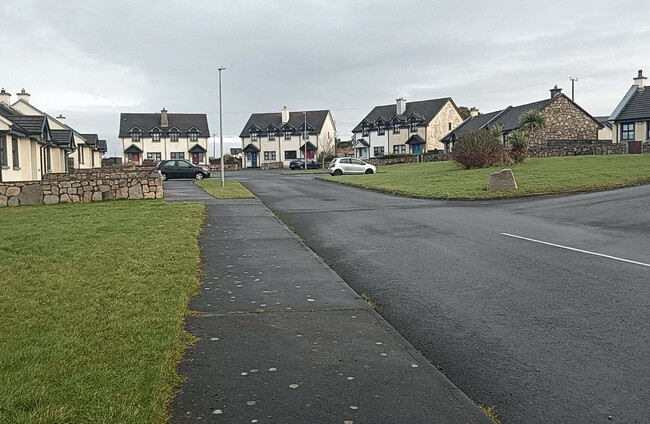
Tá tagairtí déanta do cheisteanna a bhaineann le tithiocht sa Ghaeltacht sa tuarascáil athbhreithnithe ar phleanáil teanga. Bánú

Gaeltacht Department has to republish language planning report and its responses due to errors

Statistics used in the Review of Language Plans are presenting an inaccurate picture of the state of Irish in Gaeltacht regions.

(Seo alt ónár bhfoireann Gaeltachta. Is féidir an bunleagan as Gaeilge a léamh anseo.)

THE DEPARTMENT OF Rural and Community and Gaeltacht Development has acknowledged that further revisions are underway to the review report on ten language plans published earlier this week after the reliability of some of the figures used in the document was questioned.

The figures being questioned were not the only problem with the 290-page report, however, and the report’s aftermath since the start of this week has been likened to an edition of a documentary detailing a fiasco of bureaucratic red tape.

Irish language organisations and Gaeltacht groups had been waiting a long time for the review report, which was understood to have been completed by Belfast consultancy Barr Feabhais over a year ago.

According to the Gaeltacht Act 2012, it was decided that language plans would be in 26 language planning areas (LPA) spread across seven Gaeltacht areas in counties Galway, Mayo, Donegal, Meath, Waterford, Cork and Kerry.

Language planning areas are areas within Gaeltacht regions where a local community organisation employs a planning officer to devise and implement schemes and strategies to increase the use of Irish as a community language.

Ten language plans from language planning areas (LPAs) across the country were considered in this report. These were An Cheathrú Rua in Connemara, Árainn Mhór, South Kerry, West Kerry, Chloich Chionn Fhaola, Central Connemara, Gaeltacht na Mi, Gaoth Dobhair, Rann na Feirste, Anagaire and Loch an Uíir, Na Déise and North Mayo. It is understood that review reports will be produced on the remaining LPAs in the future.

The Department has stated that the seven-year period initially given to the language plans will be extended by two years. This will allow the lead organisations to apply the lessons from the first period to the next period.

Although the legislation was passed in 2012, the scheme did not come into effect until 2018 and since then, community organisations in these language planning areas have received an annual grant of €100,000 or more to employ language planning officers and initiate projects to support the speaking of Irish in the areas under their care.

The first seven-year period ended in 2025 and it was intended that a review of the implementation of ten language plans that began in 2018 and were published well before that would be carried out to chart the way forward for the second seven-year period.

So, when it was published, the wave of criticism that has followed in recent days was unexpected. First of all, questions had long been raised about the way the census figures were used in the report. One source said that they were supporting the Department of Gaeltacht’s position that there is no language emergency in the Gaeltacht, as experts and campaign groups have long argued.

Language planning officers have expressed doubts about the comparison in the review report between figures for the number of daily Irish speakers in the LPTs included in the report between the censuses in 2016 and 2022.

According to Victor Bayda, Language Planning Officer in South Kerry, the figures in the report are being compared which gives an inaccurate picture of the state of Irish as a community language in the Gaeltacht.

It is likely that he [the author of the report] took a number, not the total population but the Irish speakers, the people who said they had a command of Irish, which is why it is higher because Irish speakers are a proportion of the total population and if you count the proportion of daily Irish speakers as a proportion of a proportion, your percentage will be higher.

It is reported that the Department had the first version of the report since the beginning of the Summer of 2024. A statement from the Department, however, stated that a ‘final version’ of the report had not been received from the Barr Feabhais company until the Autumn of 2025. Whichever version of the story you believe, the Department had between three months and 17 months to examine the report from start to finish.

The Journal requested a response to a series of questions relating to the same figures. We have not yet received a response. The Department’s Press Office sent a response to RTÉ Raidió na Gaeltachta and we are grateful that this response (see below) was provided to us:

The independent consultant who compiled the Review has noted that there are a number of errors in the figures included in the version published yesterday. He is taking steps to correct them.

In addition to the confusion over the use of the figures, there was another twist to the story which showed that the Department was operating Murphy’s Law in that everything that could go wrong was going in that direction.

The authors of the report had made 40 recommendations based on the research they had carried out and were seeking to provide guidance that would support that process.

The Department’s decision to issue responses to the forty recommendations was unexpected and these responses were questioned during an interview with the Minister, Dara Calleary, on Adhmhaidin, RTÉ Raidió na Gaeltachta on Monday morning. Later that same evening, the Department of the Gaeltacht issued revised responses.

Minister Calleary was questioned about two of these responses during the interview. In one recommendation, number 27(a), it was suggested that a regulation be introduced which would ensure that Irish speakers seeking planning permission to build houses in the Gaeltacht would have priority over applicants for planning permission who were not Irish speakers.

In the Department’s initial response, it was stated that this recommendation was based on the understanding that there was competition between Irish speakers and non-speakers for planning permission and that it was the Department’s view that there was no such competition.

Reference was also made to the commitment in the National Housing Plan that the Department of Housing would publish a National Planning Statement for the Gaeltacht in the first half of 2027. This statement is the same as the planning guidelines for the Gaeltacht which have been promised to be available soon on numerous occasions since 2022.

The amended response, however, made no reference to what had been said previously and the denial that there was competition between Irish speakers and non-Irish speaking applicants. Instead, it stated that an attempt would be made to ‘address the difficulties faced by Irish speakers in obtaining planning permission in the Gaeltacht’.

Another recommendation, 27(c), stated that housing subsidies should be given to residents who had and used Irish. The Department’s response stated that there was a risk that ‘incentives such as these would boost the construction of holiday homes in the Gaeltacht – which is undesirable’.

In its amended response, the Department only said that ‘the issue as it relates to incentives for Irish speakers already based in the Gaeltacht would be discussed with the Department of Housing, Local Government and Heritage’.

The report has met with a mixed reception from Irish language organisations and Gaeltacht groups.

Conradh na Gaeilge, the national all-island advocacy organisation, said that it welcomed “suggestions such as that a salary on the Civil Servant scale at the level of a Senior Executive Officer should be used for the Language Planning Officer, additional staff should be recruited and that action should be taken on housing issues in the Gaeltacht”.

The Department’s responses were referred to and were said to have created “uncertainty about the actions that the State will take in this regard”.

John Prendergast, the advocacy manager for the Conradh na Gaeilge, said that they were “not a step closer to having a monitoring system in place for the Language Planning Process” and that this had “disappointed and discouraged many language planning officers”.

All these language planning efforts depend on the State system, the Gaeltacht Department, and the “top down”, and if the challenges that lie ahead for the effective implementation of language planning are not honestly addressed, it will only fail.

“We must act on behalf of the Gaeltacht, and a strategic vision must be put together for this Process, including the review.”

The group Bánú, which is lobbying for housing in the Gaeltacht, said it welcomed the report’s recommendation that subsidies be paid to Gaeltacht residents who speak Irish.

“However, BÁNÚ is disappointed that, following discussions over the past two years with the Department of the Gaeltacht about the housing problem, the Department has only said that the issue will be discussed with the Department of Housing, Local Government and Heritage,” a spokesperson said.

The Journal’s Gaeltacht initiative is supported by the Local Democracy Reporting Scheme

Readers like you are keeping these stories free for everyone...
A mix of advertising and supporting contributions helps keep paywalls away from valuable information like this article. Over 5,000 readers like you have already stepped up and support us with a monthly payment or a once-off donation.

Close
Comments
This is YOUR comments community. Stay civil, stay constructive, stay on topic. Please familiarise yourself with our comments policy here before taking part.
Leave a Comment
    Submit a report
    Please help us understand how this comment violates our community guidelines.
    Thank you for the feedback
    Your feedback has been sent to our team for review.

    Leave a commentcancel

     
    JournalTv
    News in 60 seconds